
LED and LCD screens are effective multimedia equipment that is actively used as an advertising and presentation tool. We will tell you how these types of equipment differ and compare them by various parameters. And you will be able to draw a conclusion about which type of screen is best suited to solving your problems, especially in the context of Digital Signage applications.
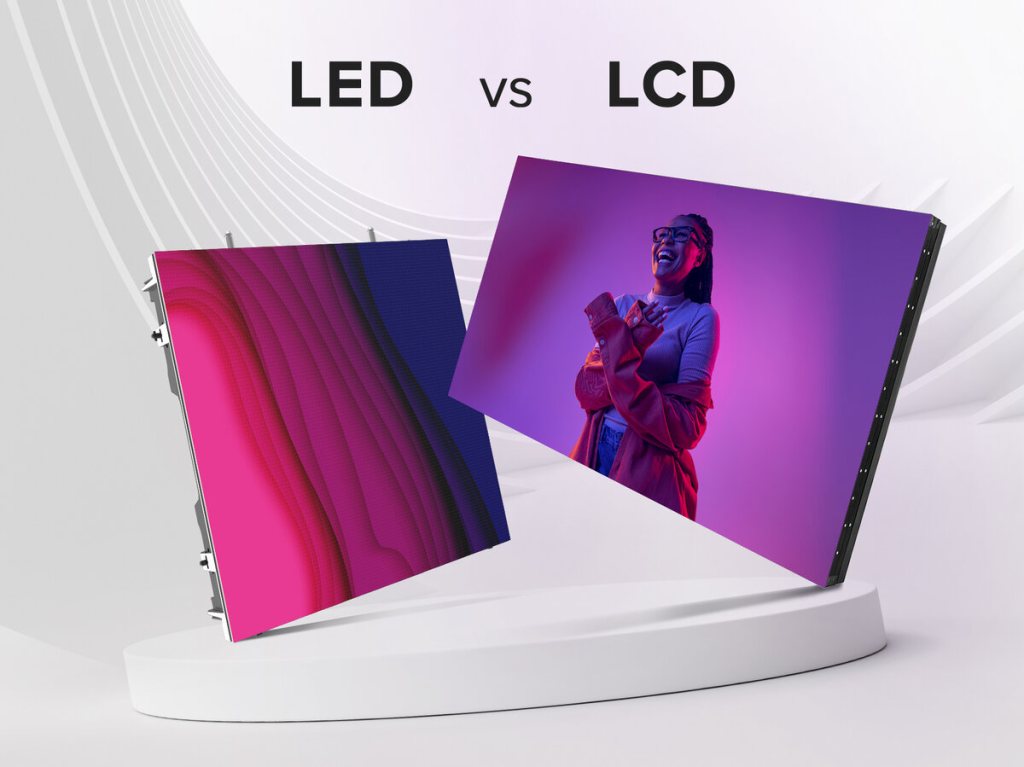
LED and LCD technology: what is the difference?
>
LCD (Liquid Crystal Display) is a liquid crystal display (LCD). It consists of crystals placed between transparent polymer plates. They are not capable of producing light, so they are illuminated with lamps using a cold cathode. These are CCFL lamps or fluorescent lamps, often used in Digital Signage setups.
The backlight in LCD screens allows you to get a wide palette of colors. The equipment has low energy consumption. But for high-quality operation, it requires a high-frequency alternating current source. Converters need a power of about 25 W / h. The service life of LCD systems is approximately 5000 hours. This indicator is affected by the set glow intensity.


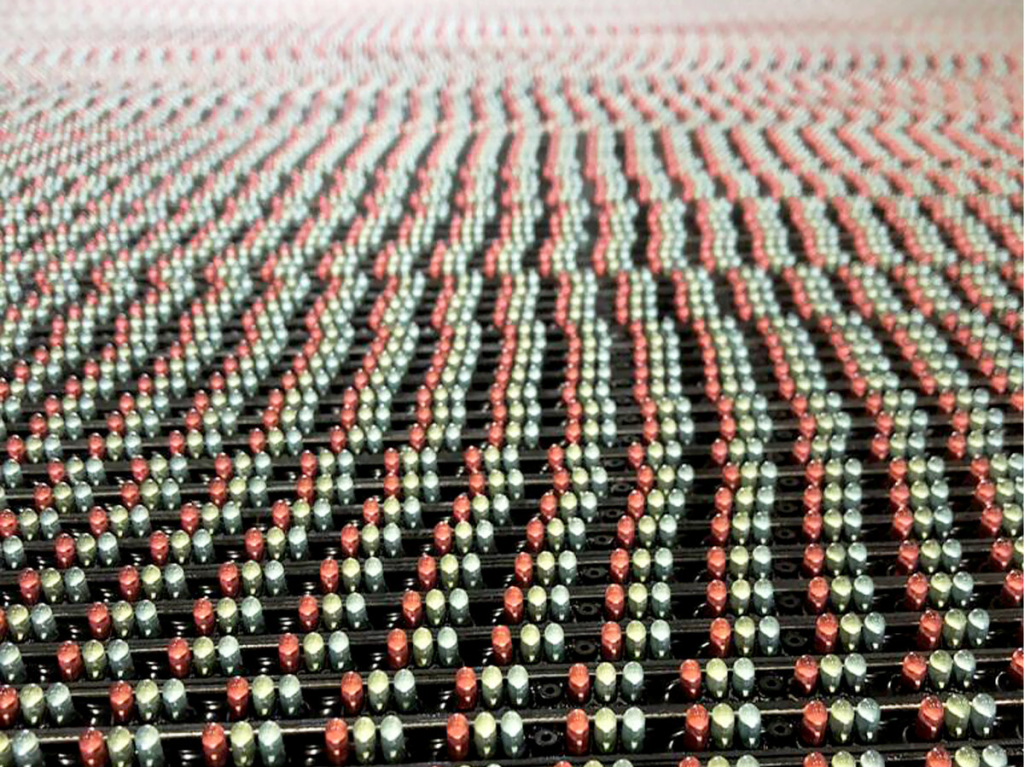
LED screens are based on the design of light-emitting diodes (LEDs). They are smaller in size than cold cathode fluorescent lamps, but more efficient. Therefore, LED equipment can be called an improved version of LCD monitors, making it ideal for Digital Signage solutions.
Bright LEDs in LED designs provide uniform light supply and require significantly less working space. Thanks to the use of LED modules, all restrictions on screen size have disappeared. In addition, LEDs allow for local dimming and deeper black color.
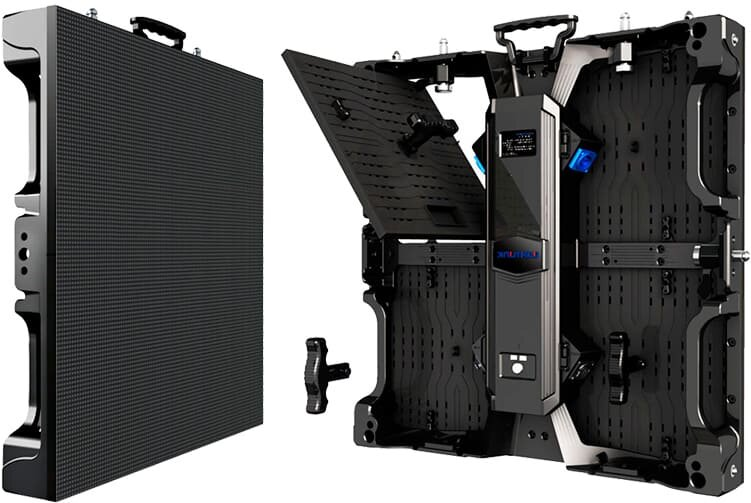
Compare equipment characteristics
>
Image quality
Both types of screens transmit high-quality images. But LCD monitors are still slightly inferior to LEDs in this parameter. The latter have good color rendering and high contrast, which is crucial for effective Digital Signage. They do not have frame flickering, image changes are clearer and without a trail. The shades are transmitted very saturated. LCD monitors have slightly worse color rendering, and the shades are not as rich.
The equipment also differs in brightness. For LCD panels it is 240-400 cd/m², for LED structures – 600-10,000 cd/m². In addition, LED modules can be used to assemble a seamless structure of any size. Large-scale video walls are also made from LCD monitors, but in this case, visible seams remain.
Power consumption
LED screens are about 40% more energy efficient than LCDs. LEDs do not need additional converters, only the current limiter requires energy. A small indoor LED screen with a small pixel pitch “eats” about 3-10 kW/h of electricity. Large outdoor displays with a long viewing range and a wide pixel pitch have higher energy consumption. But still, the consumption will be less than that of LCD structures with the same dimensions, making LED setups more suitable for efficient Digital Signage.
Dimensions
LEDs are much smaller in size than CCFL lamps. Therefore, LED screens can be much thinner than LCD monitors. In addition, LED modules are lightweight, which reduces the load on the base. And this is very important for creating large-scale structures commonly used in Digital Signage.
Resistance to external influences
Liquid crystal screens can operate in a very narrow temperature range. They can no longer withstand frost below -5 °C. The LED monitor works perfectly at temperatures from -30 to +50 °C, making it ideal for outdoor Digital Signage. It is enclosed in a reliable sealed case, the electronics are covered with a protective varnish. In addition, the equipment is equipped with additional devices for comfortable operation in outdoor conditions: forced ventilation, automatic heating, etc. Such a design is not afraid of snow, rain, dirt, heat, and frost.
Service life and maintainability
LEDs are champions in terms of service life. Their service life is 50,000 -100,000 hours depending on the conditions of use. They do not burn out immediately, but gradually lose brightness. Designed for intensive use. An LED screen can last almost 11 years if used 24/7. LCD monitors are less durable – by about 30%. For long-lasting Digital Signage, LEDs are a more viable option.
If something happens to the LCD screen, it is dismantled and taken to a service center. In the case of an LED monitor, it is enough to remove only the damaged module. There is no need to dismantle the entire structure.
What to choose?
The choice depends on your tasks and budget. If you plan to use the screen only indoors and for a limited number of hours, an LCD Video Wall will suit you. And if you need a screen with a flawless picture that can be used continuously around the clock, choose LED Digital Signage.
ScreenSculpt are committed to connecting with partners around the world for audio and video initiatives, and aspire for our expertise and offerings to bring greater value to you.
We are continuously exploring new challenges and innovations within the industry of Digital Signage. Our core offerings include LCD video walls, LED displays, all-in-one conference whiteboard solutions, and multimedia advertising kiosks.
Great insights! Understanding LED video wall vs LCD helps businesses choose the right display solution.