The P6 Paradox: How This Outdoor Display Standard Creates Unique Visual Experiences
P6 LED displays represent a fascinating intersection of technology and perception in the outdoor advertising and event industries. While many assume “LED is LED,” those familiar with visual technologies immediately notice something distinctive about P6 outdoor screens. Let’s explore what makes P6 displays look different and why they’ve become the go-to choice for specific applications.
Catalogue
- Understanding the P6 Specification
- Why P6 Outdoor LED Screens Look Different: 7 Key Factors
- Technical Innovations Making Modern P6 Look Different
- Applications Where P6’s “Different Look” Excels
- P6 vs. Other Outdoor Resolutions: Visual Comparison
- The P6 Cost-Performance Sweet Spot
- FAQ
- Conclusion: Embracing P6’s Distinctive Visual Character
Understanding the P6 Specification
What “P6” Actually Means
Pixel Pitch = 6mm: The distance between the centers of adjacent pixels measures 6 millimeters. This creates approximately 27,778 pixels per square meter (1000mm/6mm = 166.67 pixels per linear meter, squared = 27,778 pixels/m²).
The Visual Sweet Spot
P6 displays occupy a strategic position in the outdoor LED spectrum:
- Lower resolution than: P4 (62,500 pixels/m²), P5 (40,000 pixels/m²)
- Higher resolution than: P8 (15,625 pixels/m²), P10 (10,000 pixels/m²)
This middle-ground resolution creates its unique visual signature.
Why P6 Outdoor LED Screens Look Different: 7 Key Factors
1. The Optimal Distance Illusion
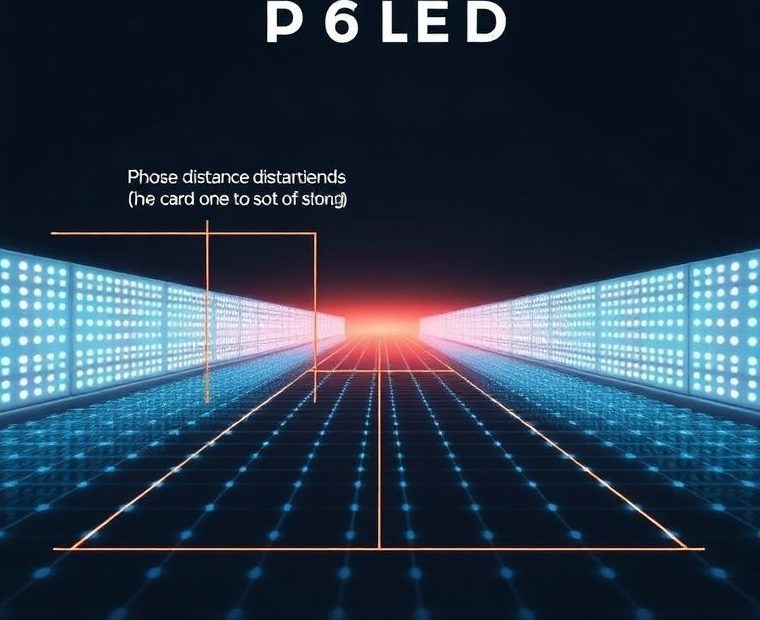
P6 displays leverage a perceptual phenomenon: The Viewing Distance Sweet Spot
- Minimum viewing distance: 9 meters (6mm × 1.5)
- Optimal viewing distance: 18 meters (6mm × 3)
- Maximum effective distance: 60+ meters
At these distances, the human eye perceives P6 content as continuous and sharp, despite its relatively low pixel density compared to indoor displays. The “look” comes from this perfect balance between detail and viewing range.

2. Brightness That Behaves Differently
Outdoor P6 displays typically operate at 5,000-8,000 nits, creating unique visual characteristics:
- High contrast preservation in sunlight: Unlike indoor screens that appear washed out outdoors, P6 maintains image integrity
- Dynamic range adaptation: Advanced P6 panels automatically adjust brightness across different zones of the screen, preventing the “flat” look of older technologies
- Glare management: Surface treatments create a matte appearance that reduces reflections without sacrificing brightness
3. The “Outdoor Color” Profile
P6 outdoor LEDs use different color calibration than indoor screens:
- Enhanced blues and greens: Compensates for atmospheric scattering over distance
- Reduced color bleeding: Larger pixel spacing minimizes color mixing at viewing distances
- Sunlight spectrum matching: Colors are tuned to remain vibrant under specific outdoor light temperatures (typically 5000-6500K daylight)
4. Pixel Structure and Fill Factor
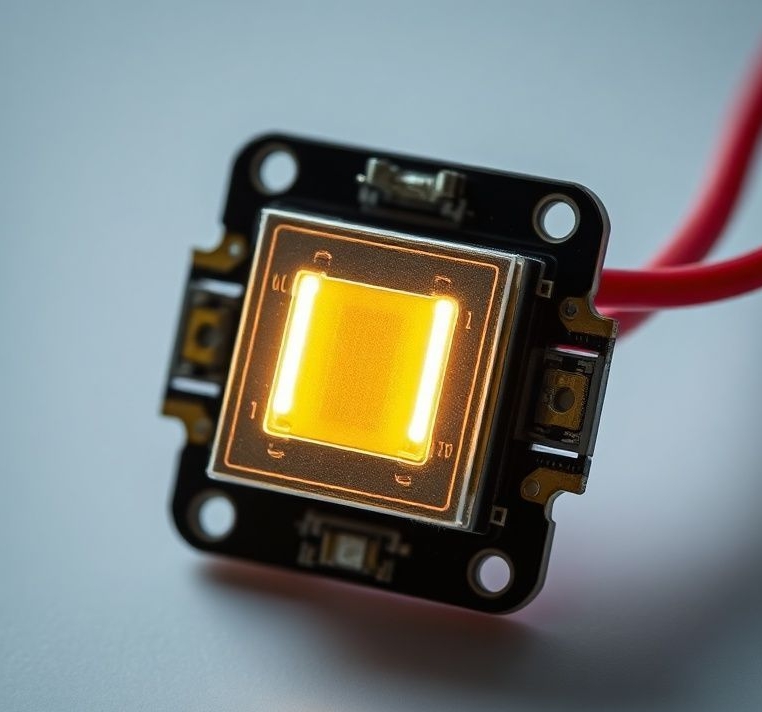
The physical construction of P6 outdoor LEDs contributes to their distinctive appearance:
- Higher fill factor: The ratio of emitting area to black space between pixels is optimized for outdoor viewing
- Anti-glare surfaces: Many P6 displays use textured or coated faces that scatter light differently than smooth indoor screens
- Darker black levels: Despite high brightness, modern P6 technology achieves deeper blacks through improved contrast ratios (3000:1 or higher)
5. Content Rendering Characteristics
P6 displays process content differently due to their resolution and application:
- Natural downscaling: HD content (1920×1080) downscales naturally to typical P6 display sizes, avoiding the artificial sharpness of higher-resolution displays
- Motion handling: Lower pixel density combined with high refresh rates creates a distinctive motion rendition, particularly effective for large-scale video content
- Text legibility optimization: Font rendering algorithms specifically tuned for P6’s pixel grid
Technical Innovations Making Modern P6 Look Different
1. Advanced Chip Technologies
Modern P6 displays often incorporate:
- Black LED technology: Special LEDs that remain inactive appear darker, improving contrast
- 3-in-1 SMD packaging: Red, green, and blue chips in single package for better color uniformity
- Higher binning standards: Tighter color and brightness matching between individual LEDs
2. Smart Processing Capabilities
- Local dimming zones: Some advanced P6 displays feature zone control for better HDR performance
- Content-adaptive brightness: Adjusts output based on scene content to maximize impact
- Weather compensation: Automatically adjusts color and brightness based on ambient conditions
3. Surface and Optical Enhancements
- Anti-reflective coatings: Reduce sunlight reflection without compromising viewing angles
- Wider color gamut: Many P6 displays now achieve >85% NTSC coverage
- Improved viewing angles: 140-160° horizontal and vertical without significant color shift
Applications Where P6’s “Different Look” Excels

1. Outdoor Advertising Displays
P6’s balance of resolution and viewing distance makes it ideal for:
- Highway billboards
- Building facades
- Shopping mall exteriors
The “look” works because it delivers impact at the distances where these displays are typically viewed.
2. Sports Stadiums and Arenas
The combination of:
- Long viewing distances
- Variable lighting conditions
- Need for high brightness
makes P6 the standard for many stadium installations. The distinctive visual quality becomes part of the venue’s character.
3. Rental and Event Production
Event producers appreciate P6’s:
- Rapid deployment capabilities
- Consistent appearance from multiple angles
- Reliability in varying weather conditions
The “look” becomes synonymous with major outdoor events.
P6 vs. Other Outdoor Resolutions: Visual Comparison
| Feature | P6 Outdoor | P4 Outdoor | P8 Outdoor |
|---|---|---|---|
| Optimal Viewing | 18-30m | 12-20m | 24-40m |
| Content Feel | Balanced detail | Highly detailed | Broad visual impact |
| Motion Rendering | Natural movement | Ultra-smooth | Slightly softened |
| Color Presentation | Vibrant, atmospheric | Precise, accurate | Bold, high-impact |
| Typical Applications | Medium-distance ads | Close-viewing areas | Very large/distant displays |
The P6 Cost-Performance Sweet Spot
The “different look” of P6 is partly economic: It represents the optimal balance between:
- Image quality sufficient for most outdoor applications
- Manufacturing cost significantly lower than P4 or smaller pitches
- Maintenance requirements manageable due to larger components
- Energy efficiency better than higher-density displays
This economic sweet spot allows for larger installations at practical budgets, creating the distinctive “large format outdoor LED” appearance we associate with modern cities.
Design Considerations for P6 Content
To maximize P6’s unique visual characteristics:
1. Resolution Optimization
- Design at native resolution or simple multiples
- Avoid fine details that disappear at intended viewing distances
- Use bold typography with minimum 6-pixel height for readability
2. Color Strategy
- Enhance saturation by 10-15% to compensate for outdoor conditions
- Use high contrast color combinations
- Implement “outdoor-friendly” palettes that consider daytime viewing
3. Motion and Animation
- Optimize for 1920-3840Hz refresh rates
- Consider slightly slower transitions for long-distance viewing
- Use motion to guide attention across the larger pixel structure
Future Evolution: Will P6 Keep Looking Different?
1. Technology Convergence
As manufacturing advances:
- P6 is benefiting from technologies developed for smaller pitches
- The gap between P6 and P4 visual quality is narrowing
- Future P6 may achieve near-P4 appearance from standard viewing distances

2. Smart Display Integration
Upcoming innovations:
- Integrated sensors for real-time appearance adjustment
- Self-optimizing color and brightness based on content and environment
- Predictive maintenance that preserves consistent appearance over time
3. Sustainability Improvements
Next-generation P6 will likely feature:
- Lower power consumption while maintaining brightness
- Longer-lasting components for consistent appearance over lifespan
- Recyclable materials without visual compromise
FAQ
Q1: Why does a P6 outdoor LED display look different from my TV or computer monitor?
A: P6 outdoor displays are engineered for entirely different viewing conditions:
- Pixel Size: P6 pixels are 6mm apart vs. 0.2-0.5mm on typical monitors
- Brightness: 5,000-8,000 nits vs. 300-600 nits for indoor screens
- Viewing Distance: Optimized for 18-60 meters vs. 1-3 meters
- Color Calibration: Enhanced for sunlight viewing vs. controlled indoor lighting
- Anti-Glare Surface: Textured face vs. smooth glass/plastic surfaces
This combination creates the distinctive “large-format outdoor look” that’s immediately recognizable.
Q2: From what distance should I view a P6 display to get the best image quality?
A: Follow the “P6 Viewing Rule”:
- Minimum distance: 9 meters (30 feet) – closer you’ll see individual pixels
- Optimal range: 18-30 meters (60-100 feet) – perfect balance of detail and immersion
- Maximum effective distance: Up to 60+ meters (200+ feet) – still readable
- Professional formula: Viewing distance (meters) = Pixel pitch (mm) × 3,000
Example: For 6mm pitch: 6 × 3,000 = 18,000mm = 18 meters optimal distance.
Q3: How does P6 compare visually to P4 and P8 displays side by side?
A: The differences are striking at various distances:
| Distance | P4 (4mm) | P6 (6mm) | P8 (8mm) |
|---|---|---|---|
| 10m | Crystal clear | Visible pixels | Clearly pixelated |
| 20m | Ultra-sharp | Perfectly sharp | Acceptable |
| 30m | Very sharp | Optimal | Slightly soft |
| 50m | Sharp | Still clear | Blurry details |
Visual Character:
- P4: “Precision instrument” look – clinical sharpness
- P6: “Balanced impact” look – natural outdoor appearance
- P8: “Large format” look – bold but less detailed
Conclusion: Embracing P6’s Distinctive Visual Character
P6 outdoor LED displays don’t just look different by accident—they represent an optimized solution for specific viewing conditions and applications. Their distinctive appearance results from:
- Purpose-driven design for outdoor environments
- Optimal technical balance between resolution, brightness, and cost
- Advanced processing tailored to outdoor viewing conditions
- Economic realities that enable widespread adoption
Rather than viewing P6 as a compromise, recognize it as a specialized tool with its own visual language. Its “different look” is precisely what makes it effective for communicating at scale, in daylight, across distances that would challenge other display technologies.
For your next outdoor project, consider not just whether P6 is adequate, but whether its distinctive visual characteristics might actually enhance your communication goals. Sometimes, looking different is exactly what makes a display effective.
Ready to leverage the unique visual impact of P6 displays for your project? Consult with specialists who understand how to maximize this technology’s distinctive characteristics for your specific application and environment.