
As we move into 2025, retail stores are facing increasing pressure to adapt to the digital age. The advent of technology has transformed not only how businesses operate but also how consumers interact with brands. One of the most effective ways to modernize your retail space and enhance the customer experience is through digital screens. These aren’t just for big tech-savvy brands anymore; they’re becoming essential for retail stores of all sizes. With consumers expecting seamless, interactive experiences, digital screens provide a platform to meet these expectations while also offering a competitive edge.
In this article, we’ll explore why every retail store needs a digital screen, the benefits they offer, and how you can effectively implement them in your space. We’ll delve into the latest trends in digital signage and provide insights on how to leverage this technology to enhance customer engagement and drive sales. Whether you’re a small boutique or a large retail chain, understanding the power of digital screens can revolutionize your business strategy in 2025.
Digital signage in retail has rapidly gained popularity over the past few years. As consumer expectations evolve, so must the ways in which retailers engage with their customers. Digital screens offer a dynamic and flexible way to display information, promote products, and create an engaging shopping environment. They have become more than just tools for displaying advertisements; they are integral components of the shopping experience that can influence buying decisions and brand perception.
Digital screens are electronic displays used to show content such as advertisements, promotions, product information, and more. They can be as small as a tablet or as large as a wall-mounted TV, depending on the needs of the store. These versatile devices can display static images, video content, or interactive interfaces that customers can engage with. They can also be networked to display synchronized content across multiple screens, creating a cohesive branding message throughout the store.
The flexibility of digital screens means they can be customized to fit the aesthetic and functional requirements of any retail environment. From sleek, modern displays that blend seamlessly into high-end boutiques to rugged outdoor screens for storefronts, the technology is adaptable to various retail needs. Moreover, digital screens can be programmed to change content based on time of day, season, or customer demographics, offering targeted marketing opportunities.
The shift to digital is driven by the need for retailers to keep up with changing consumer behaviors and preferences. Shoppers today are accustomed to digital interaction, and traditional static signage often fails to capture their attention. Digital screens provide a versatile solution that can be easily updated and tailored to meet specific marketing needs. This shift is also about keeping pace with technological advancements and consumer expectations for a more interactive and personalized shopping experience.
Furthermore, digital screens offer a sustainable alternative to traditional signage. As retailers increasingly focus on sustainability, digital screens reduce the need for printed materials, aligning with eco-friendly practices. They also offer cost-saving benefits by eliminating the recurring expenses associated with traditional signage updates. The ability to update content remotely and in real-time ensures that messaging is always current and relevant, providing a significant advantage in the fast-paced retail environment.
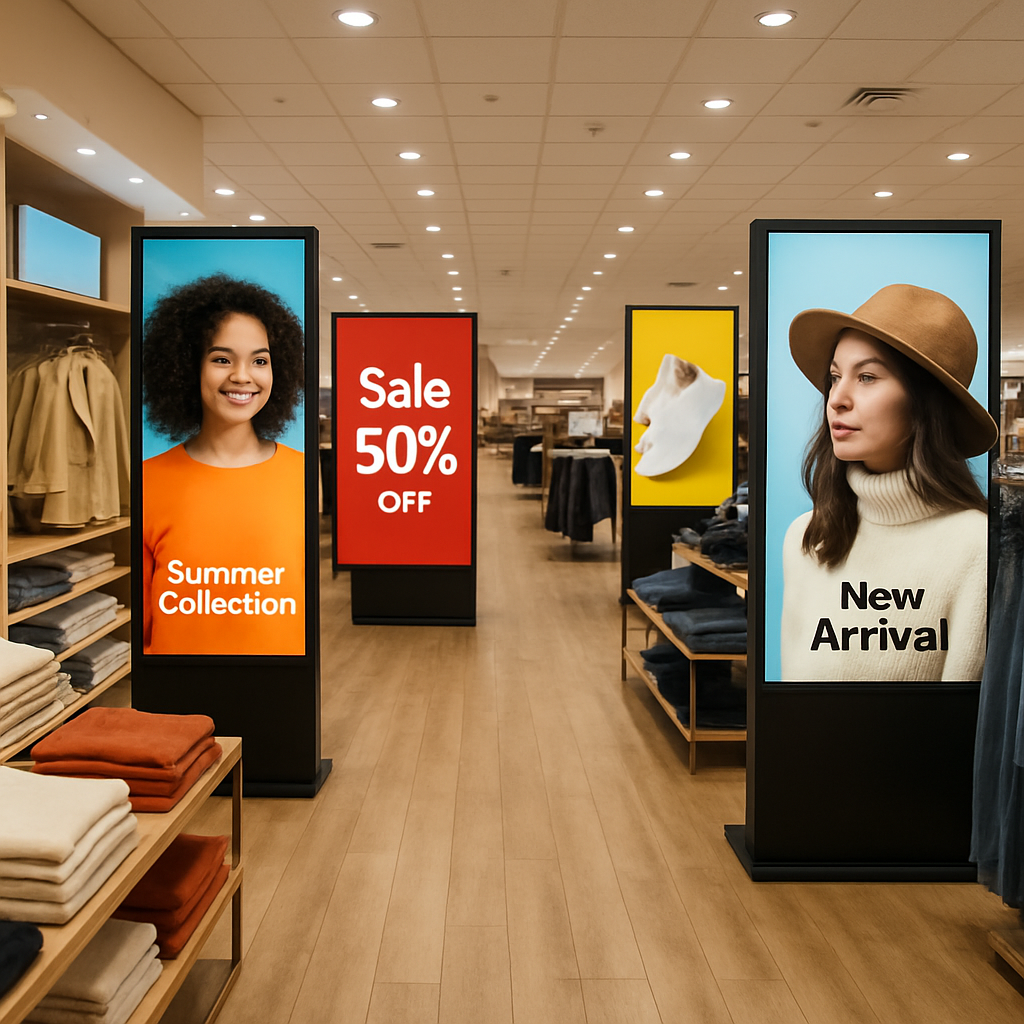
Incorporating digital screens into your retail environment offers numerous advantages that can significantly impact your bottom line. These benefits extend beyond mere aesthetics, influencing customer behavior and operational efficiency.
Enhanced Customer Engagement
Digital screens are visually appealing and can capture attention more effectively than traditional signs. With the ability to display high-resolution graphics, videos, and animations, they create a more engaging shopping experience. They can be used to showcase product features, demonstrate usage, or tell a brand story that resonates with customers. This level of engagement can lead to increased customer satisfaction and loyalty.
In addition to visual appeal, digital screens can provide interactive experiences that invite customer participation. Interactive kiosks or touchscreens enable customers to explore products, access detailed information, or even customize products. This interactivity can enhance the shopping experience by empowering customers and providing them with a sense of control over their purchasing decisions.
Increased Sales and Promotions
Digital screens can significantly boost sales by promoting special offers and highlighting best-selling products. Since content can be updated in real time, retailers can quickly respond to changing trends or inventory levels. For example, if a particular product is in surplus, a retailer can promote it with a special discount displayed prominently on a digital screen. This agility allows retailers to optimize their promotional strategies and capitalize on consumer demand.
Moreover, digital screens can be used to upsell or cross-sell products by suggesting complementary items or showcasing package deals. By strategically placing screens near related products, retailers can influence purchasing decisions and increase average transaction values. The ability to customize content based on sales data and customer insights further enhances the effectiveness of digital promotions.
Improved In-Store Experience
In-store experience is crucial for retaining customers and encouraging repeat visits. Digital screens can enhance this experience by providing wayfinding assistance, displaying queue information, or offering entertainment while customers wait. Interactive screens can also allow customers to explore product catalogs or find additional product information without needing to ask for assistance. This can improve customer satisfaction by reducing wait times and enhancing convenience.
Furthermore, digital screens can contribute to creating an ambiance that reflects the brand’s identity. By displaying themed content, music videos, or seasonal decorations, retailers can create an inviting atmosphere that enhances the overall shopping experience. This sensory engagement can differentiate a store from competitors and foster a lasting impression on customers.
Cost-Effective Marketing
Though the initial investment in digital screens may seem high, they often prove cost-effective in the long run. Traditional print signage requires frequent reprinting, which can add up over time. Digital screens eliminate this need, allowing content to be changed easily and as often as necessary without additional printing costs. This not only reduces expenses but also minimizes waste, supporting sustainability efforts.
In addition to cost savings, digital screens offer a higher return on investment due to their versatility and impact. The ability to track and analyze customer interactions with digital content provides valuable insights that can inform marketing strategies and improve ROI. By continuously optimizing content based on performance data, retailers can maximize the effectiveness of their digital signage campaigns.
Implementing Digital Screens in Your Retail Store

The process of incorporating digital screens into your retail store involves several important considerations. Proper planning and execution are key to ensuring a successful integration that meets your business objectives.
Selecting the Right Technology
When choosing digital screens, consider factors like size, resolution, and placement. Ensure that the screens are visible from key areas of your store and are at a height that makes them accessible to all customers. You’ll also need a content management system (CMS) to control and schedule the content displayed on your screens. A user-friendly CMS allows for easy updates and management, ensuring that content remains fresh and relevant.
Additionally, consider the durability and maintenance requirements of the screens, especially if they will be placed in high-traffic areas. Opt for screens with robust warranties and support services to minimize downtime and ensure reliability. The choice of technology should align with your store’s operational needs and customer expectations, providing a seamless experience that enhances your brand image.
Content Strategy
Developing a content strategy is crucial for maximizing the impact of your digital screens. Your content should be visually appealing, concise, and relevant to your audience. Rotate content regularly to keep it fresh and engaging. Additionally, consider using data analytics to track which content performs best and adjust your strategy accordingly. A well-planned content strategy ensures that your messaging resonates with customers and drives desired outcomes.
Incorporate a mix of promotional, informational, and entertaining content to maintain interest and appeal to diverse customer segments. Leverage storytelling techniques to create emotional connections and reinforce brand values. By aligning content with marketing goals and customer insights, retailers can maximize the effectiveness of their digital screens and drive business growth.
Integration with Other Technologies
Digital screens can be integrated with other in-store technologies to enhance the overall shopping experience. For example, screens can be paired with RFID tags to display information about products that customers pick up. Integration with mobile apps can also provide personalized content based on customer preferences and shopping history. This level of integration creates a cohesive and immersive experience that engages customers on multiple levels.
Furthermore, integrating digital screens with customer relationship management (CRM) systems can enable targeted marketing efforts and improve customer service. By leveraging data from multiple sources, retailers can deliver personalized experiences that enhance customer satisfaction and loyalty. The synergy between digital screens and other technologies can create a seamless and efficient retail environment.
Training Staff
Ensure that your staff is trained to use and troubleshoot digital screens. They should be comfortable with the CMS and able to make quick updates as needed. Additionally, staff should be knowledgeable about the content being displayed so they can assist customers who may have questions. Proper training ensures that your team can effectively manage digital screens and provide a positive customer experience.
Regular training sessions and updates can keep staff informed about new features or content changes. Encourage staff to provide feedback on the digital screens and suggest improvements based on their interactions with customers. By involving your team in the implementation process, you can enhance the effectiveness of your digital signage strategy and foster a culture of innovation.
Future Trends in Digital Signage
As technology continues to evolve, so too will the capabilities of digital signage. Retailers should be prepared to adapt to emerging trends that can further enhance their digital screens. Staying informed about these trends can help retailers leverage new opportunities and maintain a competitive edge.
Interactive and Touchless Technology
Interactive screens will become more prevalent, allowing customers to interact with content through touch or gesture controls. Touchless technology, such as voice commands or motion sensors, will also gain popularity, offering a more hygienic option in a post-pandemic world. These advancements in interactivity can provide a more intuitive and engaging experience for customers.
The integration of artificial intelligence (AI) with interactive screens can further enhance personalization and responsiveness. AI-powered screens can adapt content in real-time based on customer interactions, providing tailored recommendations and enhancing the shopping experience. As consumers increasingly seek convenience and personalization, adopting these technologies can differentiate your store and increase customer satisfaction.
Personalized Content
Personalization is key to creating meaningful customer interactions. Future digital screens may utilize AI and machine learning to display personalized content based on individual shopper behavior and preferences, making the shopping experience more tailored and engaging. Personalization can lead to higher conversion rates and increased customer loyalty.
By analyzing data from various touchpoints, retailers can deliver highly relevant content that resonates with individual customers. This level of personalization can enhance customer satisfaction and drive repeat business. As technology advances, the ability to deliver personalized experiences will become a critical factor in retail success.
Augmented Reality (AR)
Augmented reality offers exciting possibilities for digital signage. Retailers could use AR to create immersive experiences, such as virtual try-ons for clothing or makeup. This technology can provide customers with a unique and memorable shopping experience that sets your store apart from competitors. AR can bridge the gap between online and offline shopping, offering the convenience of e-commerce with the tactile experience of in-store shopping.
By incorporating AR into digital screens, retailers can offer interactive product demonstrations, virtual tours, or gamified experiences. These applications can capture customer interest and encourage exploration, ultimately driving sales. As AR technology becomes more accessible, its integration with digital signage will open new avenues for customer engagement and innovation.
Conclusion
In 2025, digital screens will be a crucial component of any successful retail strategy. They offer a dynamic way to engage customers, increase sales, and improve the overall shopping experience. By investing in digital signage now, retailers can stay ahead of the curve and meet the evolving demands of today’s tech-savvy consumers. Digital screens are not just a trend; they are a strategic asset that can transform your retail environment and drive business growth.
The time to make the switch is now—embrace the power of digital screens and transform your retail space into a modern, engaging environment that customers will love. By adopting this technology, you can create a future-ready retail experience that delights customers and ensures long-term success.