When considering a video wall display for your business or event, one of the most important factors to consider is the resolution. But what exactly does “resolution” mean, and how do you determine the best resolution for your video wall? In this article, we’ll break down the concept of resolution, compare different options, and help you choose the best resolution for your video wall setup.
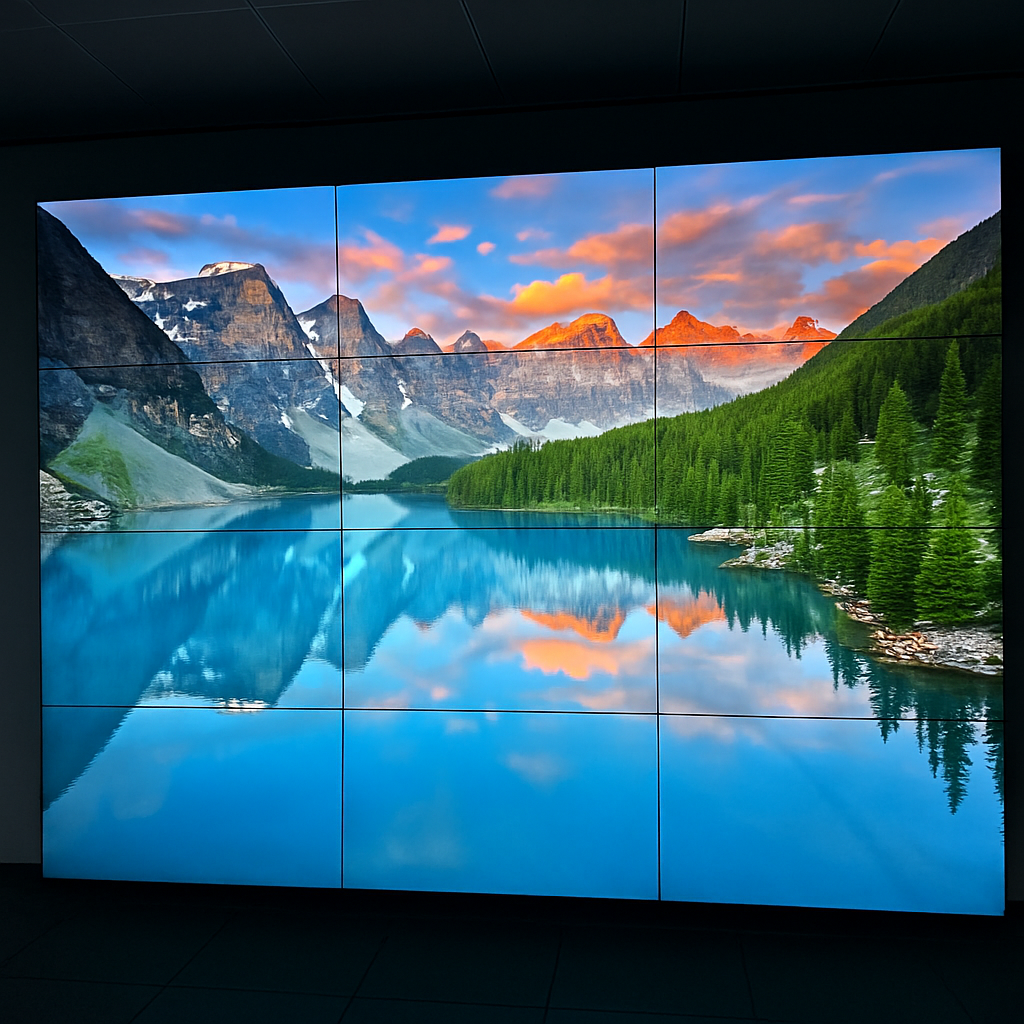
Understanding Video Wall Resolution
What is Resolution?
Resolution refers to the number of pixels that make up a display. Pixels are the tiny dots that, when combined, form the images on a screen. The resolution is usually described as width x height in pixels. For example, a resolution of 1920×1080 means there are 1920 pixels horizontally and 1080 pixels vertically.
Why Resolution Matters
The resolution of a video wall affects the clarity and detail of the images displayed. Higher resolutions mean more pixels, which generally result in sharper and more detailed images. This is particularly important for video walls, where screens are often viewed from up close and from a distance.

Common Resolutions for Video Walls
Full HD (1920×1080)
Full HD, also known as 1080p, is one of the most common resolutions for video walls. It provides a good balance between quality and cost, making it a popular choice for many applications. Full HD is suitable for smaller video walls where viewers are relatively close to the display.
4K Ultra HD (3840×2160)
4K Ultra HD offers four times the resolution of Full HD. This means more detail and a crisper image, making it ideal for larger video walls or those intended to display highly detailed content. 4K is becoming increasingly popular as prices for 4K displays continue to drop.
8K Ultra HD (7680×4320)
8K Ultra HD offers an even higher resolution than 4K, providing exceptional detail and clarity. However, 8K displays are still quite expensive and may not be necessary for all applications. They are best suited for very large installations or where the highest level of detail is crucial.
Choosing the Best Resolution for Your Video Wall
Consider the Viewing Distance
The distance from which viewers will watch the video wall should significantly influence your resolution choice. For instance, if viewers are close to the screen, a higher resolution will prevent the image from looking pixelated. Conversely, for distant viewing, a lower resolution may suffice.
Analyze Content Type
The type of content you plan to display is another important factor. Highly detailed content, like medical imaging or intricate graphics, will benefit from higher resolutions. For simpler content, such as basic presentations or text, a lower resolution might be adequate.
Budget Considerations
Higher resolutions generally come with higher costs. If budget is a constraint, it’s essential to balance resolution with your financial resources. Sometimes, a lower resolution may be a more practical choice, especially if the content and viewing distance don’t necessitate a higher resolution.

Additional Factors to Consider
Screen Size and Configuration
The size and configuration of your video wall can also impact resolution choice. Larger video walls will benefit from higher resolutions to maintain image quality across the entire display. Additionally, the configuration (e.g., grid layout) can affect how resolution is perceived.
Future-Proofing Your Investment
Technology is always evolving, and investing in a higher resolution now can help future-proof your video wall. As content increasingly becomes available in higher resolutions, having a video wall that can handle this content ensures longevity and relevance.
Compatibility with Existing Systems
Ensure that your video wall’s resolution is compatible with your existing systems and content sources. Check the specifications of your media players, computers, and other equipment to ensure they support the desired resolution.
Real-World Applications and Recommendations
Corporate Settings
For corporate settings where presentations and video conferencing are common, a Full HD or 4K resolution can provide the needed clarity and detail. The choice between these may depend on room size and budget.
Retail and Advertising
In retail and advertising, where eye-catching visuals are key, a 4K resolution is often recommended. This ensures that promotional content is displayed with stunning clarity, attracting more attention from potential customers.
Control Rooms
In control rooms, where monitoring and detailed data visualization are critical, 4K or even 8K resolutions may be necessary. These environments require the highest level of detail to ensure accurate and efficient operations.
Entertainment and Events
For entertainment and events, where immersive experiences are the goal, 4K or 8K resolutions can deliver breathtaking visuals. This is particularly important for large venues where the audience is spread out.
Conclusion
Selecting the best resolution for your video wall depends on multiple factors, including viewing distance, content type, budget, and future needs. By carefully considering these elements, you can choose a resolution that provides clear, detailed images and meets your specific requirements. Whether you’re opting for Full HD, 4K, or even 8K, understanding the nuances of resolution will help you make an informed decision and maximize the impact of your video wall display.