Touchscreen technology has become increasingly popular around the world in recent years. From smartphones and tablets to kiosks and ATMs, touchscreens have become an integral part of our daily lives. One area where this trend is particularly evident is the monitor market. Once a niche product, monitor touchscreens are now widely adopted across industries.
Understanding Monitor Touchscreen Technology
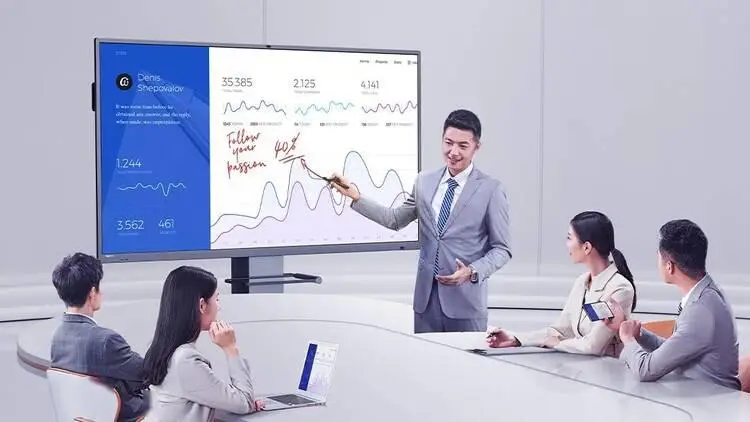
Before we dive into this trend, let’s first clarify what a touchscreen monitor actually is. Essentially, it’s a display with a touch-sensitive surface that allows users to interact with the display using their fingers or a stylus. This technology provides a more intuitive and engaging user experience than traditional displays that rely solely on a mouse and keyboard.
How does a monitor touchscreen work?
The underlying technology behind monitor touchscreens Although the methods vary, the basic principle is the same. When a user touches the screen, the device records the coordinates of the touch and processes the input accordingly. This can be achieved through a variety of methods, including capacitive, resistive, infrared, and surface acoustic wave technologies.
Types of Display Touchscreen Technology
· Capacitive touchscreen: This is the most common type and uses an electric field to detect touch. It is highly sensitive and accurate, but is sensitive to moisture and gloves.
· Resistive touchscreen: This technology uses a layer of conductive material that deforms when pressed, thus forming a circuit. It is less sensitive than a capacitive touchscreen and less durable.
· Infrared touchscreen: This type uses a grid of infrared sensors to detect touch. It is suitable for outdoor environments and can be used with gloves.
· Surface acoustic wave touchscreen: This technology uses sound waves to detect touch and is highly durable and resistant to environmental factors.
Advantages and Disadvantages of Display Touchscreen Technology
Display touchscreens offer a variety of benefits, including:
· Improved user experience: Touchscreens offer a more natural and intuitive way to interact with a computer.
· Improved productivity: Touchscreens can simplify tasks and improve efficiency, especially in industries such as retail, healthcare, and education.
· Versatility: Display touchscreens can be used in a variety of applications, from gaming and entertainment to business and education.
However, there are some disadvantages to consider:
· Higher cost: Display touch screens are generally more expensive than traditional displays.
· Potential for damage: Touch-sensitive surfaces are more susceptible to scratches and cracks.
· Limited viewing angle: Some touch screen technologies may have limitations in terms of viewing angle.
Growing popularity of touch screen displays
The demand for display touch screens has been growing steadily in recent years, driven by a number of factors. A major reason for this trend is the growing number of applications where touch screen technology can provide significant benefits.
Applications of display touch screen technology
· Online gaming: Touch screens provide a more immersive gaming experience, especially for casual and interactive games.
· Education: Touch screens can be used to create interactive learning environments, making education more engaging and effective.
· Business scope: Display touch screens are becoming increasingly popular in commercial environments, from retail stores to corporate offices.
· Healthcare: Touch screens are used in medical facilities for tasks such as handling patient records, medication management, and diagnostic tools.
Market trends and growth forecasts
The display touch screen market is expected to continue to grow at a significant rate. As more industries adopt touch screen technology, the demand for these products will only increase. Factors such as technological advancements, rising consumer demand, and favorable economic conditions are driving the growth of this market.
Key Factors Driving the Demand for Display Touchscreens
Several factors are contributing to the growing popularity of display touchscreens:
Improved User Experience
Touchscreens offer a more intuitive and engaging user experience than traditional displays. This is particularly important in applications where ease of use is critical, such as retail, education, and healthcare.
Increasing Productivity
Display touchscreens can simplify tasks and improve efficiency. For example, in a retail setting, touchscreens can be used for inventory management, customer service, and point-of-sale transactions.
Growing Consumer Demand
As consumers become more accustomed to touchscreen technology in their personal lives, they are increasingly demanding similar capabilities in their work and home environments.
Technological Advancements
Continuous advancements in touchscreen technology, such as improved sensitivity, accuracy, and durability, are making these products more attractive to consumers and businesses.
Future Trends and Innovations in Display Touchscreen Technology
The future of display touchscreen technology is promising, with several exciting trends and innovations on the horizon:
Flexible, Foldable Touchscreen Displays
Flexible and foldable touchscreen displays are expected to become more popular in the coming years. These displays offer a more versatile and portable user experience, making them ideal for applications such as gaming, entertainment, and education.
Multi-touch and gesture recognition
Multi-touch and gesture recognition technology allows users to interact with touchscreen devices in a more natural and intuitive way. The technology is already used in smartphones and tablets, and is likely to become more common in monitor touchscreens.
Convergence with AI and VR
The integration of artificial intelligence (AI) and virtual reality (VR) with monitor touchscreens will open up new possibilities for user interaction and immersion. AI can be used to personalize the user experience, while VR can create realistic and engaging environments.
Sustainable and eco-friendly touchscreen solutions
As people’s attention to environmental sustainability continues to grow, the demand for sustainable and eco-friendly touchscreen solutions is also increasing. This includes the development of energy-efficient touchscreen technology and the use of recycled materials.
Conclusion
Monitor touchscreen technology is rapidly evolving, providing new opportunities and possibilities across industries. With the growing demand for intuitive and engaging user experiences, monitor touchscreens are expected to become an even more important part of our digital lives. Click here. Contact our sales team to learn more about touchscreens.
FAQs
- What is the difference between capacitive and resistive touchscreens? Capacitive touchscreens are more sensitive and accurate, while resistive touchscreens are less sensitive and less durable.
- Can I use a stylus with the monitor touch screen? Yes, most monitor touch screens are stylus compatible.
- Is the monitor touch screen suitable for outdoor use? Some monitor touch screens, such as those with infrared technology, are suitable for outdoor environments.
- How do I clean the monitor touch screen? Use a soft, lint-free cloth and mild detergent to clean the monitor touch screen. Avoid using harsh chemicals or abrasive materials.