
In today’s digital world, video walls have become a popular choice for businesses and organizations looking to make a big impact. But what exactly is a video wall, and how much does it cost? If you’re curious about this dynamic display technology and considering investing in one, you’ve come to the right place. In this article, we’ll break down everything you need to know about video walls, including their components, uses, and the factors that influence their cost.

A video wall is a large display made up of multiple screens or panels that work together to present a single, cohesive image or video. These screens are typically arranged in a grid formation and can be configured in various sizes and shapes to suit different spaces and needs. Video walls are used in a variety of settings, from control rooms and conference centers to retail spaces and entertainment venues.
Components of a Video Wall
A video wall consists of several key components:
- Display Panels: These are the individual screens that make up the video wall. They can be LCD, LED, or projection-based, each offering different benefits in terms of brightness, resolution, and energy efficiency.
- Video Wall Controller: This is the brain of the operation. A controller manages the content displayed across the panels, ensuring a seamless and synchronized image or video.
- Mounting System: To support the weight of the panels, a sturdy mounting system is essential. This system allows for easy installation and maintenance.
- Software: Specialized software is used to control the content and manage the settings of the video wall. This can include features like remote access, scheduling, and content management.
Uses of Video Walls
Video walls are incredibly versatile and can be found in a wide range of environments:
- Corporate Settings: Used for presentations, video conferencing, and data visualization in boardrooms and lobbies.
- Retail: Attracts customers and displays dynamic advertisements in stores and shopping malls.
- Entertainment: Enhances the viewer experience in theaters, concert halls, and sports arenas.
- Control Rooms: Provides real-time data and monitoring in security, traffic management, and emergency response centers.
Factors Influencing the Cost of a Video Wall
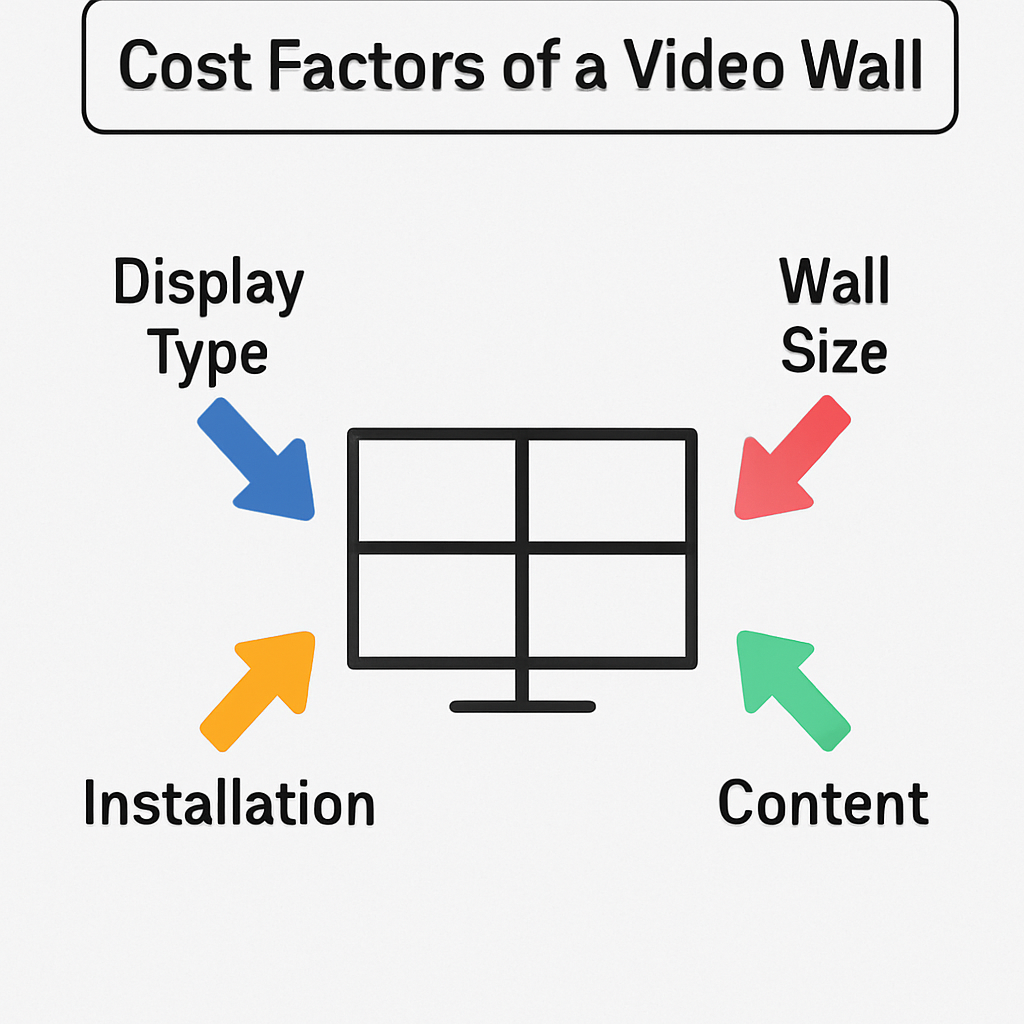
The cost of a video wall can vary widely depending on several factors:
1. Type of Display Technology
The choice between LCD, LED, or projection panels greatly impacts the cost. LED panels, known for their vibrant colors and high brightness, tend to be more expensive than LCD options. However, they offer better performance in terms of longevity and energy efficiency.
2. Size and Resolution
Larger video walls with higher resolutions (such as 4K or 8K) will naturally cost more than smaller, lower-resolution setups. The number of panels required and the quality of the image are significant cost determinants.
3. Installation and Maintenance
The complexity of installation, including the need for custom mounting solutions or structural modifications, can add to the overall cost. Regular maintenance to ensure optimal performance and longevity is another cost to consider.
4. Additional Features
Advanced features like touchscreen capabilities, interactive software, and remote monitoring can increase the price. These features enhance user experience and functionality, making them worthwhile investments for many businesses.
Estimating the Cost of a Video Wall
So, how much does a video wall actually cost? It’s essential to consider both the initial purchase price and the total cost of ownership, which includes installation, maintenance, and potential upgrades.
Initial Purchase Price
For a basic setup, a small LCD video wall might start around $10,000 to $20,000. Larger, more advanced LED walls can range from $50,000 to $200,000 or more, depending on the specifications.
Installation Costs
Installation costs can vary based on the complexity of the setup and the locati0n. Simple installations might cost a few thousand dollars, while more complex projects requiring structural changes can reach $10,000 or more.
Ongoing Maintenance
Regular maintenance is crucial to keep your video wall functioning optimally. Budgeting for periodic inspections, cleaning, and potential repairs can add up to several thousand dollars annually.
Getting the Best Value for Your Investment

When investing in a video wall, it’s important to balance cost with quality and functionality. Here are some tips to ensure you get the best value:
- Define Your Needs: Clearly outline what you need from a video wall. Consider factors like the size of the space, the primary use, and any specific features you require.
- Research Options: Compare different technologies and providers. Look for reviews and case studies to ensure you choose a reputable brand and model.
- Consider Total Cost of Ownership: Factor in not just the initial cost but also the long-term expenses related to maintenance and upgrades.
- Seek Professional Advice: Consult with experts or hire a consultant to guide you through the selection and installation process. This can help avoid costly mistakes and ensure a smooth implementation.
Conclusion
Video walls are powerful tools that can transform how businesses and organizations communicate and engage with their audiences. While the cost of a video wall can be significant, understanding the factors that influence pricing can help you make an informed decision that aligns with your goals and budget.
By carefully considering your needs, researching options, and planning for the total cost of ownership, you can make a sound investment that delivers long-term value. Whether you’re enhancing a corporate boardroom or creating an eye-catching retail display, a well-designed video wall can make a lasting impression.