
An LCD video wall splicing processor is a crucial component used in the setup and operation of LCD video walls. Here’s an overview of what it does and its importance:
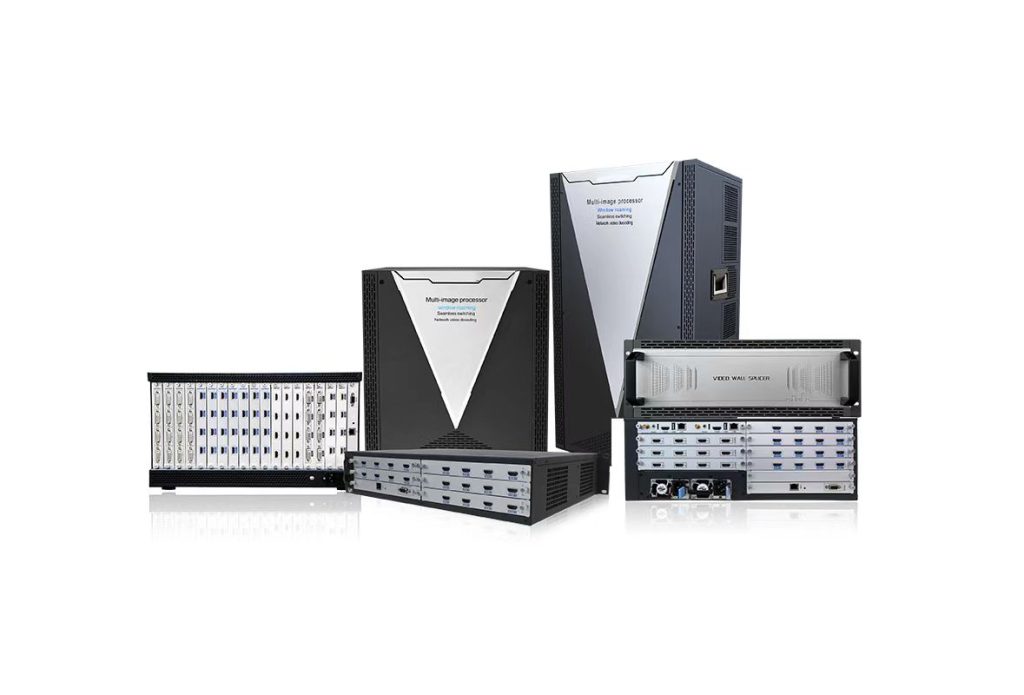
What is an LCD Display Splicing Processor?
An LCD video wall splicing processor is a device that takes multiple video input signals and seamlessly splits them across several LCD panels in a video wall configuration. This processor is responsible for managing how content is displayed across the various screens, ensuring that images and videos are aligned properly and appear as a single cohesive image.
Key Functions of an LCD Video Wall Splicing Processor
- Signal Processing: It processes input signals from various sources (like cameras, computers, or media players) and prepares them for output to the video wall.
- Content Splicing: The processor divides the input signal into sections that fit each individual LCD panel, allowing for a unified display of a larger image or video.
- Bezel Management: Many splicing processors include features to compensate for the bezels of the LCD panels, ensuring that images appear uninterrupted across screens.
- Scaling and Resolution Management: It can scale the video input to fit the resolution of the combined display, maintaining image quality and clarity.
- Multi-Source Switching: Users can switch between multiple video sources seamlessly, which is essential for dynamic presentations and control rooms.
- User Interface: Often, these processors come with user-friendly interfaces or software that allows operators to manage and control the display configurations easily.
Applications
Video wall splicing processors are commonly used in various settings, including:
- Control Rooms: For monitoring security feeds or operational data.
- Retail Environments: For advertising and promotional displays.
- Broadcasting Studios: For displaying live feeds or program content.
- Corporate Settings: For presentations and video conferencing.
Conclusion
In summary, an video splicing processor is vital for creating a visually impactful and functional video wall. By enabling seamless content display and management across multiple screens, it enhances the overall viewing experience in various applications.
If you have more specific questions about its features or applications, feel free to contact us.