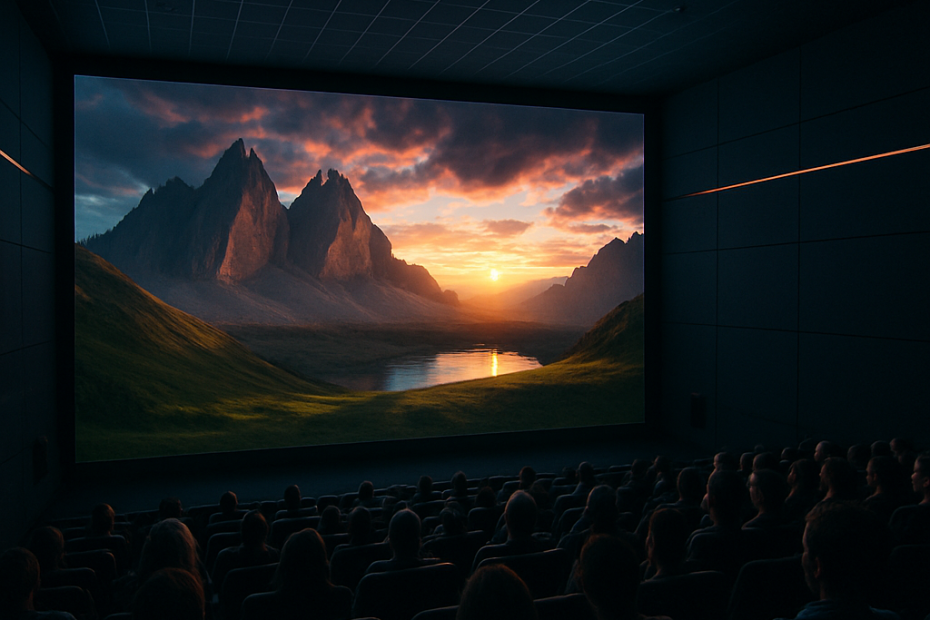
As technological frontiers expand, the realm of visual displays undergoes a transformative evolution, spearheaded by immersive LED displays. This pioneering technology is not merely an incremental advancement; it signifies a paradigm shift in how visual content is consumed, interpreted, and interacted with. By meticulously analyzing the underlying components, potential applications, and the trajectory of this technology, we can envisage a future where immersive display solutions redefine both public and private spheres.

At the heart of immersive LED displays lies a confluence of cutting-edge technologies. The core principle revolves around the usage of light-emitting diodes (LEDs), which provide the foundational element for these displays. Unlike traditional display technologies, LEDs offer superior brightness, color accuracy, and energy efficiency. The ability to manipulate individual diodes allows for unprecedented control over image fidelity and dynamic range, facilitating an immersive viewer experience that is both vivid and lifelike.
Quantum Dot Enhancement
A noteworthy advancement in LED display technology is the incorporation of quantum dots. These nanoscale semiconductor particles emit light of specific wavelengths when excited by energy, facilitating enhanced color reproduction and brightness levels. As a result, quantum dots have been pivotal in advancing the capabilities of immersive LED displays, enabling them to render a broader spectrum of colors with remarkable precision.
MicroLED and MiniLED Innovations
Recent innovations have introduced MicroLED and MiniLED technologies, which further augment the potential of immersive displays. MicroLEDs, with their minuscule pixel size, promise superior resolution and contrast ratios, making them ideal for applications requiring high detail and clarity. Meanwhile, MiniLED backlighting offers an improved local dimming capability, enhancing the overall dynamic range and contrast of displays.
Applications and Implications of Immersive Display Solutions
The applicability of immersive LED displays transcends conventional boundaries, unlocking new dimensions in multiple domains.
Transformative Impact on Entertainment and Media

In the entertainment industry, immersive LED displays are revolutionizing the cinematic experience. By offering unparalleled visual fidelity, these displays facilitate a more engaging and immersive viewing experience, transcending the limitations of traditional projection methods. The integration of LED technology in virtual reality (VR) and augmented reality (AR) platforms further amplifies its potential, enabling users to interact with digital environments in unprecedented ways.
Architectural and Urban Integration
The architectural sphere is witnessing a profound transformation through the integration of immersive display solutions. Buildings equipped with LED façades can dynamically alter their appearance, enabling them to display digital art or serve as mediums for interactive public information. Such applications not only enhance the aesthetic appeal of urban landscapes but also serve functional purposes, such as real-time data dissemination during public events or emergencies.
Corporate and Educational Environments
In corporate and educational settings, immersive LED displays facilitate enhanced collaboration and interaction. By enabling high-resolution, interactive presentations, these displays foster an engaging and informative environment conducive to learning and decision-making. The adaptability of LED displays to various form factors and sizes further underscores their utility in diverse institutional contexts.
The Future Trajectory of LED Display Technology
As we contemplate the future of immersive LED displays, several trends and innovations are poised to shape their evolution.
Integration with Artificial Intelligence and Machine Learning
The convergence of LED display technology with artificial intelligence (AI) and machine learning (ML) presents exciting possibilities. By leveraging AI algorithms, displays can dynamically adjust content based on viewer preferences, environmental conditions, or real-time analytics. This adaptability enhances the viewer experience, ensuring content is both relevant and captivating.
Sustainability and Energy Efficiency

by Possessed Photography (https://unsplash.com/@possessedphotography)
In light of growing environmental concerns, the sustainability of LED display technology is paramount. Advances in energy-efficient LEDs and the development of recyclable materials contribute to reducing the ecological footprint of display solutions. This focus on sustainability aligns with broader global efforts to minimize energy consumption and environmental impact.
Augmented Interactivity and Sensor Integration
Future iterations of immersive LED displays are anticipated to incorporate advanced sensor technologies, enabling greater interactivity. Gesture recognition, touch sensitivity, and biometric integration are among the features that will empower users to engage with displays in more intuitive and personalized ways. This heightened interactivity will not only enrich user experiences but also expand the applicability of LED displays across various sectors.
Challenges and Considerations
Despite the promising outlook, several challenges must be addressed to fully realize the potential of immersive LED displays.
Cost and Accessibility
The initial investment required for LED display installation and maintenance remains a significant barrier for widespread adoption. Efforts to reduce costs through technological advancements and economies of scale are crucial in ensuring broader accessibility and deployment.
Technological Standardization
The absence of universal standards for LED display technology poses challenges in terms of compatibility and interoperability. Establishing industry-wide standards will be pivotal in fostering consistency and collaboration among manufacturers and developers.
Conclusion
In conclusion, the future of immersive LED displays is replete with possibilities, driven by advancements in technology, applications across diverse sectors, and a commitment to sustainability. As these displays continue to evolve, they will undoubtedly reshape the visual landscape, offering new avenues for creativity, interaction, and engagement. The journey toward a fully immersive digital environment is well underway, and the prospects it holds are as boundless as the technology itself. Through concerted efforts in innovation, standardization, and sustainability, immersive LED displays will illuminate the path forward in the digital age.