Choosing the right type of signage for your church is an important decision that can significantly impact how your community perceives and engages with your place of worship. Traditional church signs and LED church signs are two popular options, each with its own set of advantages and considerations. In this article, we’ll explore the differences between these types of signs, weigh their pros and cons, and help you decide which is worth the investment for your church.
Understanding Traditional Church Signs
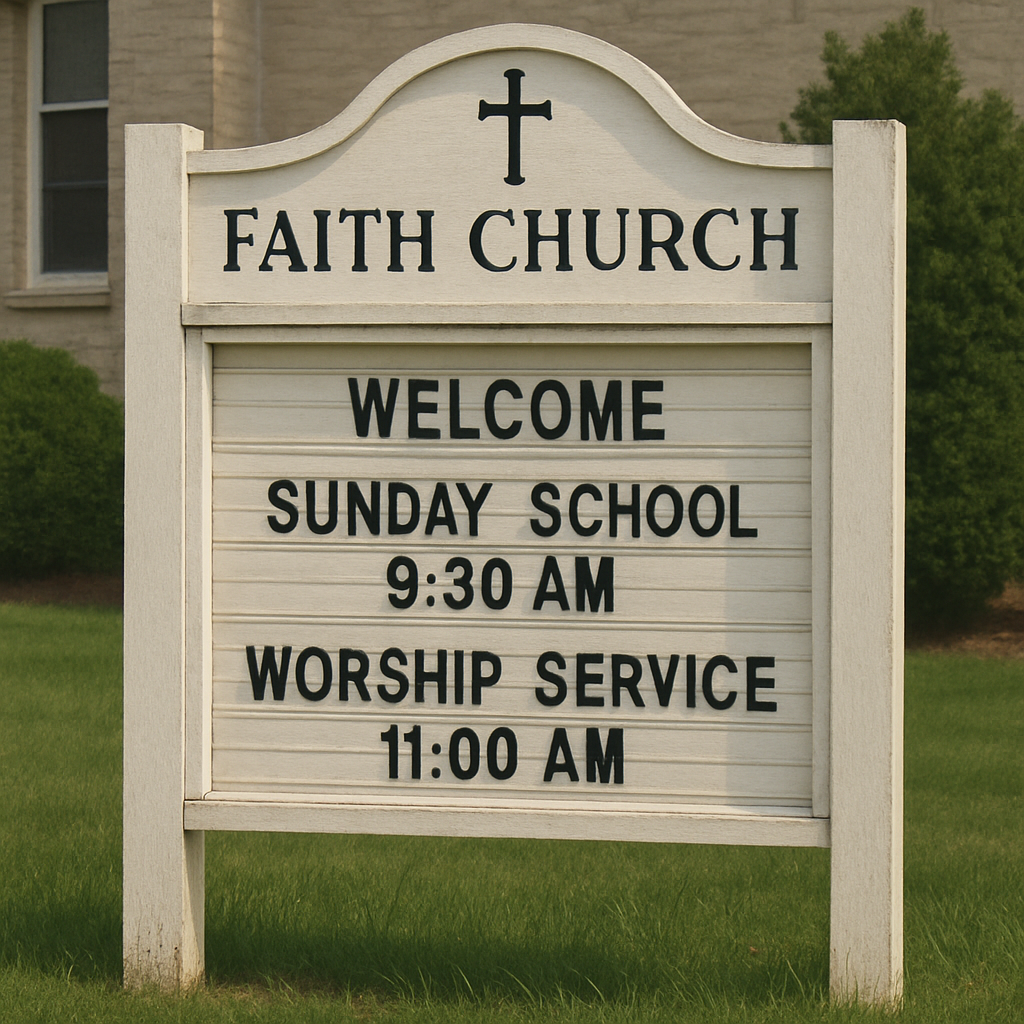
Traditional church signs, often referred to as church marquee signs, have been around for many years. These signs typically consist of a fixed frame with changeable letters or a static display that conveys messages to passersby.
Pros of Traditional Church Signs
- Cost-Effective: Traditional signs are generally more affordable upfront compared to their digital counterparts. This makes them accessible for churches with limited budgets.
- Simple Maintenance: Maintaining a traditional sign is straightforward. You just need to change the letters manually, which doesn’t require any technical skills.
- Classic Appeal: Some congregations appreciate the timeless, classic look of traditional signs, which can convey a sense of history and tradition.
Cons of Traditional Church Signs
- Limited Visibility: The visibility of traditional signs is often dependent on natural light or external lighting, which can be less effective during nighttime or adverse weather conditions.
- Manual Updates: Changing messages requires manual labor, which can be time-consuming and inconvenient, especially in bad weather.
- Limited Messaging Space: The space for displaying messages is often limited, restricting the amount of information you can convey at once.
Exploring LED Church Signs
LED church signs, also known as digital church signs or electronic signage for churches, use modern technology to display dynamic messages. These signs can be programmed to change messages automatically and are illuminated, making them visible day and night.
Pros of LED Church Signs
- High Visibility: LED signs are bright and can be seen clearly in all weather conditions, providing maximum visibility both day and night.
- Dynamic Messaging: With LED signs, you can easily update messages remotely and schedule them to change at specific times, allowing for more engaging and informative communication.
- Energy Efficiency: Despite their brightness, LED signs are energy-efficient, often consuming less power than you might expect.
Cons of LED Church Signs
- Higher Initial Cost: The upfront cost of purchasing and installing an LED sign is higher compared to traditional signs. This can be a significant factor for churches with budget constraints.
- Technical Maintenance: LED signs require some technical know-how for maintenance and updates, which might necessitate hiring a professional or training staff.
- Modern Aesthetic: While some churches appreciate the modern look of LED signs, others may find it clashes with the traditional architecture of their buildings.
Comparing Costs: Traditional vs LED Church Signs
When considering the cost of church signs, it’s crucial to factor in both the initial investment and long-term expenses. Traditional signs are generally cheaper to buy initially, but their ongoing costs (in terms of labor for updates) can add up over time. On the other hand, LED signs have a higher upfront cost but offer savings in labor and flexibility in the long run.
Initial Costs
- Traditional Signs: Prices for traditional church marquee signs can vary widely depending on size and materials, but they typically range from a few hundred to a couple of thousand dollars.
- LED Signs: The cost of outdoor LED church signs can range from a few thousand to tens of thousands of dollars, depending on size, resolution, and features.
Ongoing Costs
- Traditional Signs: Regular manual updates can incur labor costs, particularly if the sign is updated frequently.
- LED Signs: While there are minimal labor costs, there may be occasional maintenance fees, especially if technical issues arise.

Making the Decision: Which is Worth the Price?
Choosing between traditional and LED church signs depends on several factors, including your budget, the desired aesthetic, and how you plan to use the sign.
Considerations for Choosing Traditional Signs
- Budget Constraints: If your church has a limited budget and you prefer to allocate funds to other areas, a traditional sign may be the best choice.
- Preference for Classic Aesthetics: If maintaining a classic look is important to your congregation, a traditional sign will complement your church’s architecture.
Considerations for Choosing LED Signs
- High Visibility Needs: If your church is in a busy area and you need to capture attention both day and night, an LED sign is an excellent option.
- Desire for Dynamic Communication: If you want to engage your congregation and the community with timely and diverse messages, an LED sign offers that flexibility.
Conclusion
Both traditional and LED church signs have their own unique advantages and challenges. Ultimately, the decision comes down to what aligns best with your church’s goals, budget, and community engagement strategy. By understanding the pros and cons of each option, you can make an informed choice that enhances your church’s presence and outreach. Whether you opt for the timeless appeal of traditional signage or the dynamic capabilities of LED technology, the right sign can serve as a powerful tool in your church’s mission to connect with and inspire your community.
ScreenSculpt is a professional commercial display solutions manufacturer based in Shenzhen, founded and led by a technically experienced team. We maintain strong partnerships with leading panel manufacturers such as Samsung, LG, BOE, HKC, Innolux, and CSOT, ensuring access to premium display resources for our digital signage solutions, contact us now!