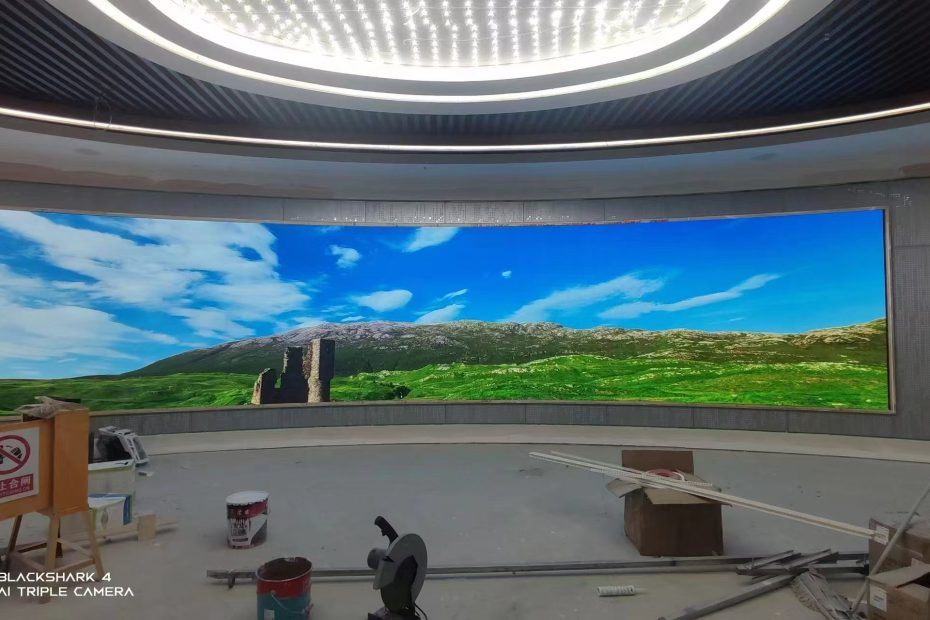
Both SMD (Surface-Mounted Device) and COB (Chip-on-Board) technologies offer unique advantages and limitations. SMD technology is mature and easy to maintain but comes with lower protection and higher power consumption. COB technology, on the other hand, provides superior visual effects, waterproofing, and energy efficiency, but when applied to an LED screen, it can suffer from color inconsistency at large viewing angles, requires more complex maintenance, and comes at a higher cost.

1. Process Overview
- SMD Technology: This process involves encapsulating the light-emitting chip (or wafer) into individual lamp beads, which are then soldered to the PCB (Printed Circuit Board) to form a unit module. These modules are later spliced together to form the complete LED display screen.
- COB Technology: In COB technology, the light-emitting chip is directly soldered onto the PCB, after which the entire unit is coated. The modules are then spliced into a complete LED display screen.
2. Product Differences
01. Image Quality
- SMD Screens: Each individual lamp bead emits light as a point source, resulting in a pixelated or “grainy” effect. These screens often have lower contrast, with a typical contrast ratio not exceeding 10,000:1.
- COB Screens: The entire light-emitting chip is coated, which converts the light source into a surface light source. This produces a smoother, more consistent visual effect with no noticeable graininess and reduces eye strain during long periods of viewing. The contrast ratio of COB screens is typically over 20,000:1, offering brighter colors and more detailed visuals, similar to those of an LCD screen.
While the front view of a COB screen offers excellent quality, large-angle side views may show color inconsistency because the lamp beads are not individually sorted by optical performance as in SMD screens.
02. Reliability
- SMD Screens: SMD technology provides weaker overall protection because the individual lamp beads are mounted separately. This makes the screen more susceptible to damage, including knocking and dropping of the lamp beads. It also offers limited waterproof, moisture-proof, and dust-proof capabilities, and cannot be wiped easily. However, maintenance is easier as individual lamp beads can be replaced on-site.
- COB Screens: COB technology offers superior protection, with an overall coating that provides strong resistance to impact, water, and moisture. The front of the screen can achieve an IP65 rating for excellent durability. It can even be cleaned with a wet cloth. However, due to the coating, on-site repairs are not feasible, and any issues must be addressed at a factory using specialized equipment.
03. Energy Efficiency
- SMD Screens: SMD screens typically use positive-mounted processes, where the leads block part of the light source. This results in higher power consumption when compared to COB technology.
- COB Screens: COB screens generally use flip-chip technology, which eliminates light source blocking, resulting in lower power consumption for the same level of brightness. The higher transparency of the coating further boosts the energy efficiency of COB screens.
04. Cost
- SMD Screens: SMD technology has a more complex production process, but the technical threshold is lower, with over a thousand manufacturers nationwide. This leads to greater competition and mature technology, making SMD screens more affordable.
- COB Screens: The production process for COB technology is more advanced, with fewer than 20 manufacturers capable of R&D and manufacturing in this space. Although the theoretical cost of COB screens is lower, the yield rate is still relatively low, leading to higher costs for screens with pixel pitch smaller than P1.2.
In summary, choosing between SMD and COB technology depends on your specific needs:
- SMD is a cost-effective, reliable option with easier maintenance, but with lower image quality and energy efficiency.
- COB offers superior visual performance, better energy efficiency, and durability but comes at a higher initial cost and more complex maintenance requirements.