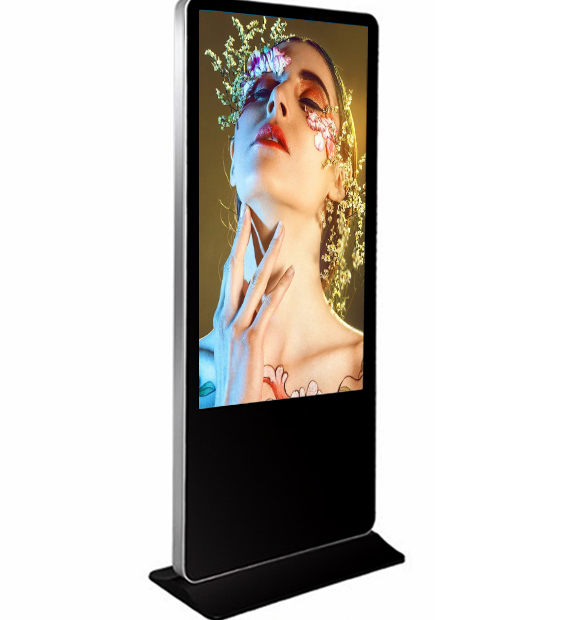
In today’s competitive retail landscape, capturing customer attention is everything. As static printed posters give way to dynamic digital displays, retailers face a key decision: LED or LCD digital posters? Both offer significant advantages over traditional media, but they serve different purposes and environments.
This comprehensive guide breaks down the strengths, weaknesses, and ideal applications of each technology—helping you choose the right solution for your retail space.

Catalogue
- Understanding the Core Technology of LCD and LED
- Head-to-Head Comparison
- Retail Applications: Which to Choose and When
- The Future of Digital Retail Displays
- Decision Checklist for Retailers
- FAQ
- Conclusion
Understanding the Core Technology of LCD and LED
LED (Light Emitting Diode) Posters:
- Composed of tiny LED modules that emit their own light.
- No backlight required; each pixel is a light source.
- Common types: Fine-pitch indoor LED, flexible LED, transparent LED.

LCD (Liquid Crystal Display) Digital Posters:
- Use a liquid crystal layer to block or allow light from a backlight (usually LEDs).
- Require constant backlighting.
- Common types: Commercial-grade LCD displays, all-in-one digital signage players.

| Feature | LED Digital Poster | LCD Digital Poster |
|---|---|---|
| Optimal Viewing Distance | 1 meter+ | 0.3 – 3 meters |
| Brightness | Excellent (5000+ nits) | Good (500-1500 nits) |
| Resolution | Medium-High (depends on pixel pitch) | Very High (4K/8K) |
| Shape Flexibility | Fully Customizable | Standard Rectangle |
| Average Lifespan | 8-10 years | 5-7 years |
| Upfront Cost | Higher | Moderate |
| Power Consumption | Medium-High (varies with content) | Medium (constant backlight) |
Head-to-Head Comparison
1. Image Quality & Viewing Experience
- LED: Superior contrast ratios (up to 10,000:1), vibrant colors, excellent for fast-moving video content. Best for impact.
- LCD: Typically higher native resolution (4K/8K), sharper for fine details and text up close. Best for clarity.
2. Brightness & Visibility
- LED: Exceptionally bright (5,000–8,000 nits), completely visible in direct sunlight. Perfect for storefronts and bright atriums.
- LCD: Lower brightness (500–1,500 nits). Can suffer from glare and reflections in well-lit areas.
3. Design Flexibility
- LED: Can be customized into curved columns, arches, irregular shapes, and even transparent displays. Enables creative architectural integration.
- LCD: Limited to standard rectangular formats, but offers sleek, ultra-thin profiles for wall mounting.
4. Size & Seamlessness
- LED: Truly seamless in large sizes. No bezels, creating an immersive, uninterrupted canvas.
- LCD: Bezel gaps are visible in video walls. However, ultra-narrow bezel models minimize this.
5. Durability & Lifespan
- LED: Longer lifespan (up to 100,000 hours). Individual modules can be replaced easily. More resistant to image burn-in.
- LCD: Shorter backlight lifespan (~50,000 hours). Susceptible to image retention if static content is displayed too long.
6. Energy Consumption
- LED: Consumption varies with content (darker content uses less power). Modern models are increasingly energy-efficient.
- LCD: Generally lower and more consistent power draw, as the backlight is always on.
7. Cost Considerations
- Upfront Cost: High-resolution, fine-pitch LED is significantly more expensive than commercial LCD.
- Total Cost of Ownership (TCO): LED’s longer lifespan and lower maintenance can offer better value over 5+ years.
8. Content Management
Both support modern Content Management Systems (CMS) for:
- Remote scheduling and updates
- Integration with sensors, cameras, and POS data
- Real-time content triggers (e.g., weather, inventory)
Retail Applications: Which to Choose and When
Choose LED Digital Posters If:
- Your location has high ambient light (sunny windows, atriums).
- You need a large, seamless display for a video wall or feature wall.
- You want creative shapes (curved, circular, wrapping a column).
- The goal is maximum visual impact and brand spectacle (e.g., flagship stores, entrances).
- Displaying high-motion promotional videos is a priority.
Choose LCD Digital Posters If:
- Viewers will be close to the screen (point-of-sale, product showcases, aisle ends).
- You need to display high-resolution graphics, pricing, or detailed text.
- You prefer a lower initial investment.
- You need a standard size/shape for easy mounting in multiple locations.
- Content is mostly static or mixed media with less fast motion.
The Future of Digital Retail Displays
- Interactivity: Touch, gesture control, and mobile integration are becoming standard.
- Data-Driven Personalization: Screens changing content based on audience demographics, time of day, or live inventory.
- Transparent & Flexible Displays: Transparent LED is revolutionizing store windows, showing products behind dynamic content.
- Sustainability: Energy-efficient models and longer-life components are a growing focus.
Decision Checklist for Retailers
Answer these questions to guide your choice:
- Primary Goal: Brand awareness/experience or product information/sales?
- Viewing Conditions: Bright or controlled lighting? Close or distant viewing?
- Content Type: Fast video, animations, or detailed graphics/text?
- Installation Space: Standard wall or unique architectural opportunity?
- Budget: Focus on upfront cost or long-term (5-year) value?
- Scale: One iconic display or a network of dozens of screens?
FAQ
Which is more energy-efficient, LED or LCD?
It depends on usage. LCD power draw is relatively constant due to the always-on backlight. LED power consumption varies with content—darker images use less power. In typical retail use, modern fine-pitch LED displays have comparable efficiency to LCDs. Always check specific energy ratings and product specs.
What should I choose for a sun-drenched storefront window?
Definitely choose a High-Brightness LED display. LCDs suffer from severe glare and reflection in direct sunlight, drastically reducing visibility. Professional window LED screens offer 5000-8000 nits brightness, ensuring vibrant visuals even at noon. Transparent LED screens are an innovative option for windows, displaying digital content without completely blocking the view inside.
How can I start if I have a limited budget?
A: We recommend a phased implementation strategy:
- Phase 1: Install 1-2 high-quality LCDs at key conversion points (checkout, top-selling product areas).
- Phase 2: Expand the LCD network to other areas based on ROI data.
- Phase 3: Invest in a medium-sized LED attraction screen at the entrance.
This approach controls risk while allowing for continuous optimization.
Is there a big difference in content production cost?
A: Both screens can use the same core assets but require optimization:
- For LED: Design for viewing distance, avoid fine text; ideal for dynamic, bold visuals.
- For LCD: Leverage high resolution for detail; ideal for mixed text and imagery.
Budget 15-25% of total project cost for initial content creation, plus 5-10% monthly for updates and maintenance.
Which is more complex to install and maintain?
LCD installation is simpler—typically wall or stand mounting with straightforward cabling. LED installation requires a professional team for structural support, power distribution, and signal calibration. For maintenance, LCDs often require whole-unit repair/replacement, while LEDs allow for module-level fixes, which can mean lower long-term costs despite more complex installation.
Conclusion
The “better” technology depends entirely on your specific retail objective and environment.
- For Wow Factor & Large Spaces: LED is King. Its brightness, seamlessness, and flexibility create unforgettable brand moments.
- For Clarity & Scalability: LCD is the Workhorse. It delivers cost-effective, high-resolution information at scale.
Pro Tip: Many successful retailers use a hybrid strategy. Use a large, bold LED display at the entrance to stop traffic and set the brand mood. Then, deploy networked LCD screens throughout the sales floor for pricing, promotions, and product details to guide the purchasing journey.
Remember, technology is only the canvas. Compelling content is what truly engages customers. Invest in high-quality, relevant visuals and messaging that resonates with your audience.