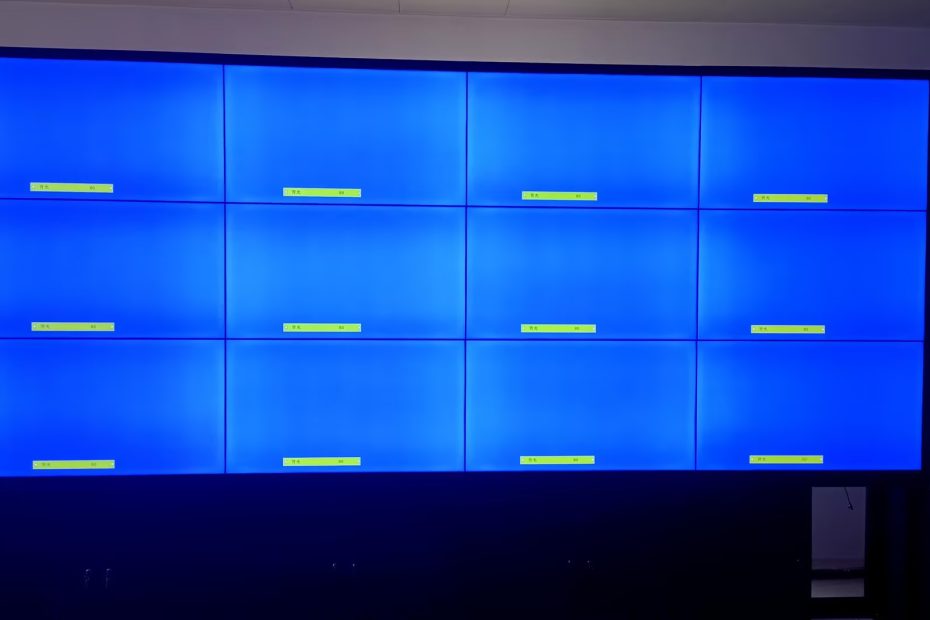
In the digital age, large-screen display technology is increasingly coming into focus, with LCD splicing screens and LED displays emerging as two prominent stars. Each excels in different domains, boasting unique working principles, product performances, and characteristics. Large Format LCD Displays, in particular, offer remarkable clarity and versatility. Let’s delve into these two display technologies and explore their distinctions and strengths.

1. Working Principle: Distinct Approaches with Unique Benefits
As implied by its name, an LCD video wall comprises multiple LCD units seamlessly joined together. Its operation relies on a microcontroller system paired with an LED backlight. Through control signals from the integrated circuits, the system processes various input signals, ultimately rendering vibrant images on the spliced screen. Each LCD unit functions independently, utilizing precise splicing technology for a cohesive visual output. Understanding these principles helps in choosing large format LCD displays.
Conversely, LED displays consist of thousands to hundreds of thousands of individually controllable LED pixels arranged in a grid. Each pixel can adjust brightness and color independently, creating dynamic and colorful images. This working principle allows LED displays to convert electrical energy directly into light, producing a vivid picture through point light sources.
2. Product Performance: High Definition and Brightness
LCD splicing screens are renowned for their full HD resolution and detailed imagery. They excel in color reproduction, contrast, and brightness, achieving industry-leading performance. Supporting various input formats—including VGA, DVI, and HDMI—LCD splicing screens cater to diverse display requirements. Additionally, they offer a long service life and low maintenance costs, making them ideal for large format LCD displays in commercial displays, security monitoring, and similar applications.
LED displays shine with their exceptional brightness and wide viewing angles. As solid-state light sources, LEDs provide brightness levels unmatched by traditional display technologies. Their unique emission properties allow for nearly unrestricted viewing angles, ensuring clarity from various perspectives. With vibrant colors, high saturation, and durability, LED displays are favored for outdoor advertising, sports events, and stage performances.
3. Product Features: Flexibility and Stability
LCD splicing screens are celebrated for their adaptable splicing configurations. They easily accommodate single-screen displays, multi-screen setups, or any combination thereof. Their ultra-thin and lightweight design simplifies installation and maintenance. Furthermore, LCD splicing screens support advanced features like roaming, zooming, and cross-screen digital signal display, offering users a rich array of display options. For many, large format LCD displays provide such flexibility that they meet a wide range of requirements.
On the other hand, LED displays are known for their stability and reliability. As solid-state devices, they are robust and less prone to damage, ensuring high operational stability. Environmentally friendly and energy-efficient, LED displays outperform traditional options in terms of power consumption. They also offer various control methods—such as remote operation and scheduled power management—enhancing user convenience.
4. Conclusion: Two Stars, Each with Its Stage
As leading representatives of large-screen display technology, LCD splicing screens and LED displays each bring distinct advantages and characteristics. LCD splicing screens excel in commercial settings and monitoring centers, showcasing high-definition imagery and flexible configurations. Meanwhile, LED displays dominate outdoor advertising and sports venues, prized for their brightness and expansive viewing angles. Together, these technologies enrich our visual experiences and, moving forward, large format LCD displays are set to continue illuminating the landscape of the big-screen era.