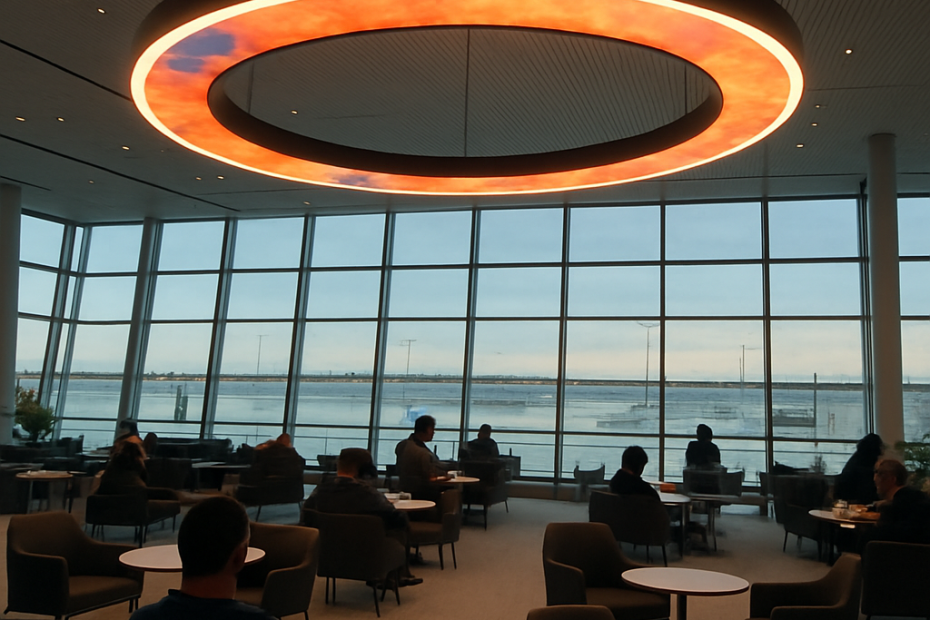
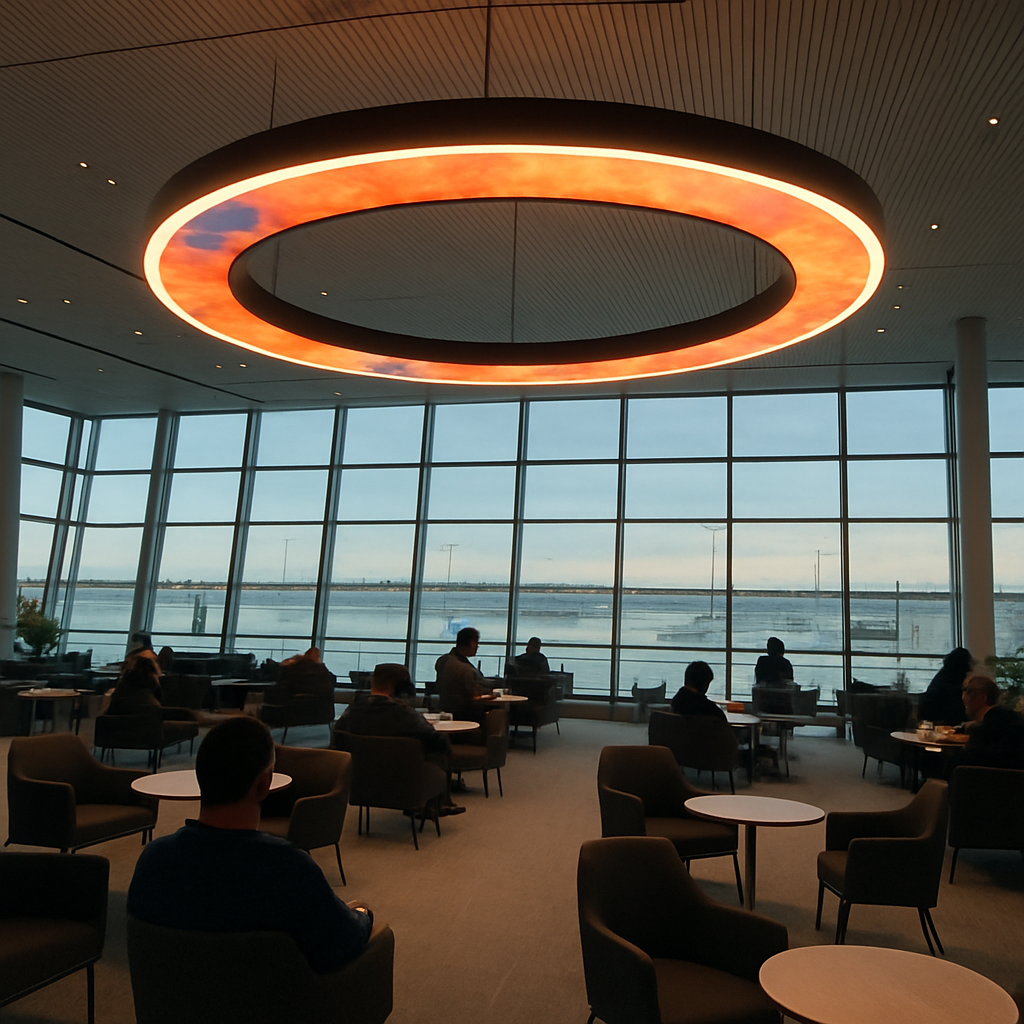
Think about your daily screens—phones, laptops, and TVs are all just glowing rectangles. Now, imagine entering a room where the display isn’t a box, but a “digital halo” floating overhead. This geometric disruption defines the modern circular LED screen. By breaking the rules of traditional angles, these displays create an immersive 360 degree viewing experience that flat monitors simply cannot match.
Why does this shape compel us to look? Studies on visual attention suggest that organic, unexpected forms capture significantly more engagement—up to 40% more—than standard flat panels. In a world full of sharp corners, round digital display technology acts as a magnet for the eye.
Turning rigid tech into a seamless curve requires engineering that feels like magic. From suspending glowing rings to wrapping structural columns, we are witnessing a shift where screens stop being appliances and become architectural art.
Digital Origami: How Tiny Flat Modules Create Seamless Curves and Spheres
Most people assume a curved screen is just a standard monitor that has been heated and bent, but the reality is more like a high-tech mosaic. Manufacturers build these displays by connecting smaller, individual squares called modules, much like snapping together LEGO bricks. By arranging these flat tiles in a faceted circle, builders can create the illusion of a round surface, though you might spot the sharp edges if you stand too close.
To solve that angular roughness, engineers developed the flexible LED module, which behaves less like a hard plastic tray and more like a rubber mat embedded with lights. These pliable sheets can wrap tightly around corners or snake along wavy walls, allowing the technology to physically hug the underlying structure. This flexibility is what separates a blocky, octagon-shaped display from a smooth, true cylinder.
Creating a convincing image on these surfaces depends heavily on “pixel pitch,” which is simply the physical distance between each tiny light. If the dots are too far apart, the image looks grainy and the joining lines between modules become obvious. A tighter pitch packs the lights closer together, creating a continuous digital skin where the individual mechanics disappear.
Achieving this seamless look is the ultimate test of quality, as even a hairline gap in the display can break the immersive effect. Once the hardware becomes invisible, the screen transforms from a piece of equipment into a fluid architectural element. This capability is exactly why designers are starting to look at boring structural columns in a completely new light.
Turning Structural Eyesores into Art: Why Pillars Are the Best Canvas for Cylindrical Displays
Every large building relies on concrete columns to stay standing, but these supports often block views and interrupt the design flow. By wrapping a cylindrical advertising video wall around these obstacles, architects make heavy load-bearing structures appear to vanish behind moving images. Instead of staring at grey cement, visitors might walk past a pillar that looks like a transparent tube filled with swirling galaxies or climbing vines.
Traditional flat screens only work if you are standing directly in front of them, leaving “dead zones” where the image disappears. A round display eliminates this limitation by offering 360-degree visibility, ensuring the content is distinct from every approaching angle. This continuous loop guarantees that whether a person is entering a lobby or rushing to a gate, the visual experience remains unbroken.
Functionality often merges with beauty, as these digital surfaces are revolutionizing how people navigate complex environments. Airports utilize indoor architectural LED art installations on central pillars to guide travelers with animated arrows that flow naturally around the curve. This turns a static obstruction into an active guide that communicates without needing a single printed sign.
Achieving this illusion requires customized round video display mounting systems that hide the metal skeleton beneath the screen, leaving only the light visible. Once the hardware disappears into the architecture, businesses can leverage this technology to grab attention in crowded marketplaces.
Retail’s New 360-Degree Advantage: Using Round Signage to Stop Foot Traffic
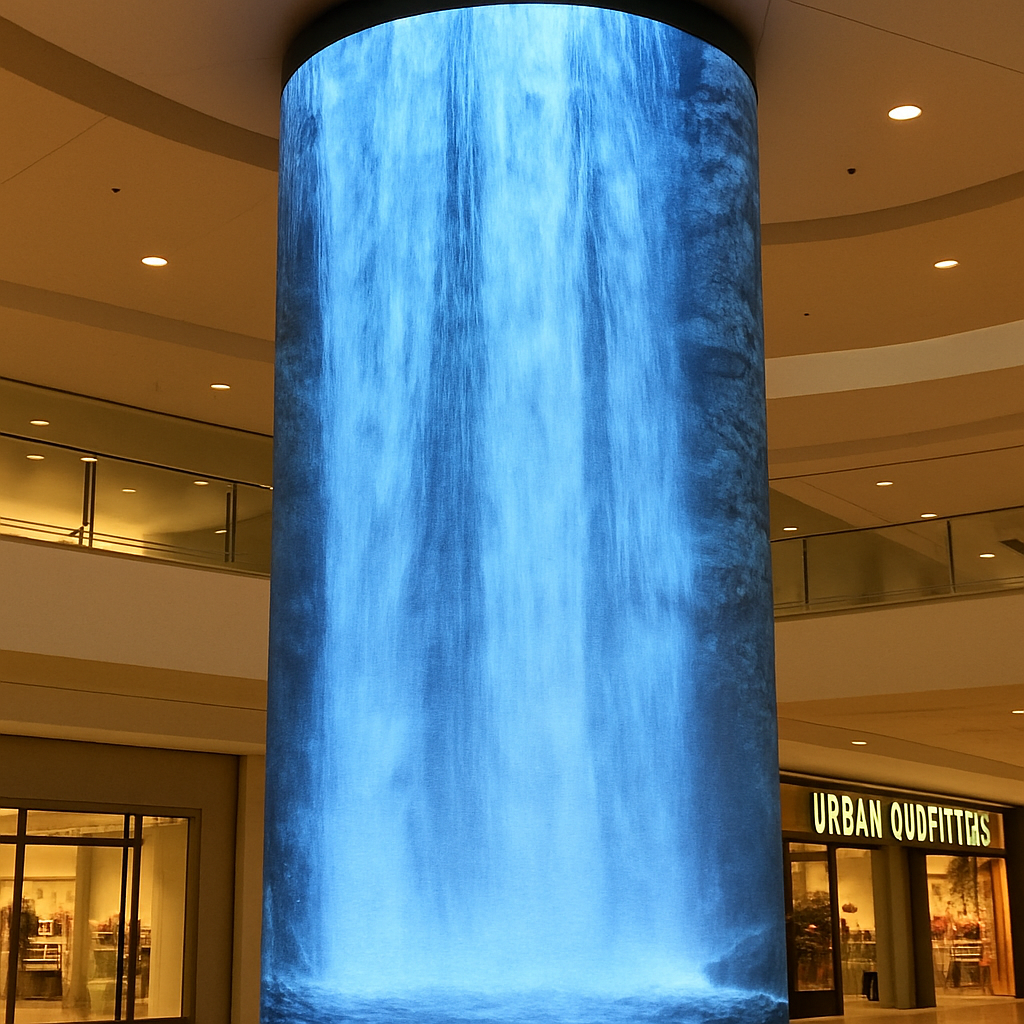
Walk through any modern shopping center, and your eyes will likely glaze over dozens of flat, rectangular posters because we have learned to tune them out. Retailers are now turning to creative retail digital signage design to break this visual monotony and recapture attention. Because our buildings are boxy but nature is full of curves, a glowing ring or sphere stands out as something organic and unexpected. This disruption forces a “double-take,” effectively pausing a shopper’s journey and increasing “dwell time”—the crucial seconds a customer stops to engage before walking away.
Luxury brands often use this geometry to create a “hero display” for their top products. Imagine a new sneaker floating on a pedestal, surrounded by a suspended led circle playing dynamic motion graphics. This framing acts like a digital spotlight or a high-tech jewelry box, instantly elevating the item inside. It signals to the brain that the product is premium, helping to justify a higher price point simply through the sophistication of its presentation.
The advantages of round visual displays extend beyond just aesthetics; they fundamentally alter how people interact with a store environment:
- Magnetic Curiosity: The unexpected shape draws people in from further away than standard screens.
- Natural Scanning: Human eyes follow curves more smoothly than sharp corners, keeping attention on the message longer.
- Perceived Innovation: Shoppers subconsciously associate brands using this technology with being modern and forward-thinking.
However, displaying a video on a curve isn’t as simple as cropping a photo; it requires a specific digital technique to prevent the image from looking warped.
The Gift-Wrap Secret: How Content is Mapped to Curved Surfaces Without Stretching
Imagine taking a movie from your TV and pasting it onto a beach ball; the edges would wrinkle and faces would stretch. This distortion creates a headache when figuring out how to format content for curved surfaces since standard video files are rigid rectangles. Unless the footage is specifically designed for the curve, the high-tech illusion breaks instantly.
Designers solve this using a process similar to wrapping a gift. Engineers create a digital “map” of the screen, then distort the source video in reverse so it straightens out once applied to the curve. This ensures a logo traveling around a ring keeps its proportions rather than looking like a reflection in a funhouse mirror.
Powerful media servers handle this heavy lifting behind the scenes. Unlike a standard player, these computers calculate geometry to bridge the gap between spherical vs flat screen technology. The result is a seamless image that flows like liquid, requiring specialized hardware to handle millions of pixels without stuttering.
Keeping these displays sharp demands bespoke geometric video board maintenance to ensure every module stays aligned. As hardware becomes more precise, the difference between a high-end installation and a budget attempt becomes obvious to the naked eye.
Your Action Plan for Round Tech: Spotting Quality and Future Trends in Your Neighborhood
You no longer just see a glowing ring; you see the clever engineering behind it. What appears to be a single, fluid surface is actually a masterpiece of high refresh rate flexible electronics working in unison. You now understand that hidden access points for maintenance are just as vital as the lights themselves for ensuring the screen’s long lifespan.
The next time you spot a circular led screen in a mall or airport, test your new “expert eye” with this quality checklist:
- Hunt for Seams: A top-tier installation hides the physical gaps between modules completely.
- Check the Flow: Colors should wrap around the curve smoothly without distorting the image.
- The Camera Test: Pull out your phone—quality screens won’t flicker on your video feed.
We are moving toward a world where digital surfaces wrap around architecture rather than sitting on top of it. While massive projects like the Las Vegas Sphere are famous, smaller versions are rapidly appearing in daily life. Even as designers calculate what is the cost of custom round displays, the visual freedom creates value that rectangles simply can’t match.
Contact us to choose your led screen. +86 137 2375 4264