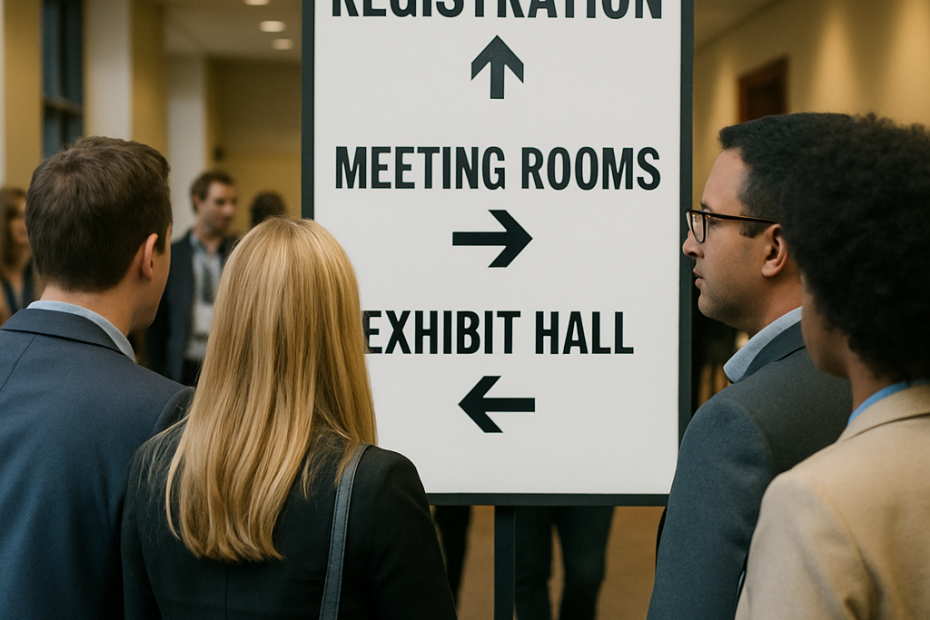
Event signage plays a crucial role in the success of any occasion, whether it’s a corporate conference, wedding, or trade show. The right signs not only direct and inform attendees but also enhance the overall atmosphere and convey the event’s theme and branding. Choosing the perfect event signage can be a daunting task, but with the right guidance, you can make informed decisions that will leave a lasting impression on your guests.

Event signage is more than just a tool for navigation; it’s an extension of your event’s identity. Custom signs provide an opportunity to showcase your brand, set the tone, and engage your audience. Whether you opt for digital signage or traditional printed signs, the key is to ensure they are strategically placed and visually appealing.
Types of Event Signage
There are various types of signage to consider for any event, each serving a unique purpose. Some common types include:
- Directional Signs: Help guide guests to different areas of the venue.
- Informational Signs: Provide essential details about the event schedule, speakers, or activities.
- Branding and Promotional Signs: Highlight sponsors, event names, or brand logos.
- Safety and Compliance Signs: Ensure guests are aware of emergency exits and other safety protocols.
Factors to Consider When Choosing Event Signage
Selecting the appropriate signage involves several factors that can influence your decision. Here’s what you need to consider:
Event Type and Audience
The nature of your event and the demographics of your audience play a significant role in determining the type of signage you’ll need. A corporate seminar may require more formal and informative signs, while a music festival might benefit from vibrant, eye-catching designs.
Venue Layout and Size
Understanding the venue’s layout is essential for effective signage placement. Consider high-traffic areas where signs will be most visible, such as entrances, exits, and main pathways. The size of the venue will also dictate the scale of your signage – larger venues may require bigger signs to ensure visibility from a distance.
Branding and Design
Your event signage should be consistent with your overall branding. Use colors, fonts, and imagery that align with your brand identity. Custom signs can be designed to reflect the theme of the event, creating a cohesive look that resonates with attendees.
Budget Constraints
Budget is always a consideration when planning an event. Determine how much you’re willing to spend on signage and explore options that fit within your budget. Digital signage can be cost-effective in the long run, especially for events that require frequent updates or changes.
Exploring Different Signage Options
With the basics covered, let’s delve into the different signage options available, so you can choose what best suits your event.
Traditional Printed Signs
Printed signs, such as banners, posters, and foam boards, are classic choices that offer versatility and ease of use. They are ideal for outdoor events or situations where digital technology may not be feasible.
- Pros: Cost-effective, easy to produce, wide range of materials.
- Cons: Limited interactivity, static content.
Digital Signage
Digital signage is a dynamic solution that allows for interactive and engaging displays. With the ability to update content in real-time, digital signs are perfect for events that require flexibility.
- Pros: Interactive, customizable, easy to update.
- Cons: Higher initial cost, requires technical setup.
Custom Signs
Custom signs offer a tailored approach to event signage. Whether it’s unique shapes, sizes, or materials, custom signs can make a significant impact and enhance the event experience.
- Pros: Unique, brand-specific, memorable.
- Cons: Potentially higher cost, longer production time.
Best Practices for Effective Event Signage
To maximize the effectiveness of your event signage, consider these best practices:
Keep It Simple
Simplicity is key when it comes to signage. Use clear, concise messaging that can be easily understood at a glance. Avoid cluttering signs with too much information.
Ensure Visibility
Place signage at eye level and ensure it’s well-lit, especially in dimly lit venues. Contrast colors to make text stand out and choose readable fonts.
Use Consistent Branding
Maintain consistency in your signage design to reinforce brand recognition. Consistent use of logos, colors, and fonts helps attendees associate the signs with your event.
Plan for Accessibility
Consider accessibility for all guests by ensuring that signage is easily readable for individuals with visual impairments. Use large fonts and high-contrast colors, and ensure digital signs have audio options if needed.
Final Thoughts
Choosing the perfect event signage requires careful planning and consideration of various factors. By understanding the different types of signage available and aligning them with your event’s goals and audience, you can create an impactful and memorable experience for your guests. Whether you opt for traditional printed signs, digital displays, or custom designs, effective signage will guide, inform, and engage your attendees, ensuring a successful event.
Remember, the right event signage is more than just a directional tool – it’s a reflection of your event’s identity and an integral part of the overall experience. Invest time in planning and designing your signs, and you’ll be rewarded with an event that not only meets but exceeds expectations.
Contact us today to learn more and get a customized quote!