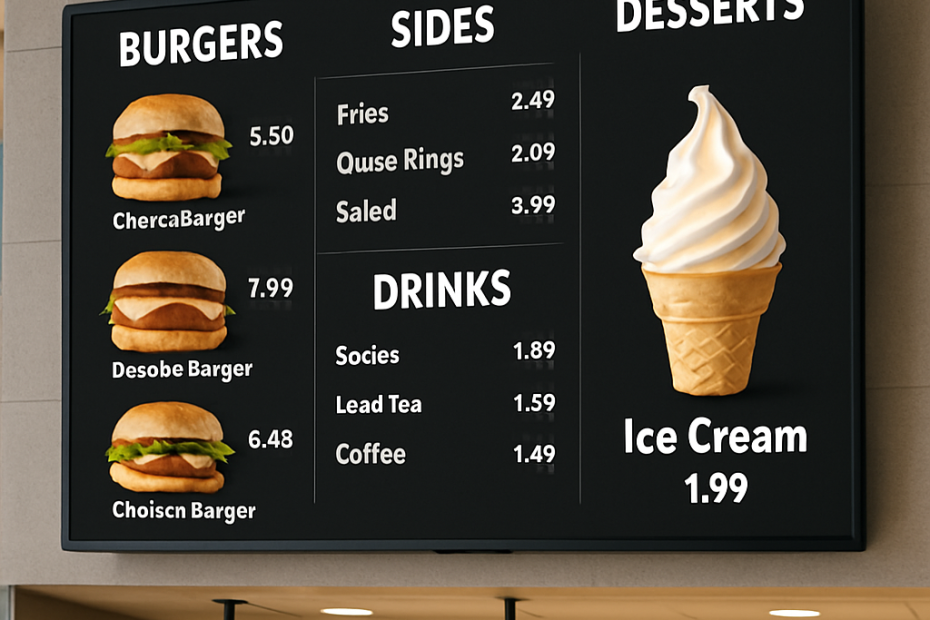
The restaurant industry is constantly evolving, and with the advent of technology, the way menus are displayed is transforming too. E-signage, or digital signage, is becoming a game-changer for restaurants across the globe. From enhancing customer experience to streamlining operations, digital menu boards are revolutionizing the dining landscape.
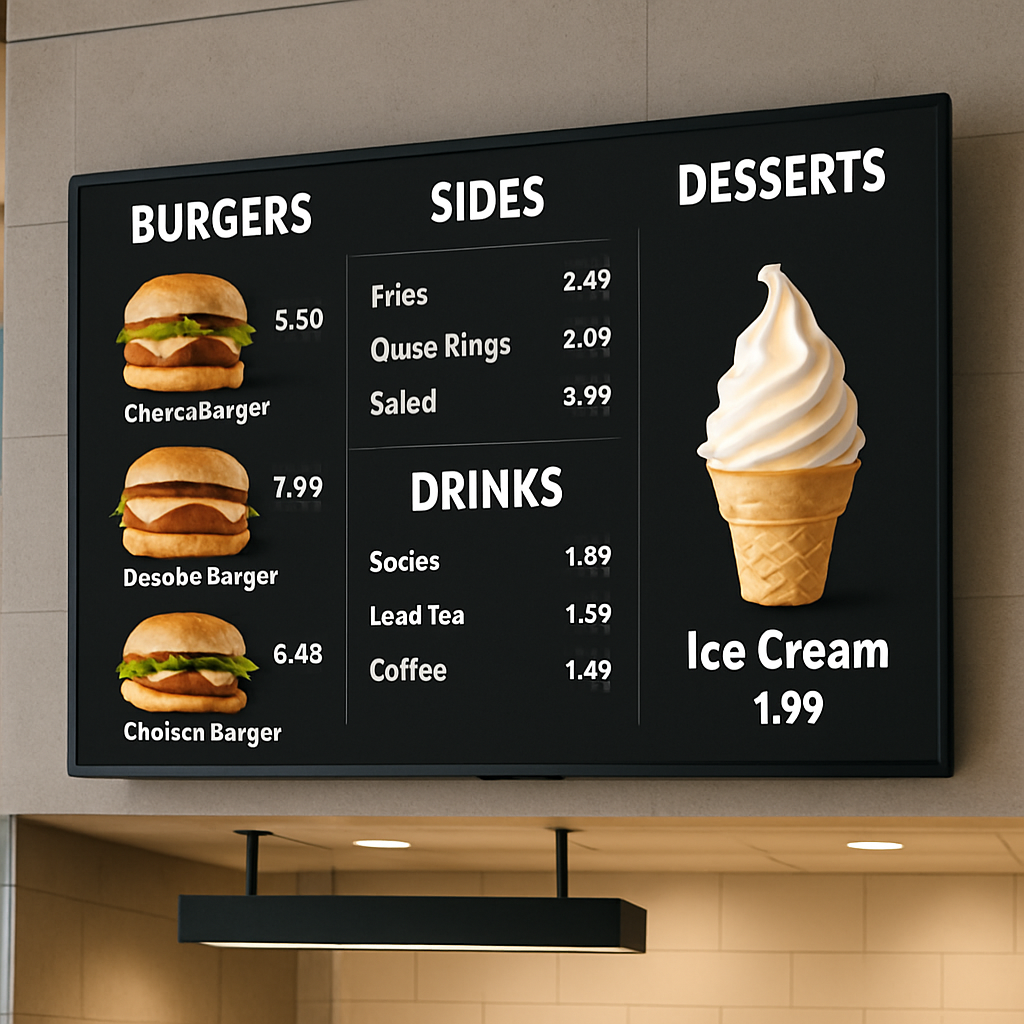
E-signage offers a dynamic and visually appealing way to display menu items. Traditional printed menus are static and can quickly become outdated, but digital signage allows for quick updates and real-time changes. This flexibility is particularly beneficial for restaurants that frequently change their menus based on seasonality or daily specials.
Advantages of E-Signage for Restaurants
E-signage provides numerous advantages over traditional menu boards:
- Flexibility: With digital signage, changes can be made instantly. Whether it’s a price change, a new item, or highlighting a special, updates can be done remotely with just a few clicks.
- Cost-Effective: Over time, digital signage can be more cost-effective than constantly printing new menus or signage. It reduces printing costs and waste.
- Enhanced Customer Experience: Eye-catching visuals and animations can engage customers and make the dining experience more enjoyable. This can lead to increased sales, as customers are more likely to try featured items.
- Improved Efficiency: E-signage can streamline operations by reducing the need for staff to manually update menus. This allows staff to focus more on customer service.
How E-Signage Works in a Restaurant Setting
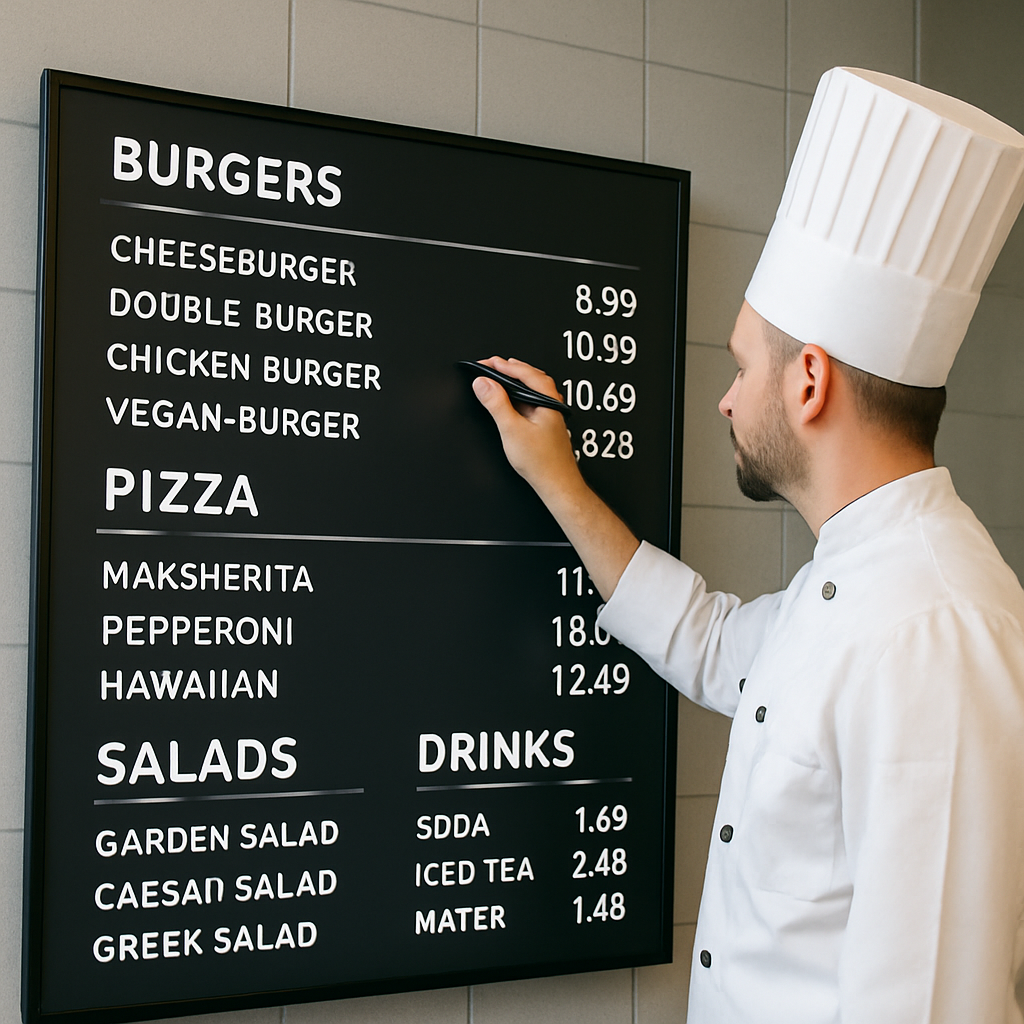
Digital menu boards are typically powered by a content management system (CMS) that allows restaurant owners to control the content displayed. Here’s how it typically works:
- Content Creation: Restaurants create digital content such as images, videos, and animations to display on their e-signage.
- Content Management System (CMS): The CMS allows for the scheduling and management of content. Restaurant owners can set specific times for different menus to appear, such as breakfast, lunch, and dinner.
- Display Hardware: High-quality screens are installed in the restaurant to display the content. These screens are strategically placed to ensure maximum visibility for customers.
Integrating E-Signage with Restaurant Operations
E-signage can be integrated with other restaurant technologies for even greater efficiency. For example, it can be connected to the restaurant’s point-of-sale (POS) system to automatically update inventory levels and remove sold-out items from the menu. This level of integration helps in maintaining accuracy and providing customers with real-time information.
Real-World Examples of E-Signage Success
Numerous restaurants have successfully integrated e-signage into their operations, experiencing significant benefits.
Fast Food Chains
Fast food chains like McDonald’s and Burger King have been early adopters of digital menu boards. They use e-signage to display bright, enticing images of their food and to promote limited-time offers. This not only attracts customers but also speeds up the ordering process by clearly presenting menu options.
Local Cafes and Diners
Local cafes and diners are also seeing the benefits. For example, a small café in New York switched to digital signage and saw an increase in sales of their featured daily specials. The flexibility allowed them to update their menu based on what was fresh and in season, directly translating to an improved customer experience and higher sales.
Upscale Restaurants
Even upscale restaurants are leveraging e-signage. These establishments use digital boards to present their wine lists or chef’s specials. The ability to provide detailed descriptions and pairing suggestions enhances the dining experience and can increase the average ticket size.
Implementing E-Signage in Your Restaurant

If you’re considering implementing e-signage in your restaurant, here are some steps to get you started:
- Assess Your Needs: Determine what you want to achieve with e-signage. Are you looking to improve customer engagement, streamline operations, or both?
- Choose the Right Technology: Select a CMS that suits your restaurant’s needs and budget. Ensure it is user-friendly and offers the features you require.
- Plan Your Content: Decide what type of content you want to display. This could include menu items, promotions, or even customer testimonials.
- Install Display Hardware: Choose high-quality screens that can withstand the restaurant environment. Consider the placement for maximum visibility.
- Train Your Staff: Ensure your staff knows how to operate the e-signage system. This includes updating content and troubleshooting any technical issues.
The Future of E-Signage in Restaurants
The future looks bright for e-signage in the restaurant industry. As technology advances, we can expect even more innovative uses of digital signage. From interactive screens that allow customers to customize their orders to augmented reality experiences, the possibilities are endless.
In conclusion, e-signage is more than just a trend; it’s a powerful tool that can transform the way restaurants operate and interact with customers. By embracing digital signage, restaurants can stay ahead of the competition and provide a memorable dining experience.
ScreenSculpt is a professional commercial display solutions manufacturer based in Shenzhen, founded and led by a technically experienced team. We maintain strong partnerships with leading panel manufacturers such as Samsung, LG, BOE, HKC, Innolux, and CSOT, ensuring access to premium display resources for our digital signage solutions, contact us now!