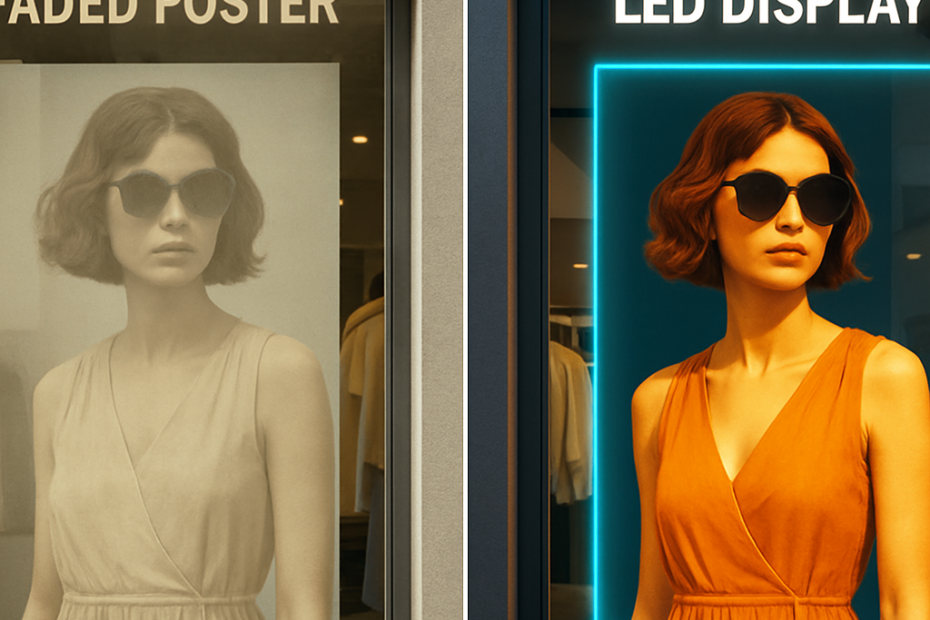
Walk down any busy high street; traditional posters constantly vanish behind window reflections. Consumer researchers term this phenomenon “banner blindness”—our subconscious habit of completely ignoring static, lifeless signage.
Biologically, human eyes prioritize movement over still images. Imagine a clothing boutique losing walk-in customers because daytime sun glare creates a dark, “invisible storefront.” Fortunately, utilizing ways to increase foot traffic with digital visuals instantly cures this physical barrier.
Capturing true “stopping power” means halting pedestrians mid-stride. Bright led displays for retail defeat outdoor glare while providing an engaging, 24/7 marketing presence. Ultimately, the dynamic digital displays retail shops deploy today ensure your storefront never stops inviting shoppers inside.

How High-Brightness Window Displays Outshine the Afternoon Sun
Have you ever walked past a sunny storefront and realized their digital screen just looked like a giant mirror? This “Mirror Effect” happens when ambient light interference—natural sunlight bouncing off glass—overpowers the image. Ordinary TVs cannot cut through this glare, making purpose-built led displays for retail stores essential.
To beat the sun, screens must pass “The Sunlight Test” using a measurement called Nits. Think of Nits as pure lighting power. While a standard living room TV produces about 300 Nits, high brightness window displays for shops need well over 3,000 Nits to remain visible. High Nits push through the glare, ensuring your investment stays vibrant all day.
Smart store owners save money by matching this brightness to their environment instead of automatically overbuying. Use this checklist before purchasing sunlight readable digital posters for windows:
- Direct sunlight exposure: South-facing windows demand maximum Nits to compete with the sun.
- Indirect sunlight: North-facing windows require medium intensity for clear visibility.
- Ambient mall lighting: Indoor storefronts need significantly less brightness to stand out.
Conquering the afternoon glare guarantees your message stops traffic from across the street. Once customers are drawn to the glass, the picture must stay perfectly crisp as they approach, making it critical to choose the right pixel pitch for your floor space.
The ‘Arm’s Length’ Rule: Choosing the Right Pixel Pitch for Your Floor Space
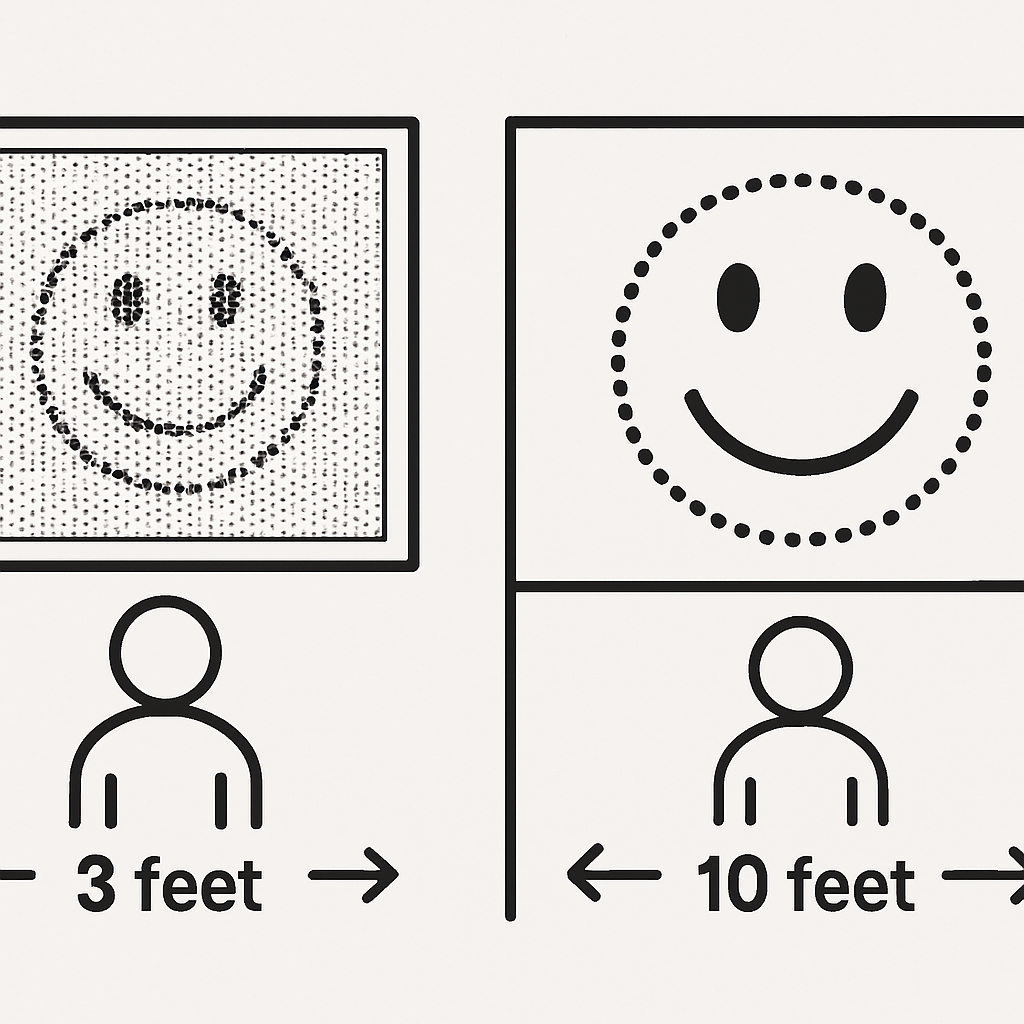
Drawing customers inside is a huge win, but the magic fades if they step close and see glowing beads instead of a clear picture. This “Screen Door Effect” happens when the screen’s dots are spaced too widely for up-close viewing.
Fixing this requires Pixel Pitch, a term for the distance between those dots. Every pixel pitch guide for indoor environments uses a “P-Rating” like P2 to indicate the millimeters of empty space between lights. Lower numbers mean tighter spacing, ensuring razor-sharp images right at your checkout counter.
Figuring out how to choose the right screen size for floor space relies on the easy “1mm per 1 meter” rule. A display viewed from three meters away needs a P3 screen for flawless clarity. Hanging that same expensive screen high up wastes money, since distance naturally blends larger dots.
Smart budgeting matches these led displays for retail directly to your customer walkways. Tailoring resolution to viewing distance maximizes impact without overspending. With dot spacing mastered, the next structural improvement is removing bulky frames entirely.
Why Borderless LED Walls Beat Traditional LCD Signage for Shopping Malls
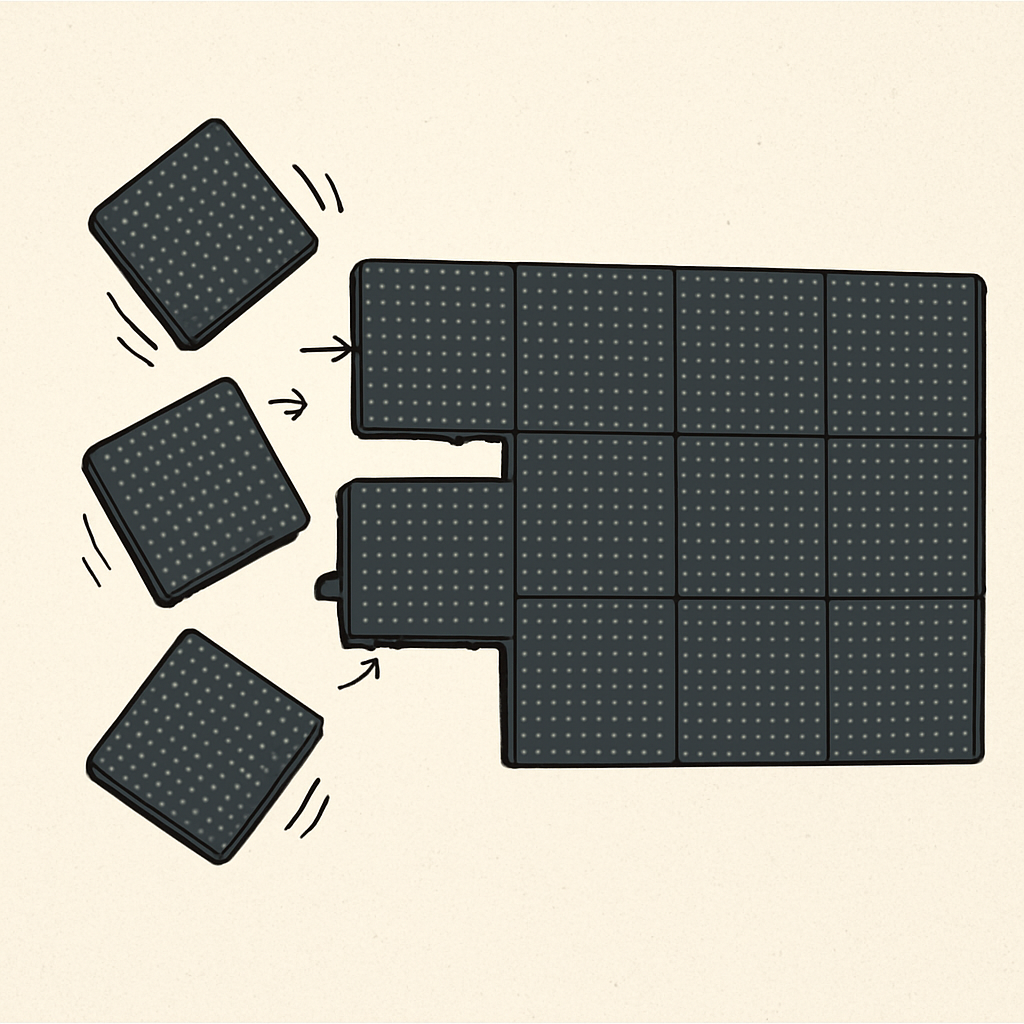
Stacking standard TVs to make a massive display often ruins the magic, because the thick plastic frames—called bezels—slice your images into a distracting grid. When comparing LED vs LCD signage for malls, this borderless design is the biggest difference. Instead of using restricted screens, modular LED displays act like digital building blocks that click together to form one giant, unbroken canvas.
Elevating your visual merchandising with dynamic digital backdrops is incredibly flexible using this modular approach. These panels also leverage the benefits of COB LED technology in retail, using a tough protective coating that easily survives accidental bumps from passing shopping carts. This durable design provides three major advantages:
- No bezels: Tiles lock together to create a completely seamless picture.
- Custom shapes: You can effortlessly wrap screens around pillars or build L-shaped curves.
- Easy maintenance: You only swap out a single damaged tile instead of replacing an entire expensive screen.
Now that you have a beautiful, unbroken canvas, loading your promotions onto it is the final piece of the puzzle. Fortunately, updating your storefront requires zero technical expertise, making content management highly efficient.
Managing the Message: How Cloud Content Management Boosts Retail ROI
If you can use a basic website dashboard, you already possess the skills to run a digital storefront. A Content Management System (CMS) acts as your screen’s remote control, letting you update promotions instantly without a ladder or tape. Eliminating expensive paper poster production and installation is the fastest way to improve digital signage ROI for brick and mortar shops.
Timing is everything, which introduces a marketing strategy called “dayparting”—automatically shifting your message based on the hour. Instead of a static poster, your storefront becomes an adaptable tool, easily scheduling types of dynamic content that drive sales:
- Flash sales during slow afternoon periods.
- Weather-triggered ads (umbrellas when it rains).
- Live social media feeds.
Growth brings questions about how to manage content across multiple store locations, but cloud software lets you monitor screen health directly from your phone. Whether you operate massive window displays or interactive customer engagement kiosks, blending digital convenience with physical shopping creates a modern “phygital” experience.
Your Visual Roadmap: 3 Steps to Launch Your First Retail LED Display
Placing a standard consumer TV in a retail window simply cannot compete with natural sunlight or grab pedestrian attention. Purpose-built led displays for retail create a brilliant, borderless canvas that effectively cuts through afternoon glare. Factoring in daily energy efficiency and the lower maintenance costs for commercial video walls reveals superior long-term value.
Successfully deploying a retail LED display requires a strategic approach. Begin by measuring your customer viewing distance to determine the ideal pixel pitch. Next, verify your physical infrastructure, including power and mounting requirements. Finally, establish a clear content schedule to maximize engagement. Executing these foundational steps ensures your storefront display functions as an effective, modern communication tool.