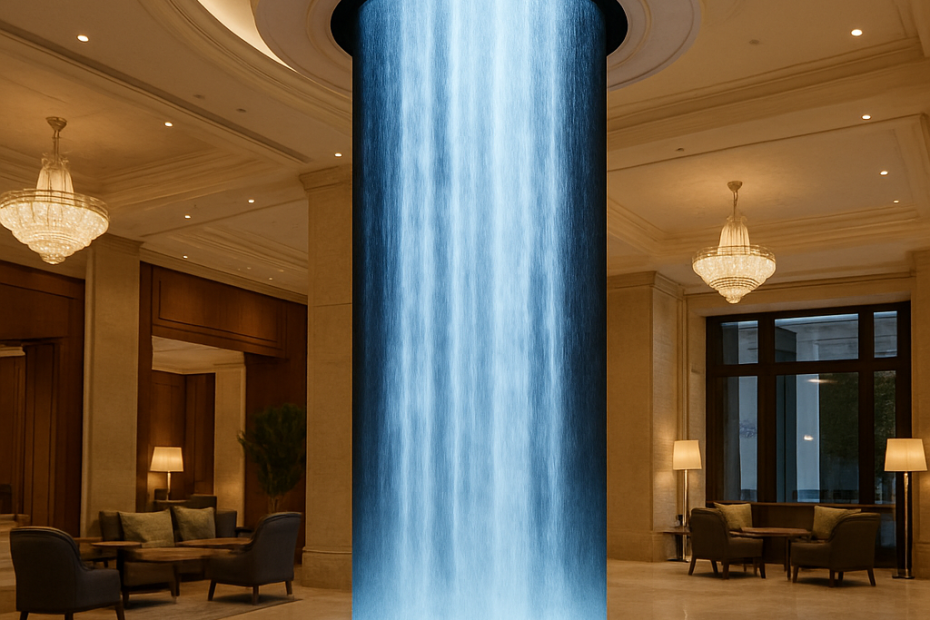
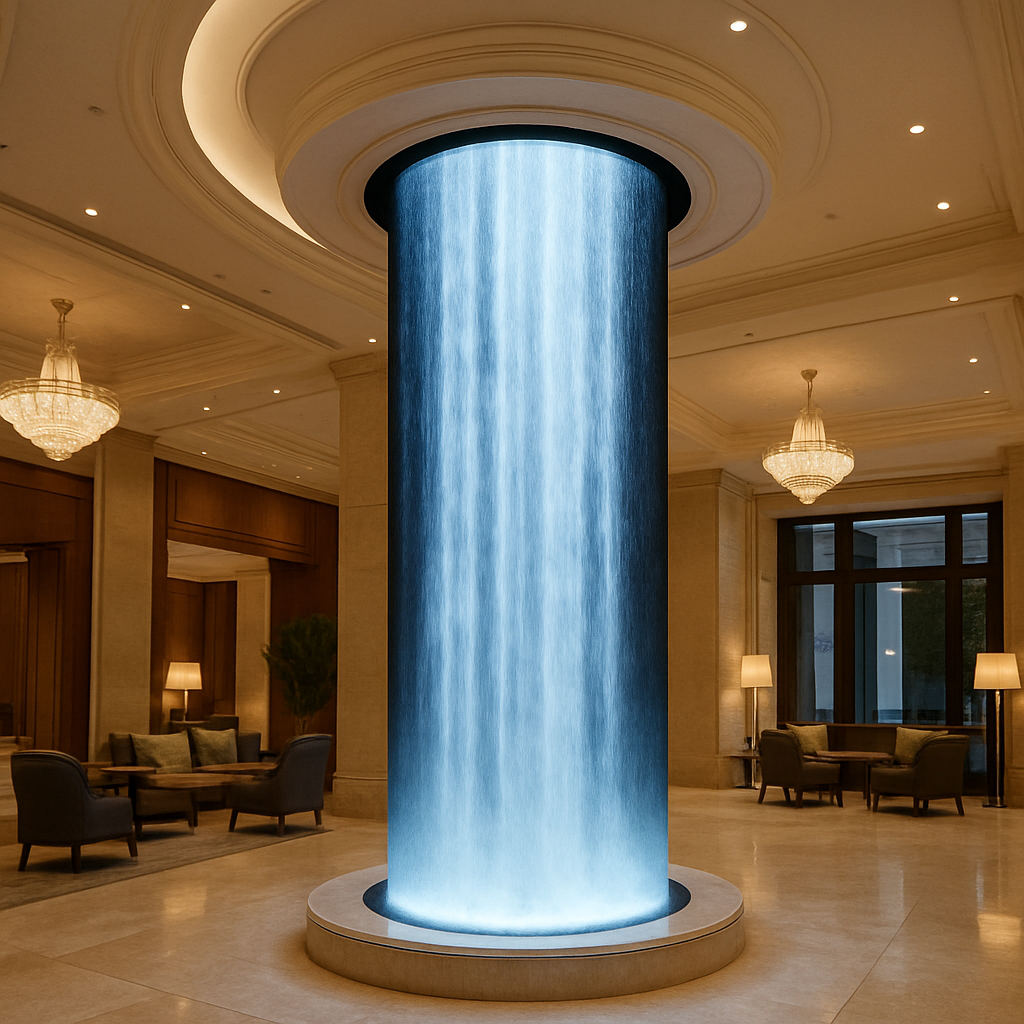
Think of the last time you walked through a luxury airport terminal. You likely noticed a massive structural pillar transformed into a glowing, moving column of water or light. That isn’t magic—it’s a cylinder LED display in action.
While traditional flat monitors force audiences into a single “best seat,” these advanced LED display solutions eliminate blind spots entirely. By wrapping perfectly around existing columns like a high-tech digital skin, they convert ordinary architectural obstacles into vibrant, attention-grabbing features.
In practice, event organizers are rapidly moving away from rigid screens to embrace these flexible, curved modules. Featuring a true 360-degree viewing angle, these creative digital signage solutions guarantee that every attendee experiences the exact same stunning visual impact, regardless of where they happen to be standing.
The Secret of ‘Digital Skin’: How Flexible LED Modules Wrap Tech Around Any Pillar
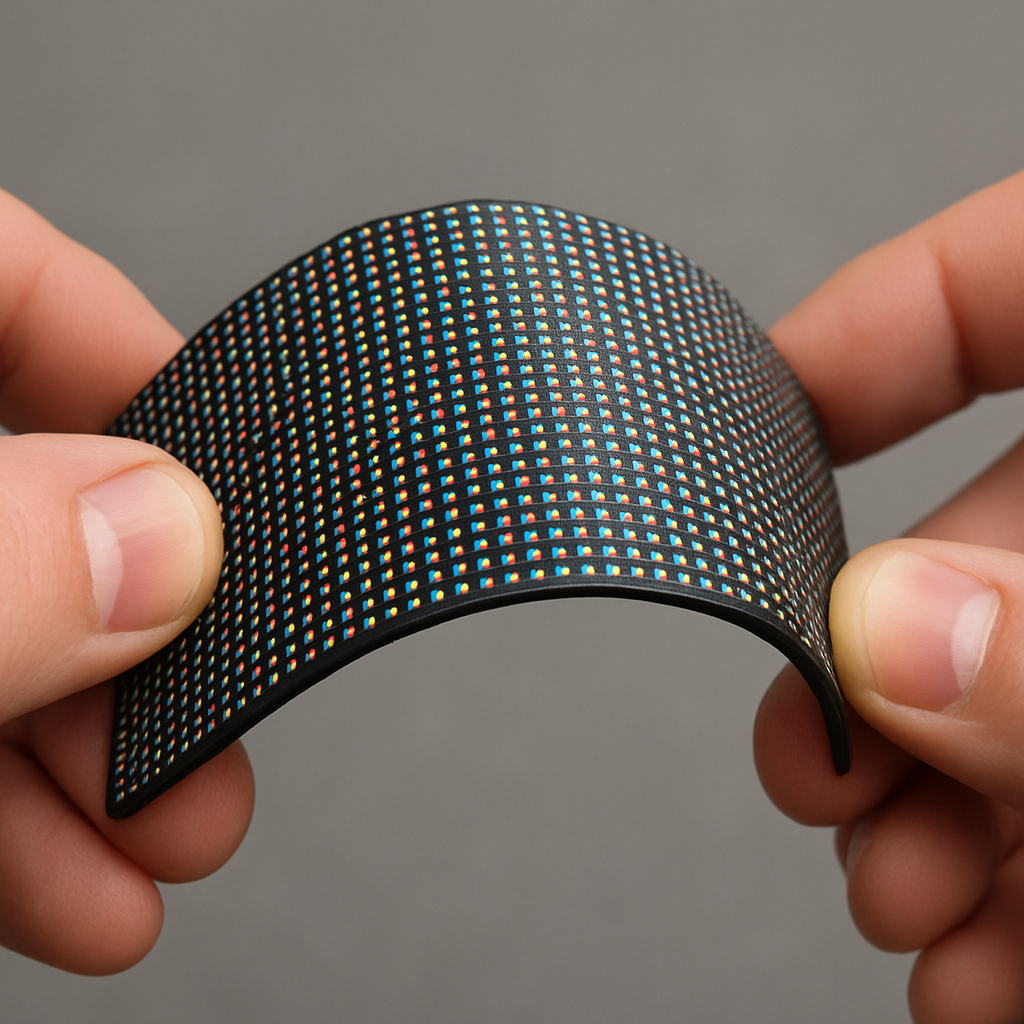
Imagine trying to wrap stiff cardboard around a concrete column. It simply won’t work, highlighting the functional difference between curved and flat LED panels. Cylinder displays use flexible LED module technology to act like a high-tech sticker instead. This “digital skin” easily hugs existing pillars, transforming cold architecture into vibrant screens without heavy construction.
The secret lies in the pliable materials that hold the tiny dots of light. These soft, rubber-like tiles can bend smoothly without breaking. They form the foundation of a customized round display cabinet design, allowing screens to fit tightly against structural tubes of almost any size.
Making the display curve is only half the battle; hiding the gaps is where the true magic happens. Engineers use seamless screen splicing techniques featuring powerful magnetic points instead of bulky screws. The flexible modules snap together perfectly like puzzle pieces, erasing the edges to create one continuous, unbroken loop of light.
Because these magnetic tiles build a flawless circle, the moving images flow naturally around the entire surface. This continuous wrap ensures nobody misses the message regardless of where they stand, fundamentally changing how digital displays engage walking crowds.
Ending the Bottleneck: Why 360-Degree Viewing Angles Beat Flat Screens in Busy Spaces
In a busy mall, flat screens force everyone into one single viewing zone. When comparing curved and flat LED panels, the biggest functional difference is how they handle foot traffic. Flat displays naturally create frustrating visual bottlenecks that block public walkways as people stop to watch.
A cylinder LED screen solves this issue by making every vantage point perfect. Because the glowing image continuously wraps, visitors easily absorb the message from any approach angle without stopping, turning an awkward crowd “huddle” into a smooth flow of movement.
This smart layout transforms busy environments through three concrete 360-degree viewing angle benefits:
- Eliminates blind spots: Important content remains completely visible from all directions.
- Prevents hallway congestion: Audiences can watch while walking, keeping pathways entirely clear.
- Saves valuable floor space: Businesses don’t need to block off dedicated gathering areas for viewers.
While a wrap-around shape successfully captures attention from every side, the image must still look crystal clear up close. Achieving that flawless clarity naturally requires choosing the optimal pixel pitch and brightness for your indoor installation.
Picking the Perfect View: Choosing Pixel Pitch and Brightness for Your Indoor Installation
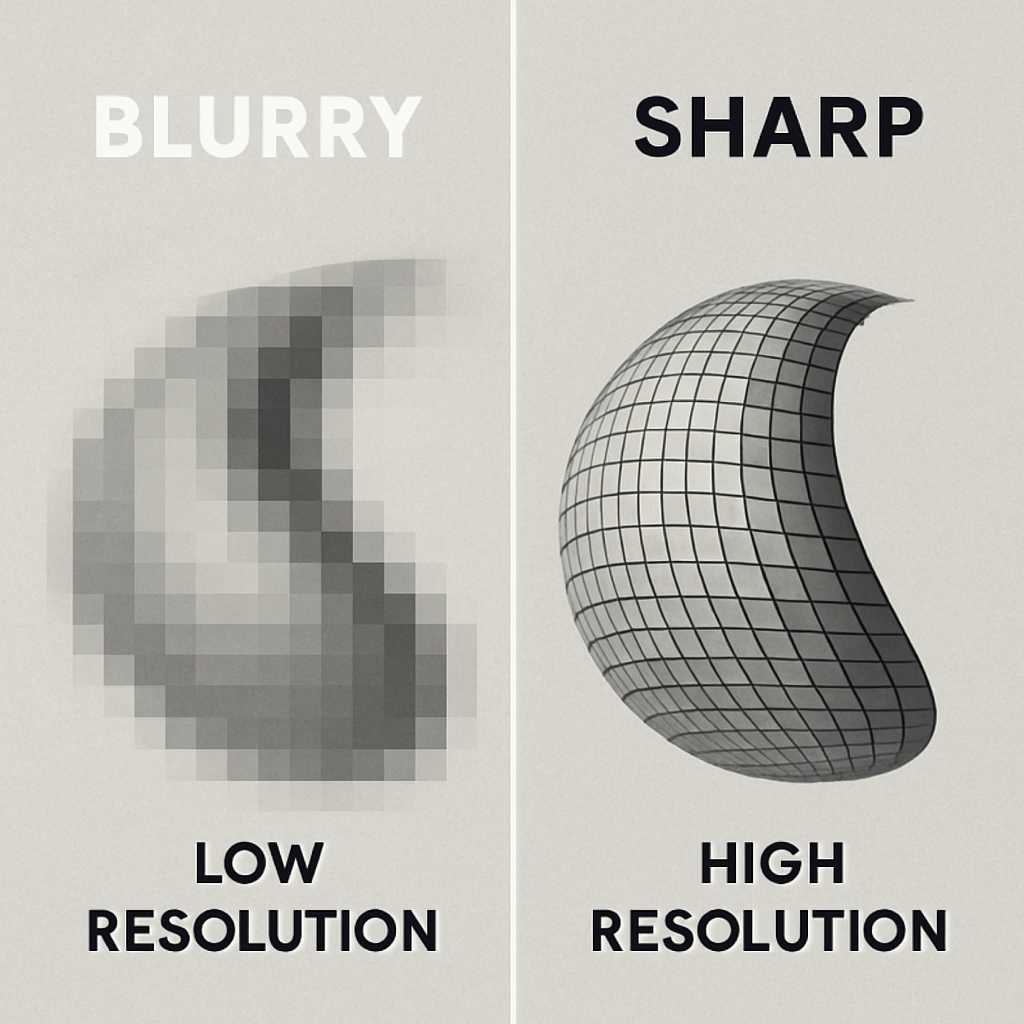
Stepping close to a digital pillar should look like a seamless painting, not a chunky mosaic. This requires the right pixel pitch for indoor pillars—simply the physical distance between the tiny dots of light that make up the image. If visitors are going to stand just inches away, those dots must be packed tightly together so the graphic maintains flawless sharpness from any distance.
Matching the screen’s glow to the surrounding room is just as crucial as its resolution. Finding the best brightness levels for indoor installations prevents the display from blinding passersby or looking washed out. A sunlit airport lobby demands a brighter output to compete with natural daylight, while a softly lit museum requires a much gentler glow to avoid causing eye fatigue.
When both clarity and lighting are perfectly balanced, your cylinder LED display transforms into a highly convincing digital canvas. With the physical hardware fully optimized to suit your specific space, the real magic begins when you move beyond static ads to craft dynamic, wrap-around visuals.
Beyond Static Ads: Creating Immersive 3D Content That Flows Around the Room
Wrapping standard commercial videos around a cylinder simply doesn’t work. The unique physical shape fundamentally changes how files are formatted, highlighting the impact of aspect ratio on round screens. Instead of stopping at four borders, designers must craft visuals that seamlessly connect end-to-end to wrap the column.
Without visible edges, these displays excel at “infinite loop” videos that cycle endlessly without a jarring restart. This continuous motion powers creative digital signage solutions that naturally boost “dwell time”—the actual minutes people stop to watch the display.
Curved surfaces also trick our brains into perceiving depth far better than flat walls do. This optical advantage allows creators to build immersive 3D video content for pillars, such as a lifelike digital aquarium where fish physically appear to swim around the column.
Bringing these hyper-realistic animations to life requires more than just clever artistic formatting. To keep that continuous illusion running brightly all day, hardware must be optimized for heat dissipation and seamless screen splicing.
Managing the Glow: Simple Solutions for Heat Dissipation and Seamless Screen Splicing
Wrapping a glowing digital skin around a solid pillar naturally traps warmth. To prevent the electronics from overheating, managing heat dissipation in enclosed screen structures is essential. Instead of relying on bulky, noisy fans, these flexible panels use smart internal airflow channels. They fit perfectly together using seamless screen splicing techniques, locking like a sleek jigsaw puzzle so no unsightly gaps show, all while keeping the internal hardware perfectly cool.
When a specific piece needs fixing, technicians skip dismantling the entire column. Modern circular screen maintenance requirements rely on a brilliant, screw-free solution: magnetic modules. Individual screen sections simply pop right off from the front for fast internal access, leaving the rest of the display completely undisturbed.
From Vision to Reality: A Practical Roadmap for Launching Your First Circular Signage
Flexible panels effectively transform plain concrete into mesmerizing digital landmarks. Evaluating the costs of curved LED signage is best viewed as an investment in unmatched crowd engagement. Start exploring LED display solutions with this practical checklist:
- Measure your venue’s pillars to ensure a seamless 360-degree wrap.
- Estimate ROI by evaluating the expected boost in engagement and aesthetic value.
- Select reliable programmable pillar display controllers for smooth, automatic content delivery.
Next time you walk through a lobby, look at the bare columns. They are no longer just structural supports; they are blank canvases waiting for a vibrant story.