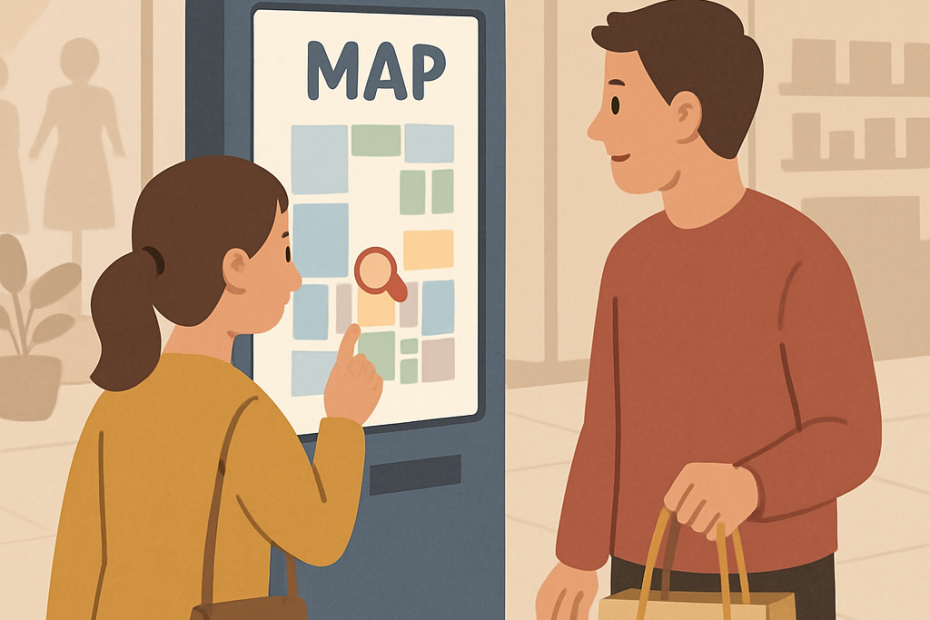
Now shopping malls have evolved into multifaceted destinations that offer more than just retail shopping. They have become vibrant hubs where people dine, engage in entertainment, and socialize. Way finding in these environments is critical, as the sheer size and complexity of these malls, with their numerous stores and amenities, can make navigation a challenging task for visitors. This is where digital signage wayfinding becomes a game-changer, transforming the way we navigate these vast complexes and enhancing the overall shopping experience.

Digital signage wayfinding refers to an interactive digital map system that aids shoppers in navigating a shopping mall efficiently. Unlike traditional static maps, these digital systems offer real-time information and can be easily updated, providing an interactive experience that allows users to search for specific stores or amenities. This technology streamlines the navigation process, making it easier for visitors to locate their desired destinations.
Key Features of Digital Signage Wayfinding
- Interactive Maps: These systems provide a dynamic interface where users can engage directly with the map. Shoppers can touch the screen to zoom in and out, search for specific locations, and even receive step-by-step directions, enhancing their navigation experience significantly.
- Real-Time Updates: One of the standout features of digital signage wayfinding is its ability to provide real-time updates. Whether it’s a store opening, a locati0n change, or a promotional event, these systems can be updated instantly, ensuring that shoppers have access to the latest information.
- Multi-Language Support: To cater to a diverse range of visitors, these systems often support multiple languages, breaking down language barriers and making navigation accessible to international shoppers.
- Accessibility Features: Inclusive design is a cornerstone of digital signage. Systems often include features such as audio directions for visually impaired users and customizable interfaces that allow for adjustable screen heights, accommodating wheelchair users and ensuring accessibility for all.
Benefits of Digital Signage in Shopping Malls
Improved Spatial Orientation
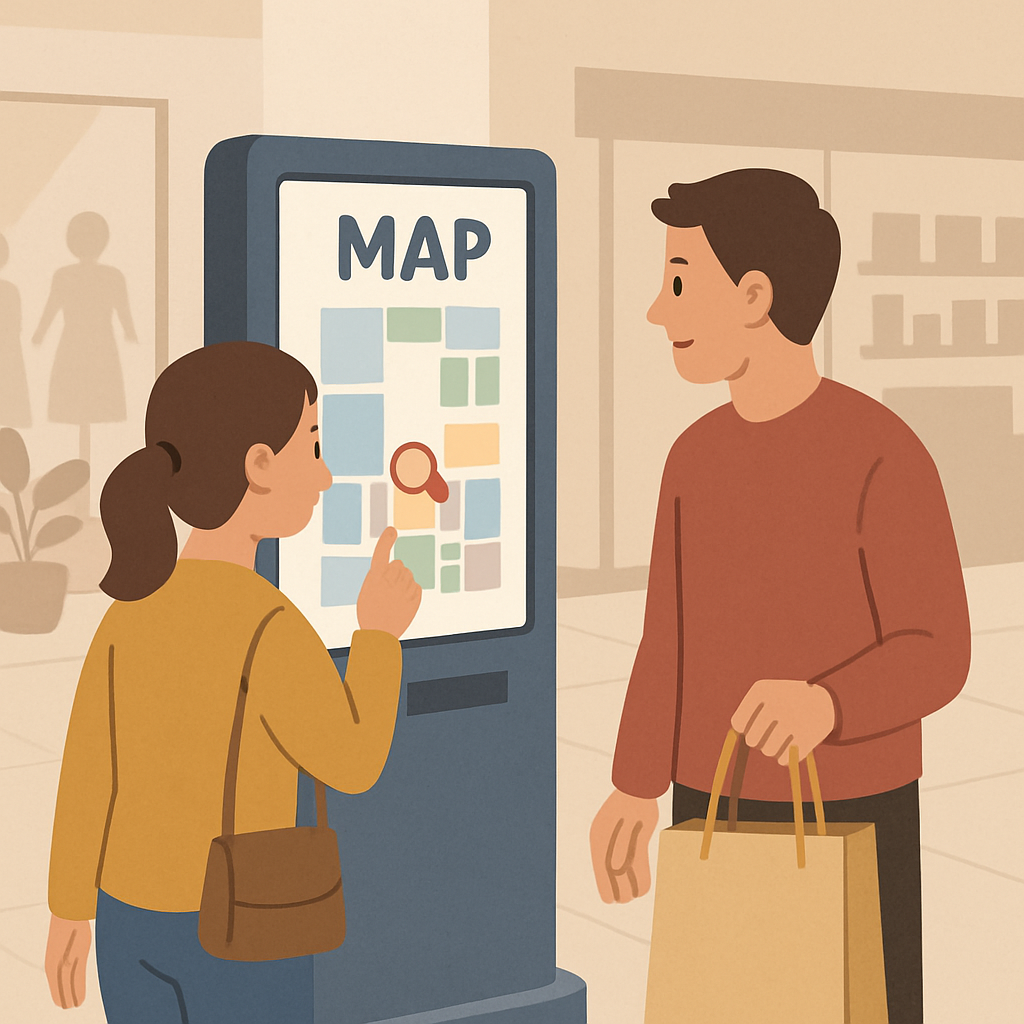
Digital signage wayfinding significantly enhances spatial orientation for shoppers. By providing clear and concise directions, these systems help visitors locate their desired destinations without the frustration of getting lost. This is particularly beneficial in large shopping malls where the layout can be confusing, allowing shoppers to enjoy a more streamlined and stress-free experience.
Moreover, improved navigation reduces the time spent wandering aimlessly, allowing shoppers to focus more on their shopping experience. This efficiency not only benefits the visitors but also the retailers, as customers who can easily find their way are more likely to visit multiple stores, increasing overall foot traffic and sales potential.
Enhanced Customer Experience
A seamless navigation experience directly correlates with an enhanced customer experience. When shoppers can quickly and easily find their way around a mall, their satisfaction levels increase. This positive experience encourages them to spend more time in the mall, exploring different stores and amenities, which can lead to increased spending.
Furthermore, an improved customer experience fosters loyalty, as satisfied customers are more likely to return to the mall in the future. The ability to navigate effortlessly contributes to a positive perception of the mall, setting it apart from competitors and making it a preferred shopping destination.
Increased Efficiency
For mall management, digital signage wayfinding offers significant operational benefits. It reduces the reliance on physical maps and directional signs, leading to cost savings in terms of printing and maintenance. Real-time updates mean that changes can be implemented swiftly, eliminating the need for costly reprints every time a store changes locati0n or an event is scheduled.
Additionally, the efficiency of digital signage extends to the allocation of resources. Staff can focus on more critical tasks rather than directing lost shoppers, enhancing overall productivity. This technological solution streamlines operations, making it a valuable asset for mall management.
Implementing Effective Wayfinding Solutions
Understanding Your Audience
To implement an effective wayfinding solution, it is crucial to have a deep understanding of the audience. Factors such as age, language preferences, and technological proficiency should be considered. For instance, younger audiences who are more tech-savvy may prefer engaging with interactive features, while older generations might appreciate a more straightforward and user-friendly interface.
Understanding the demographic composition of mall visitors allows for the customization of digital signage to meet their specific needs. By tailoring the technology to the preferences and abilities of different groups, malls can ensure that all visitors have a positive experience navigating the space.
Strategic Placement

The strategic placement of digital signage is critical to its effectiveness. Signs should be located at key points such as entrances, near elevators, and at major intersections within the mall. This ensures that the signage is highly visible and accessible to all visitors, maximizing its utility.
Effective placement also involves considering the flow of foot traffic. By analyzing the paths most commonly traveled by shoppers, mall management can position digital signage in locations where it is most needed, enhancing the overall navigation experience and reducing congestion in high-traffic areas.
User-Friendly Design
The design of the digital signage interface should prioritize user-friendliness. Clear icons, easy-to-read fonts, and straightforward navigation are essential components of an intuitive design. The goal is to create a system that is accessible to all users, regardless of their technological proficiency.
In addition to visual appeal, the interface should provide clear instructions and guidance. By minimizing complexity and focusing on simplicity, malls can ensure that all visitors, including those who may not be tech-savvy, can effectively use the wayfinding system.
Challenges and Solutions
Technical Issues
As with any digital system, technical issues can arise with digital signage wayfinding. Regular maintenance and updates are essential to ensure that the system operates smoothly and efficiently. Having a dedicated IT team on standby to address any technical problems can prevent prolonged downtimes, ensuring that the signage remains operational and effective.
Proactively addressing potential technical issues involves implementing a robust infrastructure that includes regular software updates and hardware checks. By staying ahead of potential problems, malls can maintain a reliable wayfinding system that consistently meets the needs of visitors.
Keeping Information Current
One of the challenges associated with digital signage is keeping information up-to-date. Implementing a centralized system that allows updates to be made remotely is crucial to ensuring that all signs reflect the latest information. This approach minimizes the risk of outdated or incorrect information being displayed, maintaining the system’s reliability.
To ensure that information remains current, mall management should establish clear protocols for updating the signage. This includes regular communication with store tenants to receive timely information about changes and events, ensuring that the wayfinding system always provides accurate and relevant data.
Ensuring Accessibility
To cater to all users, digital signage must include comprehensive accessibility features. This includes options such as audio directions for visually impaired users and adjustable screen heights to accommodate wheelchair users. By prioritizing inclusivity, malls can ensure that all visitors, regardless of their abilities, can effectively navigate the space.
Implementing accessibility features requires a thoughtful approach that considers the needs of diverse user groups. By engaging with accessibility experts and incorporating feedback from users with disabilities, malls can create a wayfinding system that truly serves all visitors.
Future Trends in Digital Signage Wayfinding
As technology continues to advance, digital signage wayfinding is poised to incorporate even more innovative features. One such trend is the integration of augmented reality (AR), which promises to provide an immersive navigation experience. Imagine holding up a smartphone to see a virtual path leading directly to a store, enhancing the wayfinding experience with engaging visuals.
Integration with Mobile Apps
Many shopping malls are now integrating digital wayfinding systems with mobile apps. This integration allows users to plan their shopping trips from home, save their favorite stores, and receive notifications about in-mall promotions and events. By offering a seamless experience that bridges digital and physical navigation, malls can enhance convenience and engagement for shoppers.
Mobile apps also provide a platform for personalized experiences, allowing users to customize their navigation preferences and receive tailored recommendations based on their shopping habits. This level of personalization enhances the value of the wayfinding system, making it an indispensable tool for modern shoppers.
Personalized Experiences
With the help of data analytics, digital signage can offer highly personalized experiences for shoppers. By analyzing shopper behavior and preferences, malls can suggest stores, promotions, and events that align with individual interests. This level of customization not only enhances the shopping experience but also increases the likelihood of purchases, benefiting retailers and mall management alike.
The potential for personalization extends beyond simple recommendations. Advanced analytics can provide insights into shopper flow and behavior, enabling mall management to optimize layout and store placement, ultimately enhancing the overall shopping environment.
Conclusion
Digital signage wayfinding is transforming the way we navigate shopping malls, offering a multitude of benefits for both shoppers and mall management. By improving spatial orientation, enhancing the customer experience, and increasing operational efficiency, this technology represents a significant advancement in mall navigation. As technology continues to evolve, we can anticipate even more innovative features that will further enrich our shopping experiences. Whether you’re a mall manager looking to improve navigation or a shopper seeking a smoother experience, digital signage wayfinding is undoubtedly the future of mall navigation, promising to revolutionize the way we explore these vibrant retail environments.
ScreenSculpt is a professional commercial display solutions manufacturer based in Shenzhen, founded and led by a technically experienced team. We maintain strong partnerships with leading panel manufacturers such as Samsung, LG, BOE, HKC, Innolux, and CSOT, ensuring access to premium display resources for our digital signage solutions, contact us now!