
Digital signage is revolutionizing how schools communicate and interact with students, parents, and staff. In an era where information is paramount, having an effective, visually engaging, and flexible communication tool is invaluable. Schools are increasingly turning to digital signage solutions to meet these needs efficiently.

Digital signage refers to the use of digital displays to convey information dynamically. In schools, these displays can be used for a myriad of purposes—from announcing events and showcasing student work to providing directions and emergency alerts. The flexibility and immediacy offered by digital signage make it an ideal solution for educational institutions.
Why Digital Signage?
Digital signage is not just about replacing bulletin boards with screens. It’s about enhancing the communication strategy of a school. With digital signage, information can be updated in real-time, ensuring that everyone is always in the loop. This immediacy is a significant advantage in educational settings where schedules and announcements can change frequently.
Benefits of Digital Signage in Schools
Enhanced Communication
One of the primary benefits of digital signage in schools is improved communication. Important messages can be broadcasted across the campus instantly. Whether it’s a change in the class schedule, an upcoming event, or a safety announcement, digital signage ensures that the message reaches its intended audience promptly.
Engaging and Interactive
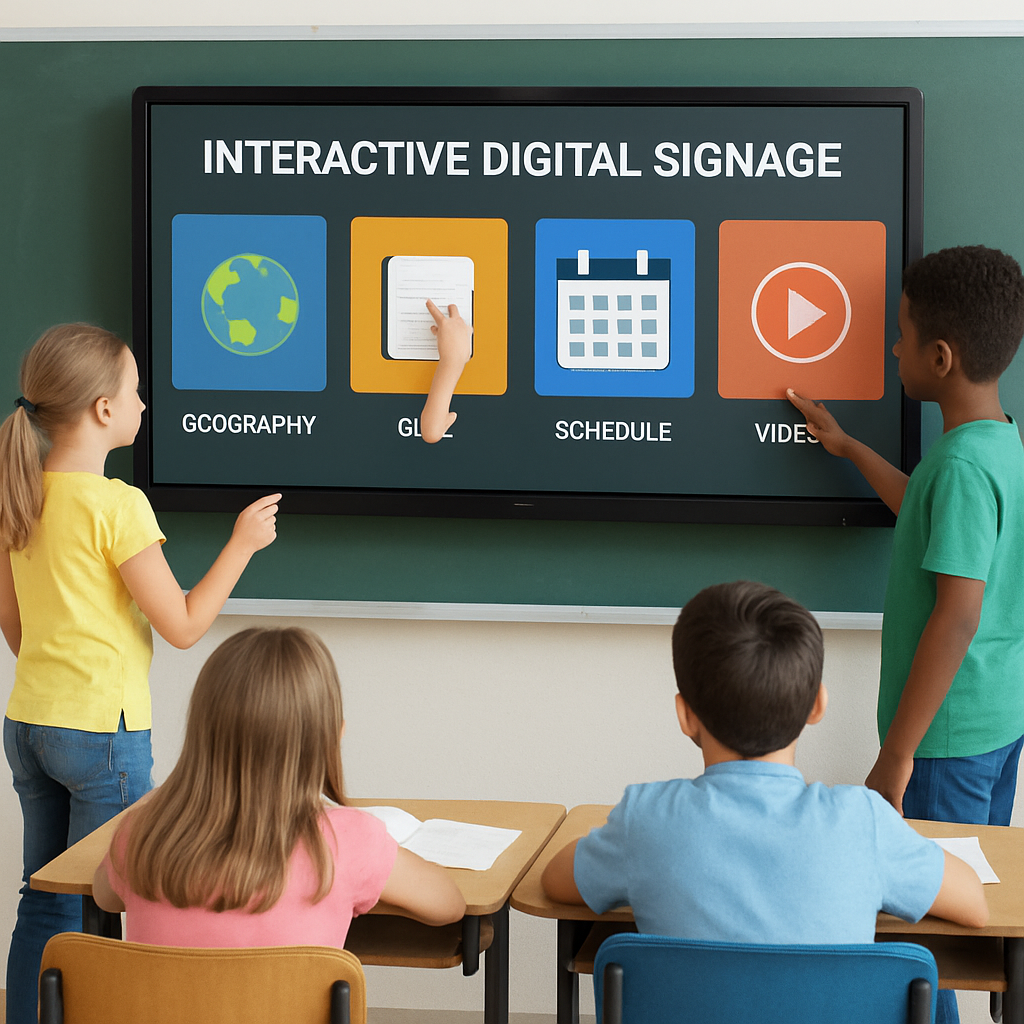
Digital signage provides a visually appealing way to capture the attention of students and visitors. Bright screens displaying dynamic content are far more engaging than static posters. Schools can use this medium to showcase student achievements, display motivational messages, or even run interactive quizzes.
Cost-Effective in the Long Run
While there is an initial investment involved, digital signage solutions can be more cost-effective than traditional methods in the long run. Think of the costs saved on printing materials, labor for updating bulletin boards, and the waste generated by paper-based communication. Additionally, digital signage reduces the need for physical materials, aligning with eco-friendly practices.
Flexibility and Control
Digital signage offers schools unparalleled flexibility. Content can be scheduled to change automatically at different times of the day or week, and it can be customized for different locations within the school. For instance, a screen in the cafeteria might display the lunch menu, while screens in hallways might show the latest school news.
Implementing Digital Signage Solutions
Assessing Your Needs
Before implementing a digital signage solution, it’s crucial for schools to assess their needs. Consider the goals you want to achieve with digital signage. Is it to improve communication, enhance safety, or engage students? Understanding the primary objectives will guide the selection of the right system.
Choosing the Right Software
When it comes to digital signage for schools, software is just as important as the hardware. The software should be user-friendly and allow for easy content creation and scheduling. Many solutions offer cloud-based management, enabling updates from anywhere, anytime. Look for features like multi-user access, which allows different departments to manage their own content.
Hardware Considerations

The choice of hardware is crucial in ensuring that digital signage meets the school’s needs. Schools should consider the locati0n of screens, the size of displays, and how they will be mounted. It’s also essential to choose durable and reliable hardware, as screens will be running for extended periods.
Content Strategy
The success of digital signage largely depends on the content strategy. Schools should aim for a mix of informational and engaging content. Regularly updating the content keeps the displays fresh and relevant. Consider involving students in content creation to make the displays more relatable and engaging.
Overcoming Challenges
Budget Constraints
While digital signage is cost-effective in the long run, the initial setup can be expensive. Schools can overcome this challenge by starting small and gradually expanding their network of displays. Look for vendors who offer discounts for educational institutions or explore grant opportunities to fund your digital signage project.
Training Staff
Implementing a new system requires training. Schools should invest in training staff on how to use the digital signage software effectively. This includes creating content, scheduling updates, and troubleshooting common issues. Many vendors provide training sessions as part of their service package.
Ensuring Security
With digital systems, security is always a concern. Schools should ensure that their digital signage solutions have robust security features to prevent unauthorized access. This includes secure login protocols and regular software updates.
Real-World Examples
Many schools across the country have successfully integrated digital signage into their communication strategies. For instance, School Name in Location uses digital signage to broadcast daily announcements and highlight student achievements. Another school, School Name, leverages digital displays for interactive learning sessions, allowing students to participate in quizzes and polls.
Conclusion
Digital signage is a powerful tool for enhancing communication and engagement in schools. By choosing the right solution and implementing it effectively, schools can enjoy numerous benefits—from improved communication to increased student interaction. As technology continues to evolve, digital signage will undoubtedly play an even more significant role in the educational landscape.
In conclusion, digital signage solutions provide schools with a versatile, cost-effective way to communicate with students, staff, and visitors. With the right approach, schools can harness the power of digital signage to create a dynamic, engaging, and efficient environment. Whether it’s enhancing safety, showcasing student achievements, or simply keeping everyone informed, digital signage is a vital component of modern educational communication strategies.