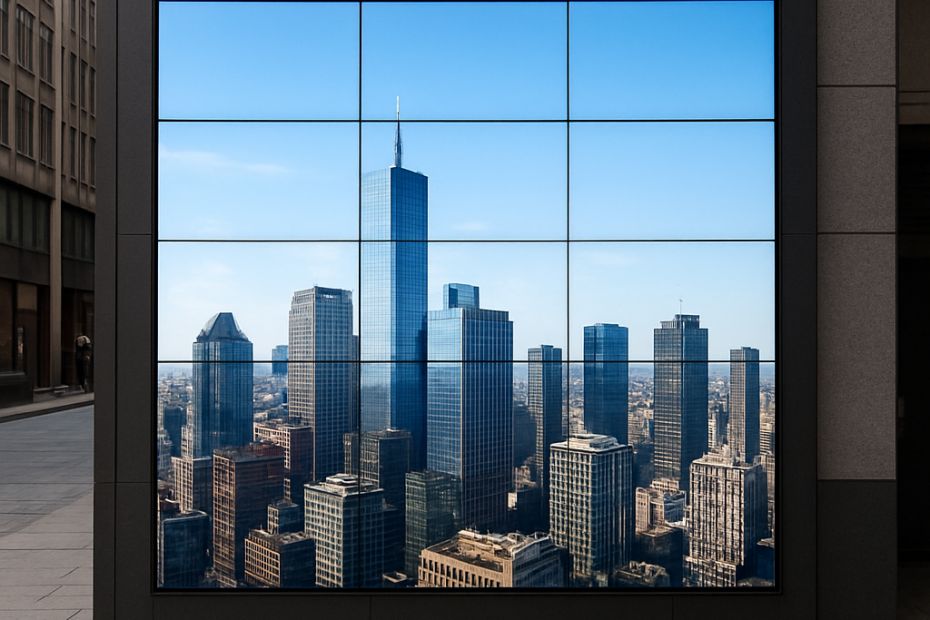
In today’s digital age, video walls are transforming how we display content. They are used in various settings, from corporate offices to public events.
Choosing between LED and LCD video walls can be challenging. Each technology offers unique benefits and drawbacks.
LED video walls are known for their vibrant colors and high brightness. They are ideal for outdoor and well-lit environments.
On the other hand, LCD video walls provide high resolution and are often more cost-effective. They are perfect for indoor applications.
Understanding the differences between LED and LCD video walls is crucial. It helps in making an informed decision based on specific needs.
This guide will explore the key differences between these two technologies. We will discuss their advantages, disadvantages, and ideal use cases.
Whether you’re a business owner or a tech enthusiast, this comparison will provide valuable insights. Let’s dive into the world of video wall technology.
Understanding Video Wall Technology
Video wall technology has revolutionized visual displays, creating large, impactful screens. These displays are formed by seamless tiling of panels, presenting a unified visual experience.
There are two primary technologies behind video walls: LED and LCD. Each has distinct mechanisms and features, catering to different needs. Understanding their core technology aids in choosing the right solution.
Key Features of Video Wall Technology
- Modular Design: Allows customization in size and shape.
- High Resolution: Both LED and LCD panels offer exceptional image clarity.
- Versatile Use Cases: Suitable for diverse environments and functions.
Video walls are employed in various industries. They enhance visibility in retail, corporate, and entertainment settings. These displays serve as effective tools for communication and engagement.
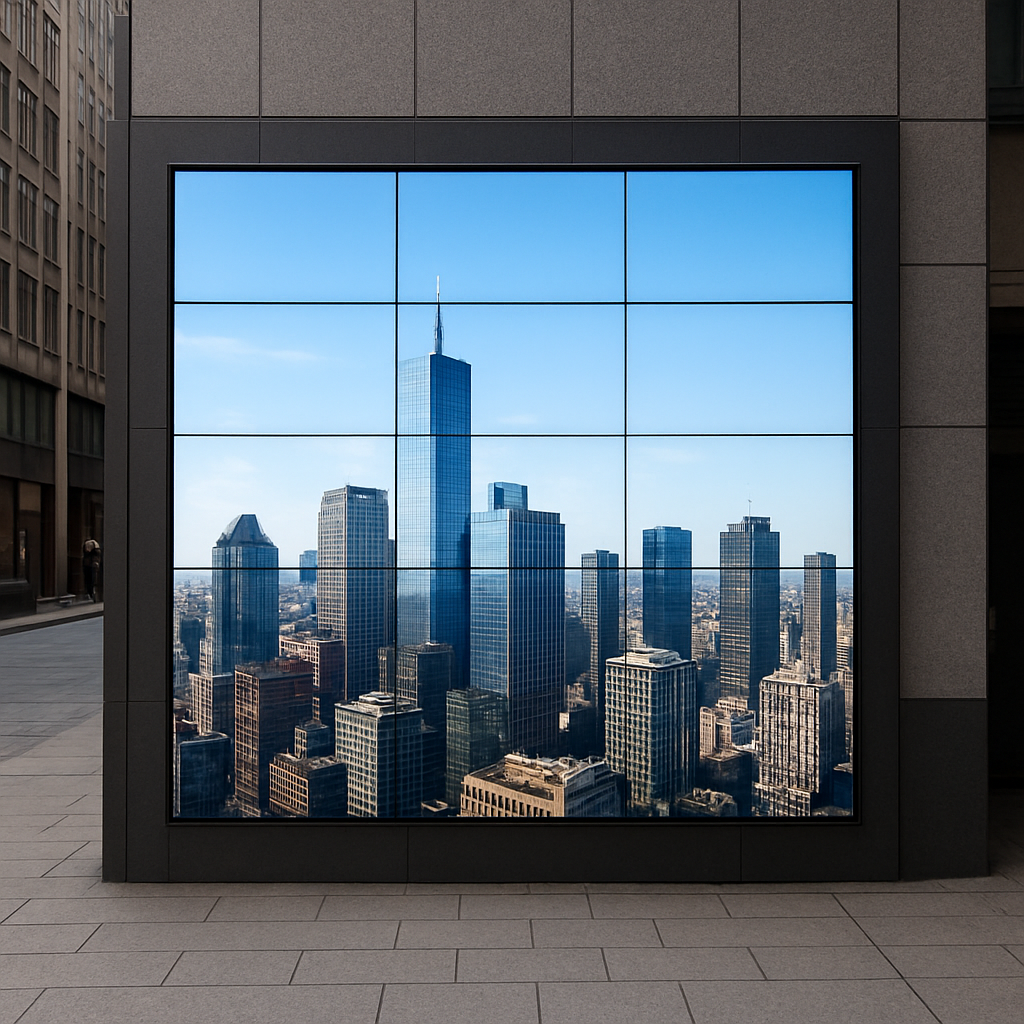
Grasping the basics of video wall technology enables informed decisions when selecting between LED and LCD options. As these technologies advance, they offer even more immersive and dynamic display solutions.
How LED and LCD Video Walls Work
Video walls made up of LED and LCD technologies differ in their functioning. Understanding these differences is key for selecting the right type.
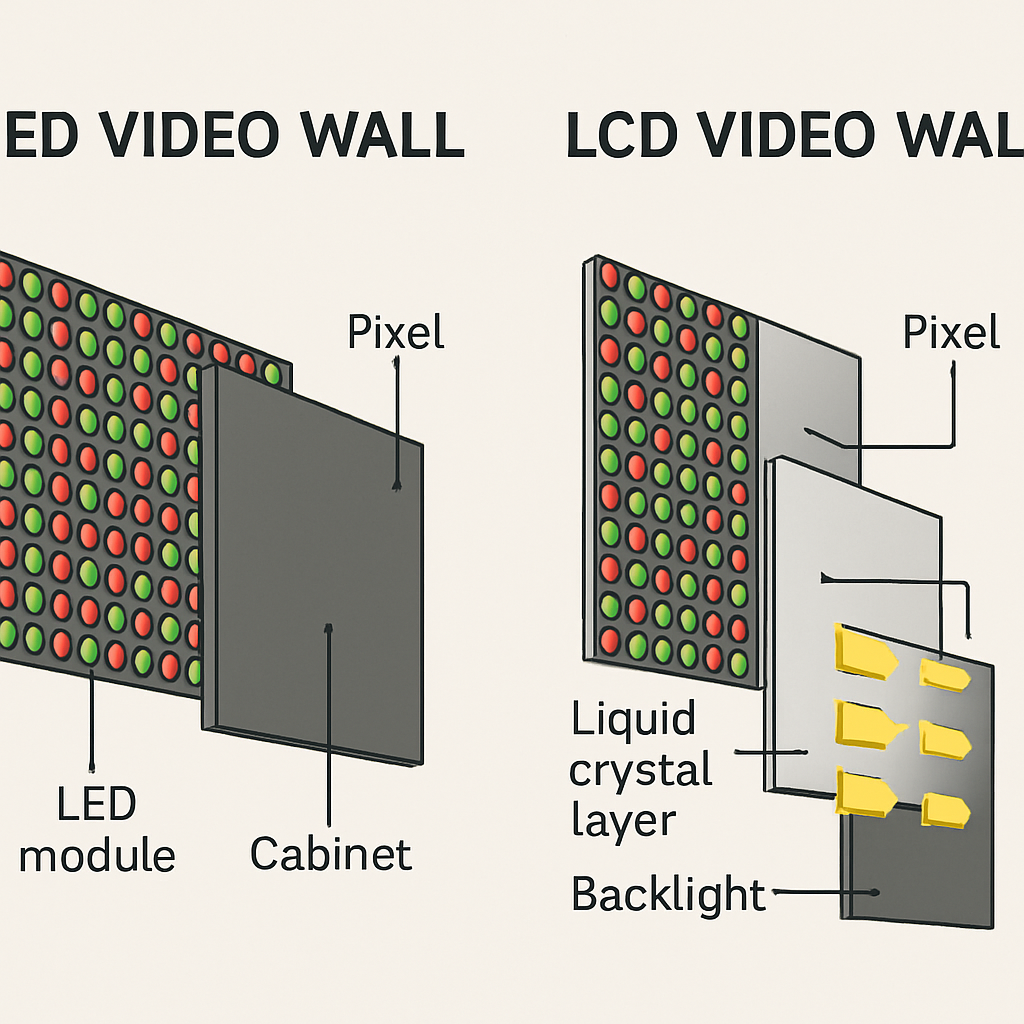
LED video walls use light-emitting diodes to create images. Each diode emits its own light, producing bright and vibrant displays. This technology excels in high ambient light settings.
On the other hand, LCD video walls rely on liquid crystal displays. They manipulate backlight to create images, which results in high-resolution outputs ideal for controlled lighting environments.
How They Operate
- LED Panels: Emit light directly from the diodes.
- LCD Panels: Rely on backlighting through liquid crystals.
- Brightness and Color: LED offers more vivid colors, LCD provides higher resolution.
Both technologies offer significant advantages depending on the use case. Whether you need dynamic brightness or high detail clarity, each has its place.
Both technologies have a crucial role, with ongoing advancements enhancing features like color accuracy and energy efficiency.
LED Video Wall Technology Explained
LED video wall technology is characterized by its use of light-emitting diodes. These diodes are fundamental components, responsible for producing sharp, bright visuals.
Each pixel in an LED video wall is a tiny diode. When electricity passes through, it emits light, creating bright, colorful displays. This design eliminates the need for backlights, offering true blacks and a high contrast ratio.
Advantages of LED technology include:
- High Brightness: Suitable for outdoor and well-lit environments.
- Energy Efficiency: Uses less power compared to LCD.
- Longevity: Durable with a longer lifespan.

by Niek Doup (https://unsplash.com/@niekdoup)
LED video walls shine in sports venues, concerts, and large public installations. They offer a seamless display with no visible gaps, delivering an immersive experience.
LCD Video Wall Technology Explained
LCD video walls operate by manipulating liquid crystals with backlighting. This process achieves detailed and high-resolution visuals ideal for indoor uses.
Each panel is filled with liquid crystals that align when voltage is applied. These crystals modulate the backlight to produce varying shades and colors. The result is a clear and sharp image.
Key features of LCD technology:
- High Resolution: Provides detailed image quality.
- Cost-Effective: Generally more affordable than LED for indoor settings.
- Lightweight: Easier to install in smaller spaces.

by Mika Baumeister (https://unsplash.com/@kommumikation)
LCD video walls excel in retail environments, control rooms, and corporate offices. They provide excellent image uniformity, essential for settings requiring precision and accuracy.
Key Differences: LED vs LCD Video Wall
When comparing LED vs LCD video walls, several key differences emerge. These differences can significantly impact the choice depending on the intended use.
LED video walls are praised for their outstanding brightness. This makes them ideal for outdoor settings or areas with high ambient light. They deliver stunning visuals even under direct sunlight.
Conversely, LCD video walls are renowned for their high resolution. They offer detailed, crisp images, suitable for indoor environments like control rooms.
Factors to Consider
- Brightness and Color:
- LED: High brightness, vibrant colors.
- LCD: High resolution, better detail.
- Installation and Maintenance:
- LED: More complex but modular.
- LCD: Easier to replace panels.
Each of these factors can influence the decision. LED video walls tend to have a longer lifespan, while LCDs are more sensitive to burnout.

by Derek Lee (https://unsplash.com/@derekleej)
Cost and Versatility
The initial investment for LED video walls is generally higher. However, they offer more versatility in terms of shape and size.
LCD video walls are often lighter, simplifying installation in smaller spaces. They are usually more budget-friendly, making them a popular choice for many businesses.
Both technologies have unique strengths, offering diverse benefits tailored to different applications.
Image Quality: Brightness, Color, and Resolution
Image quality is a crucial factor when evaluating LED vs LCD video walls. Each technology offers distinct advantages that cater to different needs.
LED video walls are celebrated for exceptional brightness levels. Their high brightness enables superb visibility outdoors and in brightly lit areas. The vibrant colors they produce make content pop, capturing attention effectively.
Conversely, LCD video walls excel in delivering sharp image resolution. They provide precise detail, making them the preferred choice for environments requiring high clarity. Control rooms and conference centers are common settings for these displays.
Highlights to Consider
- Brightness:
- LED: Best for bright, outdoor settings.
- LCD: Reliable in controlled lighting.
- Color Accuracy:
- LED: Vibrant and dynamic colors.
- LCD: Consistent color reproduction.
- Resolution:
- LED: Suitable for larger distances.
- LCD: Superior for close-up viewing.
With these attributes in mind, choosing the right video wall depends heavily on the specific requirements of the setting. Both technologies bring unique strengths in different contexts.

by nguyen truong (https://unsplash.com/@nguyent01)
Seamlessness and Viewing Experience
Seamlessness greatly influences a viewer’s experience with video walls. LED and LCD technologies differ significantly in this aspect.
LED video walls offer a true seamless experience. With no visible gaps, they create a continuous and immersive visual field ideal for large-scale displays. This capability is particularly useful in settings like stadiums and concert venues.
LCD video walls can face challenges with bezels between panels. These lines may disrupt the visual flow, affecting the coherence of the image. Despite technological advancements, achieving total seamlessness remains a hurdle.
Key Points to Note
- LED:
- No gaps between panels.
- Smooth, continuous displays.
- LCD:
- Visible bezels.
- May interrupt visual flow.
Ultimately, the choice between LED and LCD should consider the importance of seamless visuals for the intended audience. Each option has different implications for the viewing experience
Installation, Maintenance, and Durability
The installation process for LED and LCD video walls differs in complexity and requirements. LED video walls are known for their flexible configurations, which can include various shapes and sizes. However, this flexibility often requires precise alignment during installation, which can be a complex task.
In contrast, LCD video walls are generally easier to install. They are lighter and often come in standard configurations, making them well-suited for straightforward setups.
Maintenance is another key factor to consider. LED video walls feature a modular design that simplifies repairs. Panels can be swapped without affecting the entire display. This modular approach reduces downtime, ensuring continuous operation.
LCD video walls, on the other hand, may need more frequent maintenance due to backlight and bezel issues. This can lead to higher upkeep costs over time.
Key Considerations
- LED:
- Complex installation, modular maintenance.
- Durable, withstanding physical impacts.
- LCD:
- Easier setup.
- More frequent upkeep needed.
Durability matters, too. LED video walls tend to be more robust, enduring environmental factors better than LCDs.

by catrina farrell (https://unsplash.com/@xiao_mao38)
Cost Comparison: Initial Investment and Total Cost of Ownership
The cost of a video wall involves more than just the initial purchase price. LED video walls typically have a higher upfront cost compared to LCD video walls. This is due to the advanced technology and components used in LED panels.
However, when considering the total cost of ownership, LED video walls can be more economical in the long run. Their longer lifespan and lower power consumption contribute to savings over time. Additionally, less frequent maintenance can reduce operational costs.
LCD video walls, while cheaper initially, may incur higher costs due to more frequent maintenance and power consumption. Businesses on a tight budget often choose LCD video walls for smaller projects or short-term installations.
Cost Breakdown
- Initial Investment:
- LED: Higher initial cost.
- LCD: Lower initial cost.
- Long-term Costs:
- LED: Economical over time.
- LCD: Potentially higher over time.
Understanding both immediate and future expenses is crucial for a sound investment.

by Markus Spiske (https://unsplash.com/@markusspiske)
Use Cases: Where Each Technology Excels
LED and LCD video walls each shine in different environments and use cases. LED video walls are ideal for large-scale events such as concerts and sports arenas. Their high brightness and vivid colors ensure visibility even in bright outdoor conditions.
On the other hand, LCD video walls are often the go-to choice for indoor settings requiring high-resolution displays. They are commonly found in conference centers, control rooms, and retail spaces. The precision and detail of LCD technology make it perfect for these applications.
LED video walls are also favored for dynamic content, like digital signage and advertising, due to their excellent refresh rates. Meanwhile, LCD video walls are preferred where detailed graphics or static images are displayed.
Use Case Highlights
- Outdoor Displays: LED excels.
- Indoor Detail: LCD preferred.
- Dynamic Content: LED favored.
- Static Images: LCD suitable.
Each technology has distinct advantages, making them suitable for different applications.

by ayumi kubo (https://unsplash.com/@ayumikubo)
Pros and Cons: LED vs LCD Video Wall
Choosing between LED and LCD video walls means weighing their strengths and weaknesses. Both have unique advantages that cater to specific needs.
LED Video Wall Pros:
- High brightness levels.
- Long lifespan.
- Seamless image display.
LED Video Wall Cons:
- Higher initial cost.
- Complex installation.
LED video walls are energy-efficient and support a wider color gamut. However, the upfront costs can be a concern for some.
LCD Video Wall Pros:
- High resolution.
- Cost-effective for indoor use.
- Easier panel replacement.
LCD Video Wall Cons:
- Susceptible to bezels.
- Lower brightness.
LCD displays excel in settings where detail matters, but bezels can disrupt continuity. Each technology has trade-offs, impacting your choice based on requirements.

by GB The Green Brand (https://unsplash.com/@gb_the_green_brand)
Choosing the Right Video Wall for Your Needs
Selecting the ideal video wall depends on specific project demands. Consider factors like usage environment, audience size, and budget constraints.
Assessing the intended application is crucial. Will the video wall be used indoors or outdoors? Understanding this helps in deciding between LED and LCD.
Here are some critical considerations when choosing a video wall:
- Indoor vs. outdoor usage
- Required resolution
- Budget limitations
- Installation complexity
Evaluate these elements carefully to ensure optimal performance. LED and LCD video walls both offer distinct benefits, but your choice should align with the primary objectives of your display needs. Consider future needs as well as immediate requirements for a wise investment.
Future Trends in Video Wall Technology
Video wall technology is evolving rapidly, driven by advancements in both LED and LCD screens. Many innovations aim to enhance image quality and energy efficiency.
Emerging trends include:
- Improved pixel pitch for sharper images
- Advanced interactive display options
- Enhanced color accuracy and vividness
These innovations promise greater flexibility and performance. Video walls will offer even more engaging visual experiences in various applications. Anticipate further improvements in durability and ease of maintenance, making video walls an appealing choice for more industries.

by mos design (https://unsplash.com/@mosdesign)
Conclusion: Making an Informed Decision
Choosing between LED and LCD video walls depends on your specific needs and budget. Each technology offers unique benefits and limitations.
Consider the application environment, image quality requirements, and long-term costs. With careful evaluation, you can select the right video wall technology to meet your objectives. Understanding these factors ensures a satisfactory and impactful investment decision.