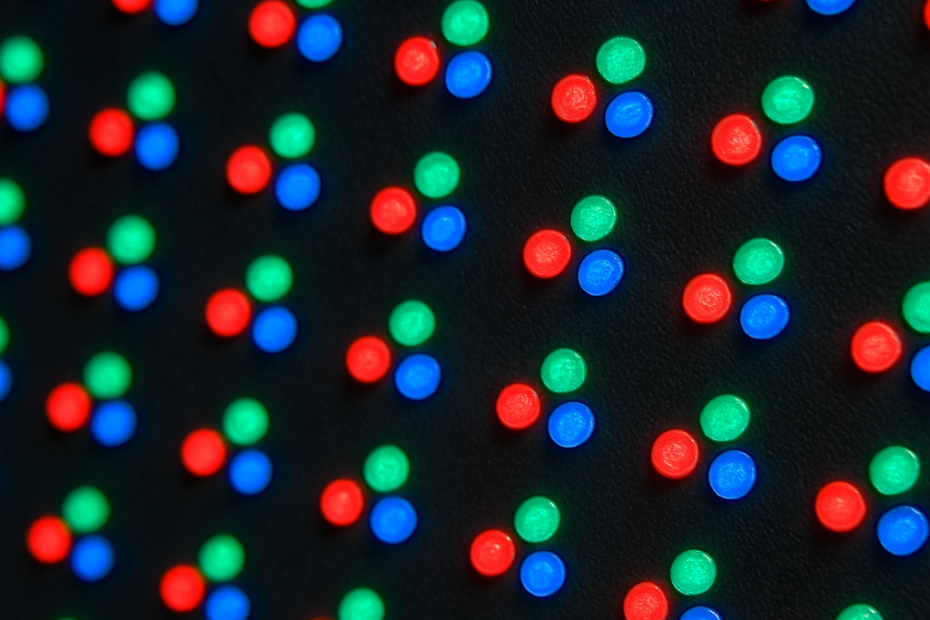
You’ve likely seen towering Times Square billboards or stadium scoreboards that look like brilliant, seamless photographs. However, according to basic optics, stepping an inch away from the surface shatters that illusion into thousands of tiny, glowing dots. Unlike standard televisions that filter a backlight, a massive rgb led display panel physically builds images using millions of microscopic lightbulbs.
The magic behind a giant matrix led screen relies on clear physical mechanics. These displays snap together like LEGO bricks, seamlessly combining individual red, green, and blue dots to deliver stunning resolution from across the street.
The Optical Illusion of Color: How Red, Green, and Blue Tricked Your Brain Into Seeing White
If you look closely at those glowing dots, you will discover a fascinating optical illusion. People often ask how do full color diode displays work when they just look like giant walls of tiny lightbulbs. The secret is that each individual “dot” on the screen is actually a cluster of three microscopic lights: red, green, and blue.
Adjusting the brightness of these three separate colors across an rgb led matrix tricks your eyes into seeing almost any shade imaginable. When all three lights shine at full blast simultaneously, they physically blend together to create a brilliant, pure white. To show a deep black shadow or a dark night sky, the screen simply turns those tiny bulbs completely off.
Think of an led rgb matrix panel like a digital pointillist painting. Up close, it is just millions of separate red, green, and blue specks. Step back, and your brain perfectly blends them into a vivid photograph. How far back you need to step before that colorful illusion takes hold depends entirely on the physical gap between those tiny clusters.
The Fingernail Rule: Understanding Pixel Pitch and Viewing Distance
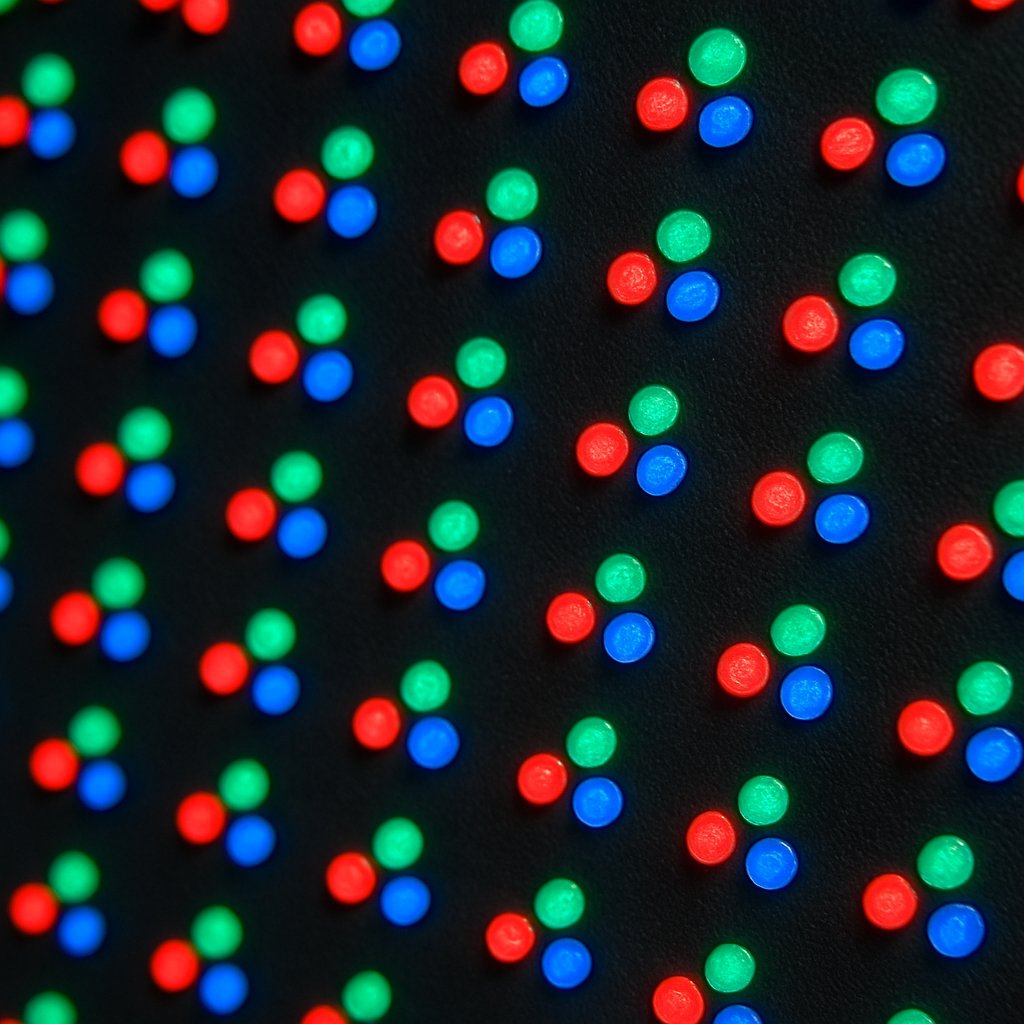
Stepping back from a display blends the image, but how far back depends on the empty space between those glowing dots. This gap is pixel pitch—the physical distance from one pixel’s center to the next. Imagine a standard fingernail’s width, which is roughly ten millimeters. When lights are packed tighter than that fingernail, the picture stays sharp from a shorter distance.
The secret to a flawless picture relies on a “Golden Rule” found in any pixel pitch vs viewing distance chart: each millimeter of pitch needs roughly one meter (three feet) of distance to look seamless. Stand too close, and the picture looks blocky like a Minecraft character. To understand how to calculate led screen resolution for your space, use this reference:
- 2mm: Indoor screens viewed from 6 feet away.
- 6mm: Mall displays seen from across a room.
- 10mm+: Stadium screens viewed from the distant bleachers.
Choosing the correct physical gap guarantees a stunning experience without wasting money. The benefits of fine pitch led technology include incredibly crisp indoor visuals, but tightly packed lights are unnecessary for towering highway signs. Regardless of how far apart the lights are spaced, every outdoor screen faces the same massive challenge: overpowering the ambient light of the sun.
Sunlight vs. Screen: Why LED Panels Win the Brightness Battle
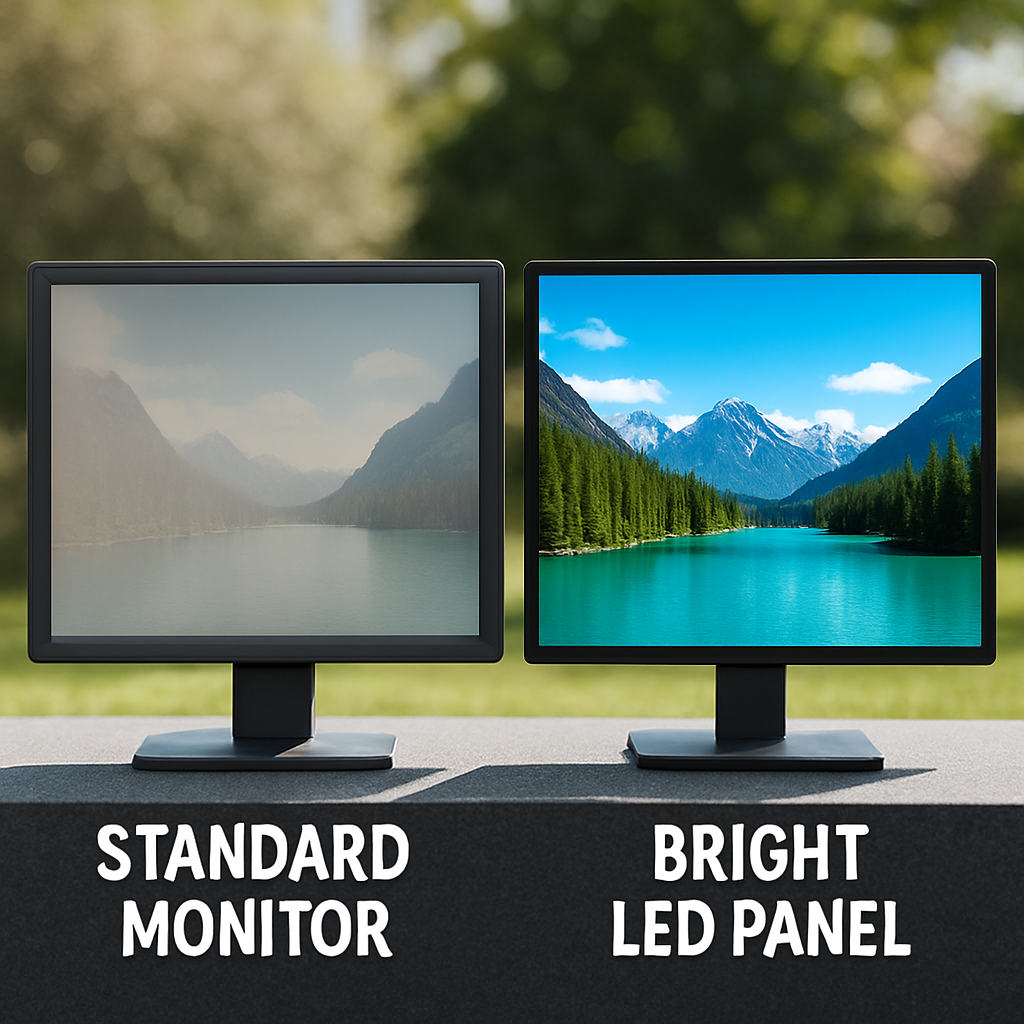
Taking a smartphone outside usually results in a washed-out, invisible screen. Giant outdoor panels avoid this by packing thousands of “nits”—the measurement of light intensity. Think of one nit as the glow of a single candle. Achieving proper brightness levels for sunlight readable displays requires incredible power to punch through the glare.
- 500 Nits: A standard living room TV.
- 1,000 Nits: Bright indoor storefront signs.
- 5,000+ Nits: Outdoor panels fighting direct midday sun.
This extreme power gap explains the physical divide between indoor vs outdoor smd modules. Indoor lights prioritize close-up clarity without blinding the viewers, while outdoor modules act like intense high-beams built to overpower daylight from blocks away.
Nature demands more than just brightness; it requires a strong ip rating for outdoor digital signage. An “IP65” score guarantees the panel acts as a watertight fortress, safely blocking heavy rain and dust. With these brilliant, weatherproof lights ready for action, construction relies on an assembly method akin to massive building blocks.
The LEGO Effect: How Modular Cabinets Make Massive Video Walls Manageable
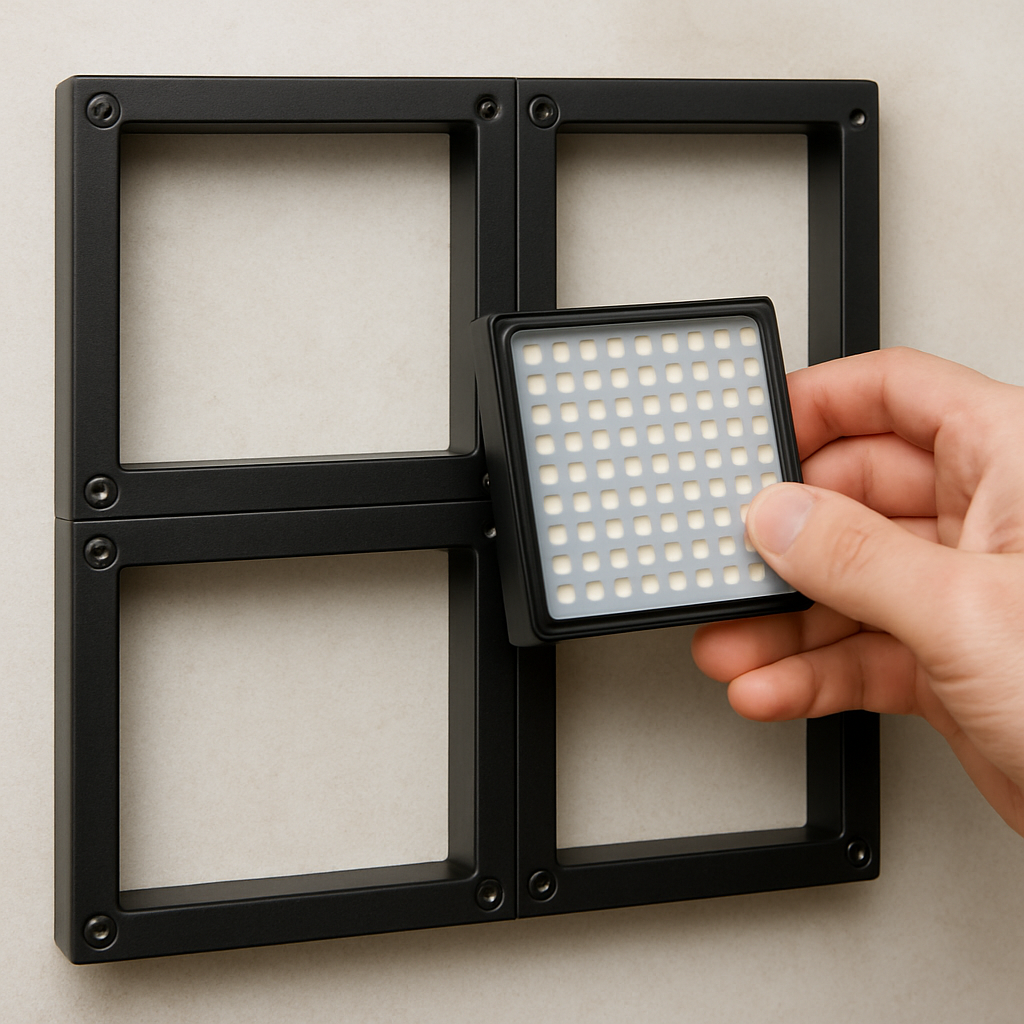
Transporting stadium-sized screens would be a logistical nightmare, so builders use a clever trick: the massive displays are never one solid piece. Instead, crews connect smaller, standardized metal frames called modular cabinets. Like high-tech LEGO bricks, they seamlessly stack to build any shape or size, making shipping and physical installation incredibly manageable for a small team.
When physical damage occurs, nobody replaces the entire billboard. This design naturally serves as a physical maintenance guide for modular video screens, allowing for rapid “hot-swaps.” If you ever wonder how to fix dead pixels on led wall displays, technicians simply pop out the single broken square and slide a fresh one in while the rest of the screen stays illuminated.
Behind these glowing tiles sits a sending box, acting as the system’s brain to translate standard video files into light signals. Processing live, synchronous event feeds or asynchronous pre-recorded loops requires precise timing, often sparking a novastar vs colorlight controller comparison among installers.
Your Roadmap to a Radiant Display: Choosing Your First LED Matrix
Giant screens aren’t magic—they are brilliantly engineered optical illusions. Whether you need a standard rgb led matrix, a massive outdoor led matrix panel, or a curved flexible rgb led matrix panel, building your vision comes down to three key steps:
- Measure viewing distance to pick the right pixel pitch.
- Check the environment for indoor or outdoor brightness needs.
- Determine your content type to match the required resolution.
The next time you walk past a towering digital billboard, step close and look for the tiny gaps between the lights. You’ll never see just a picture again; you’ll see millions of microscopic bulbs working in perfect harmony.